You've assembled the largest demand package on the file. The specials are tallied, the imaging is flagged, and the chronology looks clean. Then the adjuster calls back with one primary care note from eight months before the collision, documenting the same neck pain you're presenting as new, and your number loses its footing.
That note didn't defeat the claim by itself. It defeated a demand that never addressed it. Every one of the different types of medical records proves something different, and every one creates a different opening for the defense on causation, damages, pre-existing conditions, or credibility.
The files you receive also aren't one uniform chart. By 2021, adoption of certified EHR technology had risen to 96% of non-federal acute-care hospitals and approximately 78% of office-based physicians, according to the 2022 ONC Report to Congress. You're therefore reading a mix of structured exports, scanned paper, and narrative notes from multiple systems.
Read each record below for two things: what it establishes, and what opposing counsel will pull from the same page.
1. Office Visit and Progress Notes (SOAP Notes)
A primary care visit six months before a crash often matters more than the post-accident visit you're featuring. If the Subjective section already records neck pain, numbness, or a prior referral, the defense has its baseline argument. If it doesn't, that silence helps you show new onset.
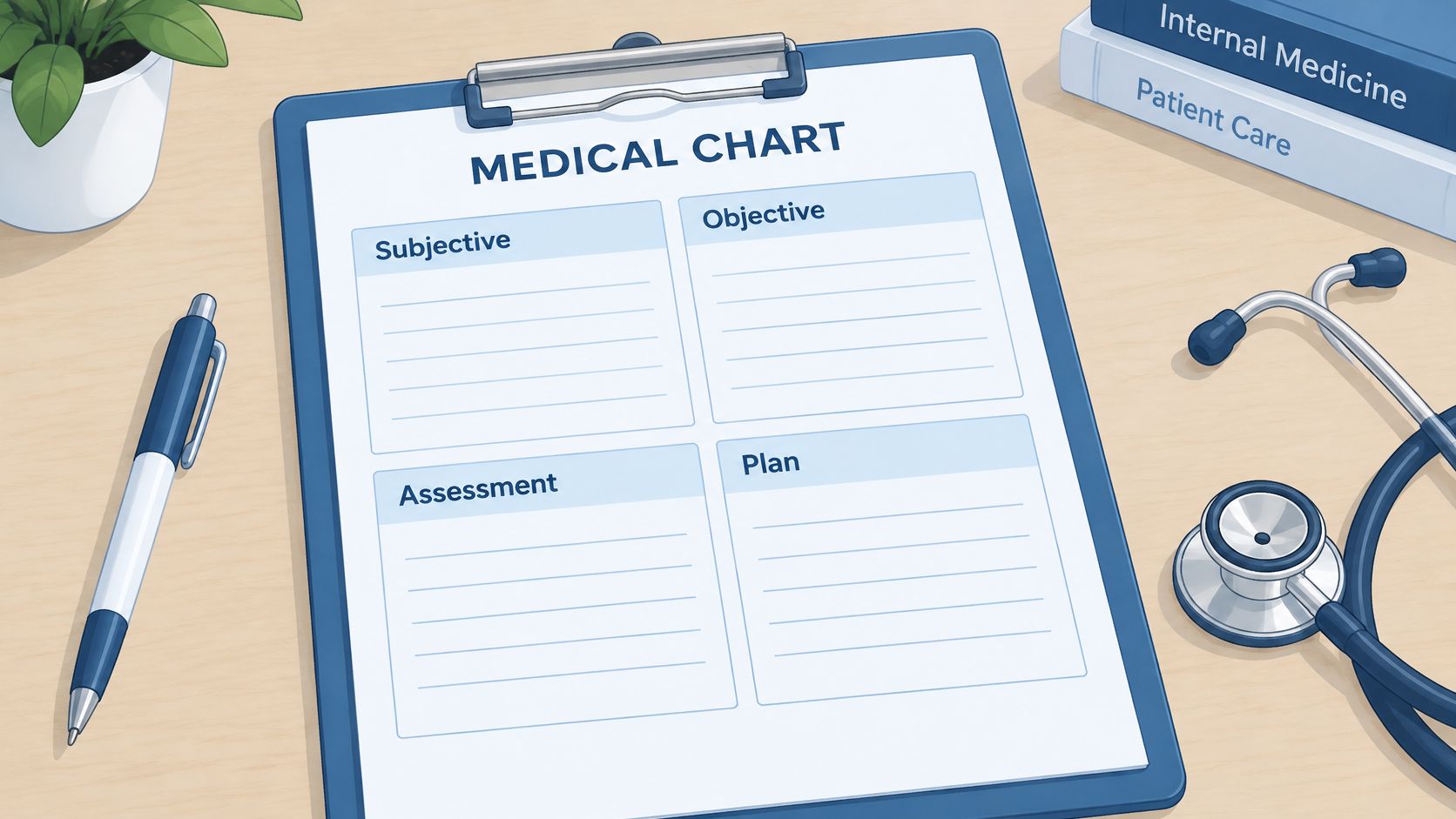
Office notes usually follow SOAP structure, covering subjective complaints, objective findings, assessment, and plan. Across months or years, they show symptom onset, progression, treatment response, and when a provider first named a diagnosis. I treat them as the longitudinal spine of the file, including the pre-accident history you can't afford to skip.
Formats vary by practice size. The National Electronic Health Record Survey quickstats found certified-EHR use was 79.9% among solo physicians, compared with 98.5% in groups with 51 or more physicians. Expect cleaner exports from large groups and scanned, lower-structure notes from smaller practices.
What to extract before drafting
- Build the visit chronology: Log date, provider, chief complaint, and plan for every encounter.
- Compare the same body part: Separate pre-accident complaints from post-accident changes in severity, radiation, or function.
- Flag treatment gaps: Missed follow-ups and long delays need a documented explanation before the insurer supplies one.
- Watch copy-forward text: Repeated language isn't fresh corroboration, so don't overstate its weight.
Say serial orthopedic notes move from strain to persistent radicular symptoms and then a diagnosed herniation. That progression can support causation, but only if you show what changed at each visit. For a deeper intake framework, see this guide to reviewing outpatient medical records in personal injury cases.
2. Emergency Department (ED) Records
After a crash, the ED chart can establish what symptoms the patient reported and what clinicians observed that day. Triage notes, nursing documentation, examination findings, orders, test results, and discharge instructions help anchor the early causation timeline. A same-day cervical CT after a rear-end collision, for example, dates the evaluation and records what the imaging showed.
The chart can also expose credibility problems. Compare the mechanism of injury across triage, the clinician's note, and the police report. Read quoted statements closely, especially any denial of pain that conflicts with later reports.

Hospital productions can omit records from the initial visit or from outside providers. Request the facility's full ED chart and an index of what it transmitted. That helps distinguish a missing document from a record that was never created.
Red flags in the first encounter
Request the EMS run report separately. It may document scene observations, the patient's position, complaints, and vital signs that do not appear in the ED notes. Compare timestamps for arrival, triage, orders, and signed notes; differences can affect how the sequence of care is understood.
Practical rule: If the discharge instructions say to return in two days and the next visit is six weeks later, get the reason from the client before mediation.
A triage note recording no prior back pain can support a new-onset account, but it is only one part of the causation record. Compare it with the client's prior history and follow-up records. An unexplained delay in care gives opposing counsel an opening to argue that the injury was minor or unrelated.
3. Hospital Discharge Summaries
A discharge summary condenses an admission into reason for admission, hospital course, procedures, diagnoses, discharge medications, restrictions, and follow-up. It's the fastest way to understand a lengthy stay. It's also an interpretation, not a substitute for the underlying chart.
Say a summary documents a five-day admission for a traumatic spinal fracture with surgical fixation. That supports substantial specials and a serious-injury narrative. But if the operative report, imaging, or daily notes use narrower diagnoses, the defense will argue the summary overstated the case.
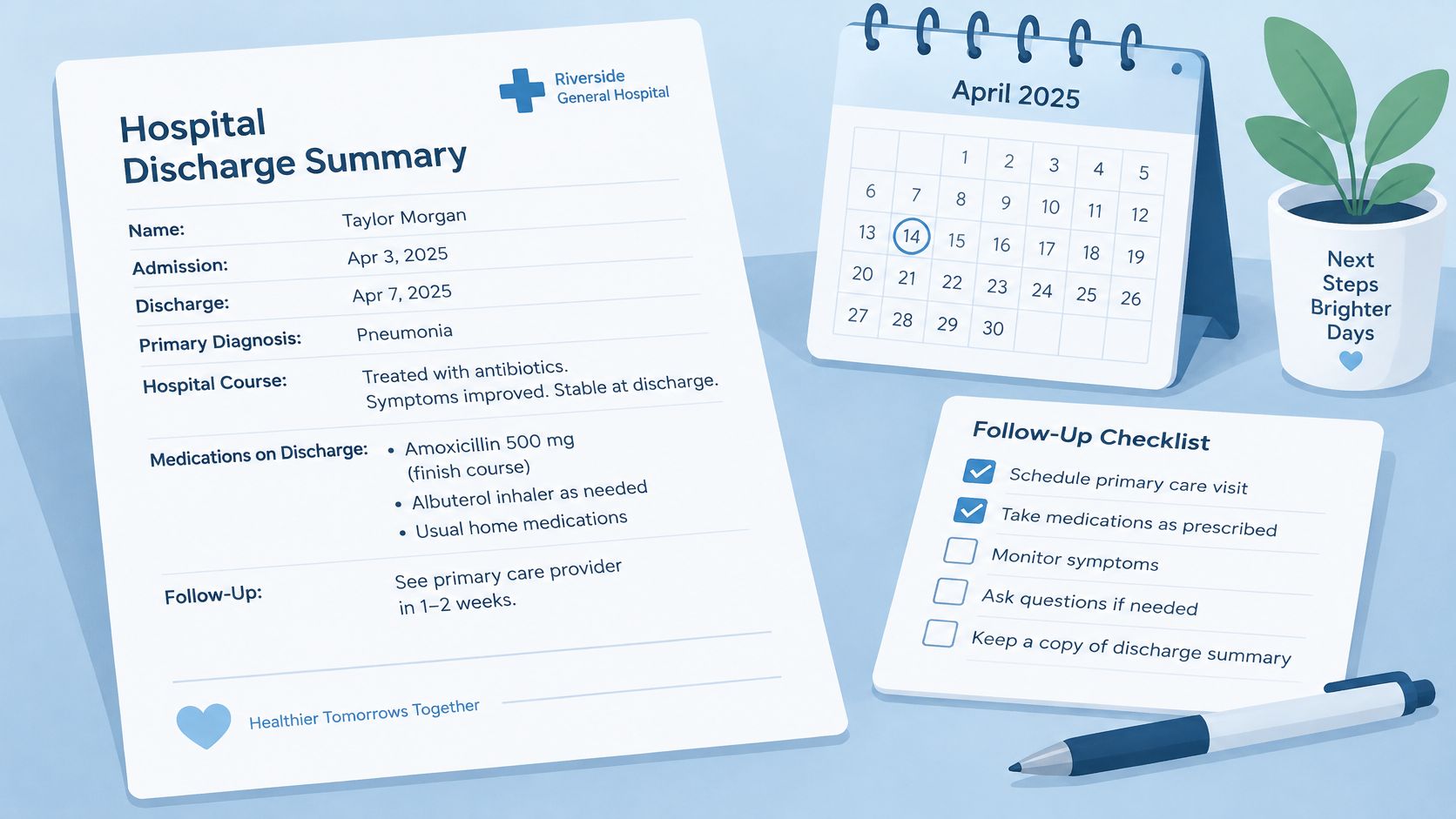
Cross-check every listed diagnosis against radiology, laboratory results, consultations, and procedure reports. If the summary references an event that appears nowhere else, request the complete inpatient chart rather than relying on the recap. Note whether it's signed and when, because unsigned or significantly late summaries invite authentication and credibility questions.
Where the damages value sits
The discharge medication list helps you track continuing prescriptions, refills, and related costs. Restrictions and referrals to pain management, therapy, or specialty follow-up anchor future care projections, provided later records show the client pursued that care.
The trade-off is speed versus reliability. Use the summary to find the story, then verify each material sentence in source documentation before you put it in a demand. A concise narrative that can't survive page-level checking hurts more than a longer chart you haven't simplified yet.
4. Diagnostic Imaging and Radiology Reports
Imaging often supplies the most objective structural evidence in the file. X-rays, CT scans, MRIs, and ultrasounds can confirm fractures, disc protrusions, or soft-tissue injury. They can also hand the defense words like chronic, degenerative, or age-related, which is why qualifiers matter as much as findings.
Treat the image and the interpretation as separate evidence. Under the HIPAA discussion from the U.S. Department of Health and Human Services, a designated record set can include X-rays alongside clinical notes, laboratory reports, billing records, and other decision-making information. A radiology impression isn't interchangeable with the underlying study.
The short video below is useful background when you're orienting a reviewer to how imaging fits into the broader record.
Make comparison studies do the work
An MRI showing a new protrusion at C5-C6 is stronger when a prior study showed no protrusion at that level. Without the comparison, you're asking an adjuster to infer timing from symptoms alone. Request both the written report and the DICOM images, especially where causation is contested.
Have a qualified radiologist or medical reviewer examine disputed images rather than paraphrasing beyond the impression. In the demand, quote the impression accurately and don't strip out limiting language. If the report says a finding may be degenerative, address aggravation directly instead of hoping nobody reads that far.
5. Laboratory and Pathology Results
Lab records rarely headline a soft-tissue demand, but they can corroborate severity or complicate causation in ways narrative notes don't. Blood and urine results include values, reference ranges, abnormal flags, and collection and reporting dates. Pathology reports add tissue-based diagnoses from biopsies or removed specimens.
Serial hemoglobin results after trauma can show acute blood loss followed by recovery, supporting the seriousness of an admission. Other abnormal findings may point to anemia, infection, thyroid disease, or another condition that explains fatigue, pain, or delayed healing. The defense will use that alternative explanation if you don't evaluate it first.
Read trends, not isolated flags
- Build a serial-values table: Put test name, collection date, result, and reference range in chronological order.
- Separate collection from reporting: A result reported days later shouldn't be placed on the wrong treatment date.
- Get clinical interpretation: Ask a medical reviewer what an abnormal value means before relying on it.
- Chase outside testing: Request reference laboratory records when a hospital summary mentions tests not included in the production.
A pathology report confirming a benign condition can also close a diagnostic branch that otherwise distracts from the injury claim. For more on organizing results across encounters, see this overview of diagnostic test results in case review.
Don't cherry-pick one abnormal flag. Reviewers trust a documented trend tied to symptoms and treatment far more than a single highlighted value.
6. Operative and Procedure Reports
An operative report tells you what the surgeon planned, what was found, and what was done. Look for preoperative and postoperative diagnoses, procedure performed, anesthesia, findings, specimens, estimated blood loss, complications, implants, and post-procedure condition. Those details support both medical necessity and the size of the specials.
The strongest causation chain connects symptoms, imaging, conservative care, surgical recommendation, and intraoperative findings. Say an MRI shows a lumbar herniation and the discectomy report describes matching nerve-root compression. That alignment is persuasive. A mismatch between imaging and operative findings requires expert attention before negotiation.
Build the full treatment chain
Pair the report with the preoperative consultation and postoperative visits. The consult explains why less invasive care failed or wasn't appropriate, while follow-up notes show recovery, restrictions, complications, and whether the procedure relieved the claimed symptoms.
Don't demand future hardware removal from the operative note alone. Find the implant record and a provider statement that removal or revision is expected.
Confirm the billed procedure codes match the procedure described. Coding that appears broader than the operative narrative gives the carrier an easy reasonableness argument. For clients and jurors, translate the procedure into plain language, but retain exact technical terms for expert review.
Operative reports can drive value, yet they also expose unrelated findings and pre-existing degeneration observed during surgery. Read for both before you characterize the operation as entirely accident-related.
7. Physical Therapy and Rehabilitation Records
Therapy records show whether an injury changed how the client moves, lifts, works, and progresses over time. Evaluations, plans of care, session notes, outcome measures, attendance logs, home exercise programs, and discharge summaries turn subjective pain complaints into a functional timeline. They also reveal plateau, noncompliance, or recovery that may contradict the demand.
Fragmentation is common because therapy may sit outside the hospital portal. In 2024, 81% of U.S. hospitals enabled app-based patient access, but only 56% enabled patients to import records from other organizations, according to the federal hospital patient-engagement capabilities report. A portal export therefore isn't proof you have the complete rehabilitation file.
Track function visit by visit
Chart Oswestry Disability Index scores, pain ratings, and range-of-motion measurements at intake, midpoint, and discharge. Improvement supports treatment benefit, while a documented plateau can support maximum medical improvement or the need for another intervention. Either trend is useful if you explain it accurately.
Note every missed appointment and ask why it happened. Transportation, work, authorization, illness, and pain flare-ups lead to different responses, and the defense will treat an unexplained gap as lack of injury. Obtain the home exercise program because documented effort between visits helps credibility.
Compare stated goals with discharge outcomes. Ongoing lifting restrictions may support vocational limitations, but only when they're consistent with the final evaluation and later provider notes.
8. Pharmacy and Prescription Records
Pharmacy records show what was prescribed, what was dispensed, and whether the client kept filling it. Drug name, strength, quantity, days' supply, prescriber, pharmacy, fill dates, and refills create an objective medication timeline. That timeline can corroborate pain treatment or expose a condition that predates the accident.
Don't rely solely on what a client can see online. In 2024, 65% of U.S. individuals were offered and accessed an online medical record or patient portal, according to the ONC patient portal and health apps data brief. Portal visibility doesn't guarantee a complete fill history across every pharmacy used.
Where pharmacy data helps or hurts
- Request every pharmacy: Include mail-order, hospital, and one-time pharmacies, not just the current store.
- Match fills to visits: Compare prescription dates with provider notes and discharge medication lists.
- Search pre-accident fills: Daily pain medication before the collision must be addressed as baseline or aggravation.
- Limit disclosure: Handle sensitive medication history carefully and disclose only what's necessary.
A muscle relaxant filled once and never refilled may be framed as noncompliance or minimal pain. It may also reflect side effects, cost, or a provider's later change in plan, so find the explanation in the chart. This guide to medication history review outlines a practical reconciliation approach.
I recommend checking pharmacy data before drafting, not after. Few surprises undermine credibility faster than a pre-accident regimen the demand never mentions.
How each medical record type compares for personal injury case work
| Item | Evidence Type | Typical Timing | Main Limitation |
|---|---|---|---|
| Office Visit and Progress Notes (SOAP Notes) | Clinical history, symptoms, exam findings, diagnoses, and treatment plans | Across ongoing care, before and after an injury | Templated or brief notes may obscure changes or lack detail |
| Emergency Department (ED) Records | Initial evaluation, triage, EMS notes, tests, and discharge instructions | Usually within hours of an injury | Initial assessments may be preliminary or descriptions inconsistent |
| Hospital Discharge Summaries | Summary of inpatient care, diagnoses, procedures, medications, and follow-up | At the end of an inpatient stay | May omit details or rely on the discharging physician's interpretation |
| Diagnostic Imaging and Radiology Reports | Imaging findings and radiologist interpretations | When imaging is ordered during evaluation or follow-up | Findings may be pre-existing or require expert interpretation |
| Laboratory and Pathology Results | Test values, trends, and tissue diagnoses | During diagnostic workup and treatment | Results may be difficult to interpret or unrelated to the injury |
| Operative and Procedure Reports | Surgical findings, procedures, diagnoses, and complications | Typically dictated shortly after a procedure | Technical language and transcription errors may require review |
| Physical Therapy and Rehabilitation Records | Functional measures, treatment, attendance, and progress | Throughout rehabilitation, from initial evaluation to discharge | Repetitive notes and missed sessions may complicate interpretation |
| Pharmacy and Prescription Records | Prescribed and dispensed medications, fill dates, and refills | At prescription and dispensing, with records spanning prior and later care | Fill records do not prove medication was taken as prescribed |
Turn Eight Record Types Into One Defensible Case Narrative
A demand may look consistent until the defense lines up a pre-accident note, a degenerative finding, and a stretch of missed therapy. Build the narrative from the records in date order, then test what each entry proves about causation, damages, and credibility.
For each ED encounter, office visit, admission, procedure, therapy session, test, and prescription fill, keep the date, provider, source document, and original timestamp attached. That lets a reviewer trace each assertion to its record. It also makes conflicts visible instead of smoothing them over in a summary.
Then compare diagnoses with the evidence supporting them. Office and ED notes document complaints and clinical impressions; imaging, laboratory results, pathology, and operative findings may add support or raise questions. Preserve conflicts between sources and get qualified medical input where needed. Choosing only the version favorable to the demand can undermine credibility when the defense presents the other record.
Test claimed damages against follow-through. Therapy attendance, outcome scores, discharge restrictions, referrals, and prescription fills help show whether treatment continued and function changed. A care gap may draw scrutiny, but first determine whether it reflects a lapse in treatment or a gap in the production. Record whether an item was never created, never requested, never sent, or not indexed.
In a PI file, provenance means knowing who authored a note, when it was signed, whether language was copied forward, and whether an image, interpretation, or bill supports the proposition you are advancing. For context on understanding forensic sample identification, the records in a PI case still need to be traced to their own authors and sources.
Ares can organize uploaded records into a single cited chronology and identify Red Flags such as missing records, treatment gaps, and inconsistencies. Its Medical Summaries provide chronologies, billing ledgers, treatment timelines, and red flags, giving attorneys an organized record to assess before negotiation.
Find the pre-accident note, degenerative qualifier, missed therapy block, or unfilled prescription before the adjuster does. Explain what each item does and does not establish, then build the demand around a record set that has been checked for conflicts and gaps.
Upload ED records, office notes, imaging, operative reports, therapy files, and pharmacy histories to Ares to generate a cited chronology, treatment timelines, billing analysis, and Red Flags for missing records and gaps. Use the organized record to check the case narrative page by page before negotiating.