
Medical chart review is a retrospective method that extracts clinically relevant facts from pre-existing patient records to answer a defined question about treatment, outcomes, or quality of care. In personal injury work, that usually means finding the exact dates, symptoms, diagnoses, and provider notes that tell you whether the story holds together.
You already know the feeling. A client's records arrive in a stack from the ER, orthopedics, physical therapy, imaging, and primary care, and every provider seems to have told a slightly different version of the same injury. Medical chart review is how you turn that stack into a usable chronology, so you can see where causation is supported, where damages are documented, and where the record has gaps that opposing counsel will exploit. Ares' medical record review service sits in that same workflow space for PI teams that want a structured way to organize the file before drafting demand.
Why Medical Chart Review Matters to Injury Firms
A PI lawyer can read every page in a file and still miss the one note that changes the case. The problem usually is not effort, it is structure. Records arrive out of order, from different systems, with different abbreviations, and the fact that matters most may sit inside a routine follow-up note.
Medical chart review gives that file a working order. In the clinical literature, it is a retrospective method that pulls clinically relevant facts from records to answer a defined question about treatment, outcomes, or quality of care, and that same logic fits injury work. The reviewer is not skimming for interesting details. They are building a defensible factual narrative from the paper trail, the same way a timeline helps a jury see how events connect. In PI cases, that narrative often decides whether a complaint reads like a real injury sequence or a loose collection of symptoms.
For an attorney, the practical payoff is straightforward. You need to know which record first documents the pain complaint, which note links symptoms to the incident, which provider records objective findings, and which entries create defense-friendly ambiguity. Once those pieces are arranged in order, the file can support causation and damages far better than a superficial read.
Practical rule: Treat every chart like a timeline problem first and a document set second. Once the chronology is clear, the legal theories become easier to test.
That is why firms often pair legal judgment with a disciplined review process. If your team wants a more organized way to handle intake and file review, the workflow described in a detailed workflow for medical record review services is worth comparing with your current method.
What Medical Chart Review Actually Involves
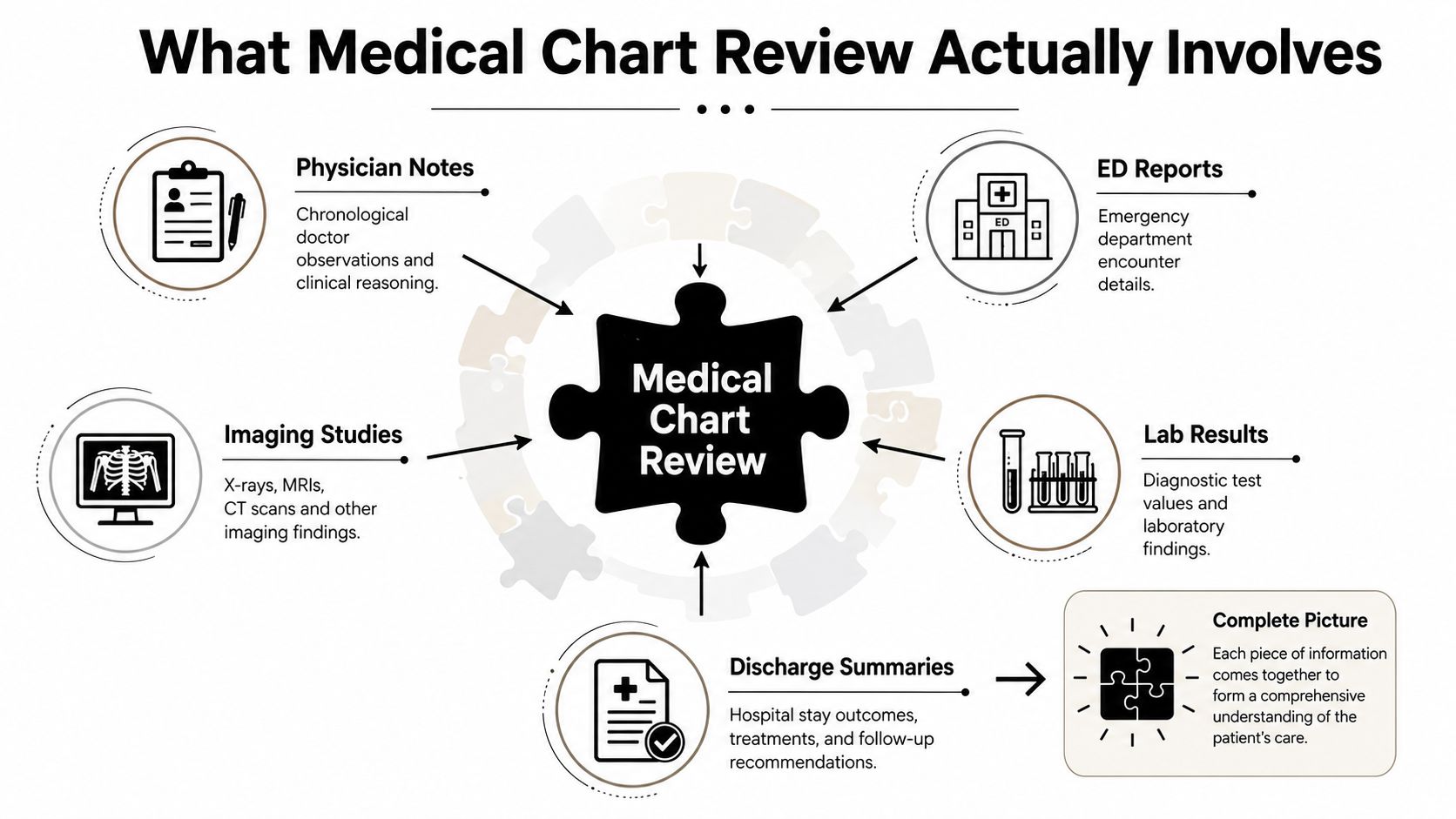
A chart review starts with two different kinds of material, narrative notes and hard data. Physician notes, ED reports, consults, discharge summaries, imaging, and labs are scattered across the file, and each piece may describe the same event from a different angle. The reviewer's task is to connect those pieces without stretching the record beyond what it supports.
The definition matters because it keeps the work disciplined. Medical chart review is a retrospective method that pulls clinically relevant facts from pre-existing records, including structured EHR fields and unstructured notes, to answer a defined question about treatment, outcomes, or quality of care. In practice, that means the reviewer is not reading for curiosity. They are reading to answer a specific question, such as what happened, when it happened, who documented it, and how strongly the chart supports the story.
For PI work, the output has to do more than summarize. It needs to surface symptom onset, diagnosis progression, treatment escalation, provider impressions, and any note that shows the client's condition changed after the incident. That is why structured abstraction matters. Without it, the reviewer is left with fragments. With it, those fragments become a usable chronology.
The sources you are reviewing
A reliable review draws from multiple locations because one note rarely tells the whole story. Physician progress notes may describe symptoms in plain language, the ED report may anchor the first acute visit, imaging may confirm injury severity, and discharge paperwork may show how the episode ended.
The sources you are reviewing do not always line up neatly. One note may use shorthand, another may leave out context, and a third may bury a critical detail in the assessment rather than the HPI. That is why a chart review must be structured, not casual.
Why the same record can support different questions
A clinician may use the file to decide treatment. A PI attorney may use the same file to prove chronology, damages, and reasonableness. An insurer may focus on medical necessity or coding support. The underlying records are the same, but the lens changes what matters.
That difference is why a one-size-fits-all summary often fails lawyers. A record set that works for clinical follow-up can still miss the points that matter most in injury litigation, especially when documentation is uneven or written with a different purpose in mind.
Review Process and Key Data Extraction
A chart review can look tidy on the surface and still miss the facts that matter if the records were collected out of order or only partially captured. In injury matters, that kind of gap is like reading a deposition with half the pages missing. The headings may still look familiar, but the timeline can no longer be trusted.
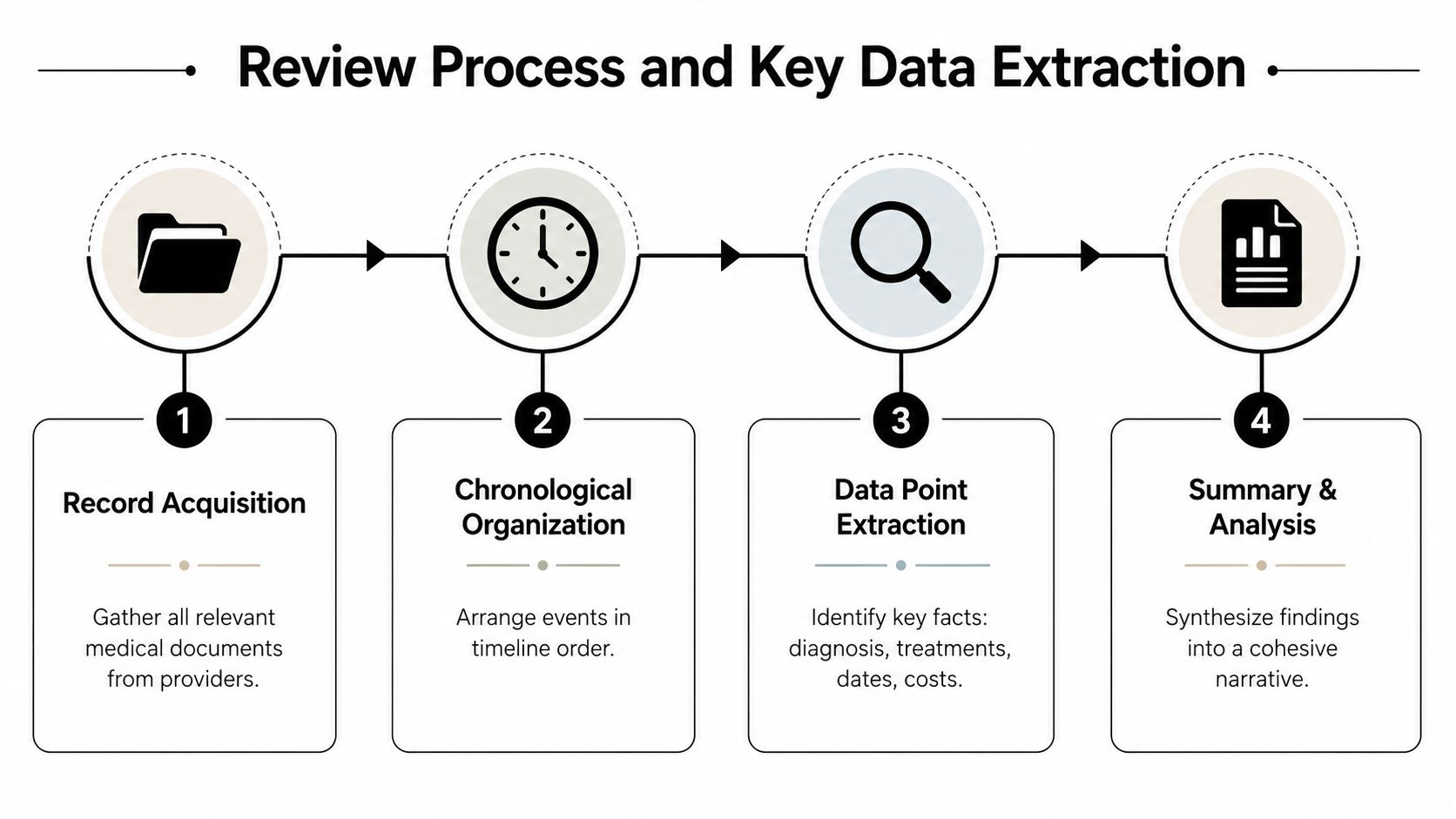
For a PI case, the review usually moves through four stages.
Record acquisition. Gather the full set of relevant records from every provider, not just the most obvious ones. If the file starts with the ER visit and leaves out follow-up care, the damages picture will be incomplete. Treatment in a vacuum is hard to read, and a missing specialist visit can change how the whole sequence looks.
Chronological organization. Put the records into date order before drawing any conclusion. A note that seems minor in isolation can matter once it sits between the crash date and the first referral. That order helps the reviewer see whether the complaint grew, stayed stable, or changed after each encounter.
Data point extraction. Pull the facts that matter to the case, including diagnoses, treatments, dates of service, provider names, symptom changes, referral patterns, and cost-related entries when they appear in the file. A useful template makes this more consistent, especially if it includes fields for symptom onset date, provider initials, and treatment escalation markers. Those labels help separate a new complaint from a prior condition and make it easier to compare files across providers.
Summary and validation. Compare the timeline against the actual documents and check for contradictions, missing episodes, or unexplained gaps. A careless review gets exposed here. If one note says the pain began after the incident and another implies a longer history, the summary has to flag that tension instead of smoothing it over.
The research on chart review shows why this work takes time. A systematic review and methodology findings paper reported a mean of 5.33 minutes to review one patient record across studies, while a more detailed structured methodology study reported 30.2 minutes per case and 94.9% reviewer agreement that the needed information could be found in the chart, with a similar methodology study reporting 12.6 safety incidents per 100 records in reviewed records and 55.6% of incidents considered preventable (systematic review and methodology findings). Those figures come from clinical settings, not PI files, but they match what lawyers see every day. Records are scattered, wording shifts from provider to provider, and one missed entry can change the legal read of the file.
The same pattern shows up in the ICU chart review study, where two-thirds of clinicians reported reviewing 3 or more years of history, and the median time spent was 15 minutes for a typical case and 25 minutes for a complex one (ICU chart review study). That kind of depth matters in injury work when an older complaint, a prior condition, or a delayed symptom report changes the causation analysis.
For attorneys building their own internal process, a structured approach helps keep the review consistent from case to case. A medical record chart review template gives the team a repeatable way to capture the same fields, label them the same way, and avoid losing the sequence when multiple providers document the same injury in different terms.
Useful habit: Extract the first mention of pain, the first objective finding, the first treatment escalation, and the first inconsistency. Those four anchors often tell you more than a dozen generic summaries.
Legal Relevance in Personal Injury Cases
A rear-end collision case looks straightforward until the records start telling different stories. The client says the neck pain began the same day. The ER note mentions acute pain after impact. Then a later primary care visit refers to preexisting discomfort without explaining whether it was the same complaint or a new one. A good review does not ignore that tension, it maps it.
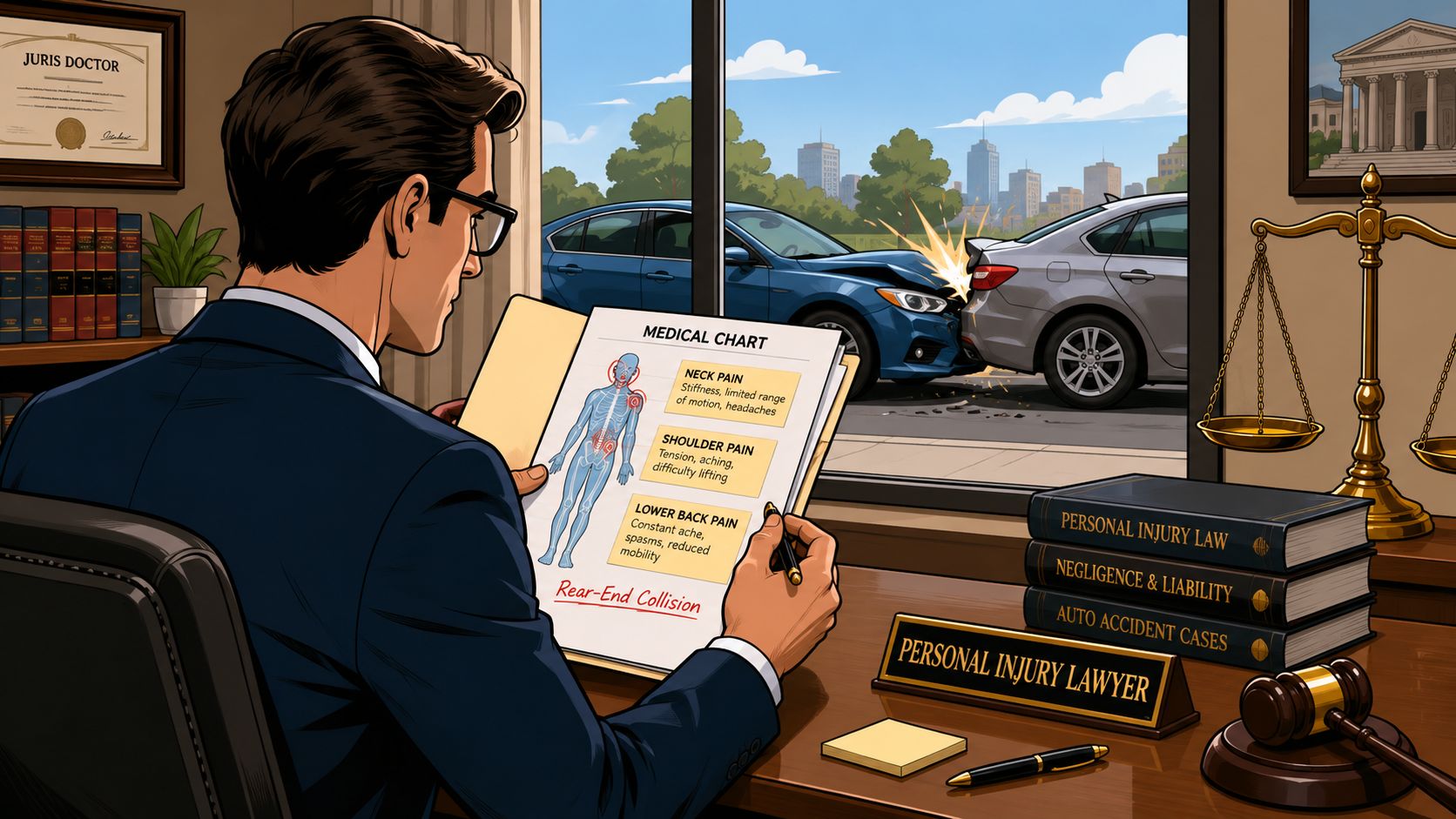
That is why chart review matters so much in PI. The review turns medical language into litigation language. It shows whether the record supports the claim that symptoms started after the incident, whether treatment was consistent with the alleged injury, and whether the chronology supports ongoing damages or a brief, self-limited episode.
Outside clinical care, the users are different. Independent sources note that chart review is used by insurance companies, government agencies, law firms, and researchers for very different purposes, including medical necessity, billing accuracy, compliance, and legal case analysis. That matters because the output format changes with the user. A research review may need to fit IRB expectations when it is intended to produce generalizable knowledge, while a legal review may need a chronology that supports causation, damages, and reasonableness in a way a judge or adjuster can follow.
The emergency-medicine literature also notes that retrospective chart reviews appear in roughly 15% to 25% of scientific articles in emergency medicine journals (emergency medicine review article). That does not tell you how a PI file should be reviewed, but it does show how common the method is when people need to reconstruct events from records rather than direct observation.
For a law firm, the key is not just “what happened?” It's “what happened in what order, and how well is that order documented?” A chronology that answers that question cleanly can help you assess liability, spot treatment gaps, and decide whether the file is strong enough for demand or needs more development.
Navigating Challenges and HIPAA Compliance
A PI file can look orderly at first glance, then fall apart under close reading. The hard part of chart review is sorting dependable documentation from uneven documentation. Medical records often include conflicting descriptions, missing dates, duplicate entries, and terminology that shifts from one provider to the next. If you do not account for that variation, a weak note can look stronger than it is, or a strong note can get missed.
A record review study found that chart reviews can surface clinically important incidents even when the chart itself is inconsistent, including findings tied to patient safety concerns and preventable harm (patient record review findings). That setting is not a personal injury case, but the same problem shows up in litigation files. The record may contain enough detail to support a causation theory, while still leaving room for disputes about onset, prior complaints, course of care, and whether the treatment path matches the alleged injury.
Red flags that deserve a second read
- Conflicting dates: One note says the pain started immediately, another places onset later, and no one explains the difference.
- Missing treatment intervals: There is a long gap in care with no explanation, which can affect both damages and credibility.
- Shifting terminology: The same body part or symptom is described in different ways by different providers, which can hide continuity.
- Unclear source attribution: It is not always obvious whether the statement came from the patient, the nurse, or the physician.
HIPAA creates a separate layer of review. Anyone handling protected health information has to use it only for authorized purposes and keep access controlled. In a shared file workflow, that means secure storage, limited access, and clear handling rules for the team. A practical overview of those controls is laid out in HIPAA-compliant document management guidance for secure PHI handling.
Practical rule: If you cannot tell whether a fact came from the patient report, the exam, or a copied-forward note, do not treat it as settled.
The safest review culture is disciplined skepticism. It respects the chart, but it does not assume every line carries the same weight. That matters in PI work, where one undocumented assumption can distort causation analysis, damages assessment, or settlement posture.
How AI Assisted Tools Transform Review Workflow
Good review software doesn't replace judgment. It removes the busywork that slows judgment down. For PI teams, that usually means speeding up intake, organizing records into sequence, and surfacing the same kinds of facts a manual reviewer would extract by hand.
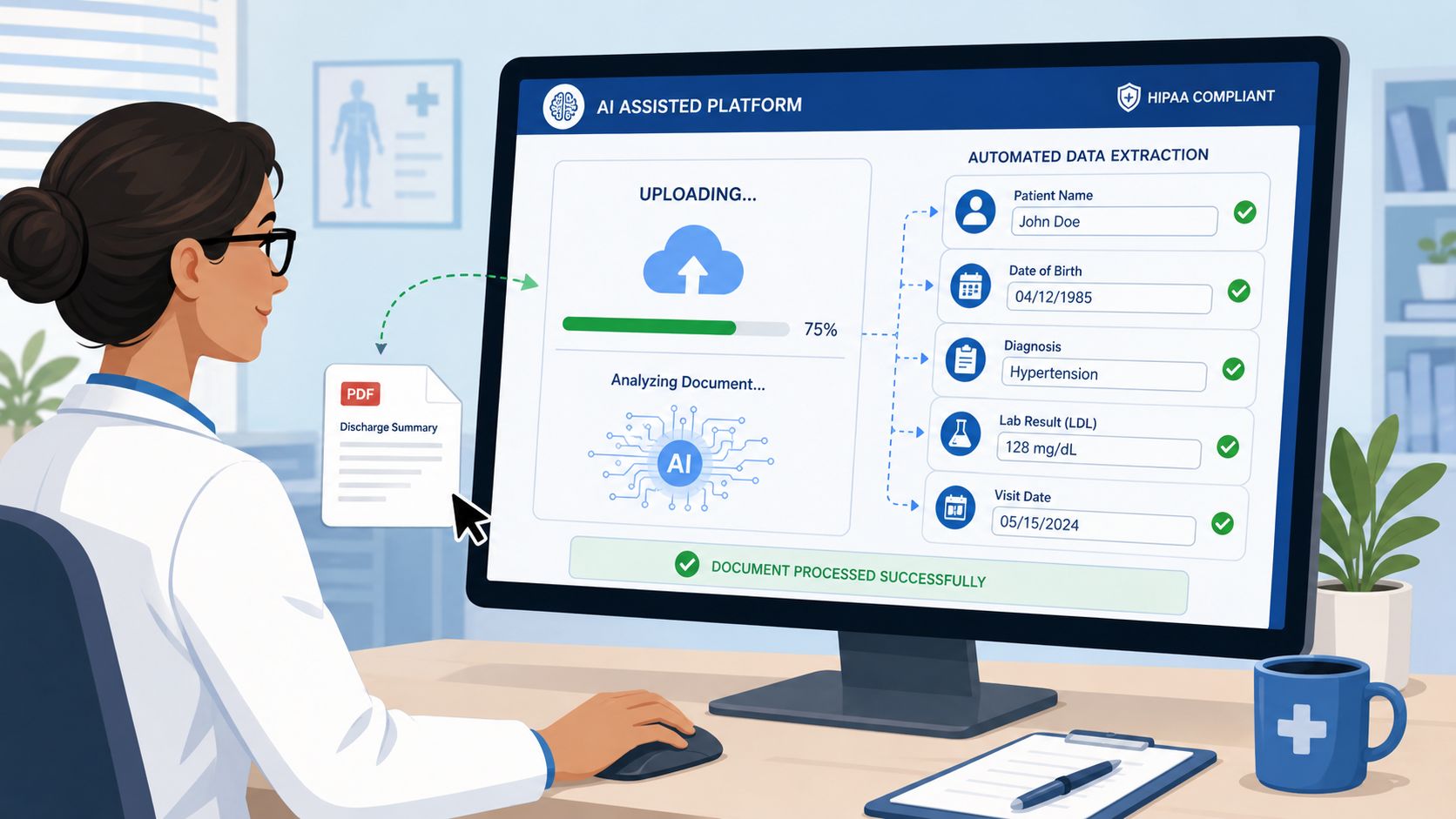
A good workflow starts with drag-and-drop upload, then moves into automated extraction, then into attorney review of the summary and chronology. The value is not magic. It's consistency. When the same categories are captured the same way every time, you spend less time reconstructing routine facts and more time on legal analysis.
Structured review and technology intersect in this process. The methodology literature already points to the importance of centralized review and clear abstraction protocols because documentation can be fragmented and inconsistent (structured review discussion). AI-assisted tools can help standardize that first pass by pulling out dates, providers, diagnoses, and symptom progression, then packaging the result in a form the legal team can verify.
For high-volume PI practices, the practical test is simple. Can the platform reduce manual sorting, preserve the source record trail, and give an attorney a chronology that's easy to check against the chart? If it can, it's doing useful work. If it can't, it's just another layer to manage.
One option in this space is Ares, which automates medical record review for personal injury teams by extracting key dates, diagnoses, treatments, providers, and symptom chronology into organized summaries and demand-ready materials. The specific tool matters less than the workflow principle, though. Whatever platform you use, the attorney still has to verify the record, test the timeline, and decide what the facts support.
Conclusion and Next Steps
Medical chart review is not clerical cleanup. It's a disciplined way to convert messy clinical documentation into a clear factual record that can support or weaken a PI claim. When it's done well, it helps you see causation, damages, treatment progression, and credibility issues before opposing counsel does.
The core process is straightforward. Gather the full file, organize it chronologically, extract the facts that matter, and validate the summary against the underlying documents. The hard part is respecting documentation variability without getting lost in it. That's why the best reviewers stay methodical, skeptical, and specific.
For a new PI attorney, the next move is to standardize the review process inside the firm. Use the same intake categories, the same chronology fields, and the same verification habits every time. That makes your review faster, your analysis cleaner, and your case strategy more defensible.
If your team wants a more consistent way to turn records into usable timelines, Ares can help automate the first pass by extracting the dates, providers, diagnoses, treatments, and chronology buried in the file. Visit Ares to see how a structured medical record workflow can support PI case review, demand drafting, and faster internal collaboration.