
A client tells you the fractures have healed, the scans look better, and the insurer wants to close the file. Then they explain that they still can't drive past the crash site, sleep through the night, return to work, or sit in a car without panic. The physical treatment may be nearing its end, but the personal injury claim mental health evidence is only beginning to take shape.
That is where many otherwise viable claims lose value. A diagnosis can support the case, but it doesn't prove causation, severity, duration, or functional impairment. A defensible psychiatric damages docket connects the incident to symptoms, symptoms to treatment, and treatment to measurable changes in work, relationships, mobility, sleep, and daily life.
The Hidden Injury in Motor Vehicle Crashes
A client may arrive with emergency records, imaging, surgical notes, and a discharge summary that suggest recovery. Weeks later, a therapy note may record nightmares, driving avoidance, irritability, poor concentration, and escalating fear. Treat those symptoms as a late-added complaint, and the defense will likely do the same. Treat them as evidence that needs a timeline, and the file becomes easier to assess.
Psychological injury can develop alongside physical trauma. A 2018 systematic review of road-traffic-accident survivors found clinically significant PTSD across a substantial group of crash survivors, while also showing variation by study design, assessment method, injury severity, and follow-up timing. The finding supports careful screening, not automatic entitlement. A diagnosis still has to connect the crash to the condition and the condition to compensable loss.
Practical rule: Do not wait for the client to use the words “post-traumatic stress disorder.” Record the symptoms first, then establish whether a clinician diagnosed a recognized disorder.
Why physical recovery can mislead the file
A healed fracture is easy to show an adjuster. Avoidance, hypervigilance, depressed mood, and an inability to tolerate traffic require a more detailed evidence chain. The client may attend physical therapy consistently while missing psychiatric appointments. They may describe poor sleep or panic to a primary-care provider before receiving a formal referral. Those facts do not decide the claim, but they make chronology and corroboration important.
Build the timeline around observable changes. Record the first disturbed night, the first attempt to drive, the first missed shift, the first panic episode, and the first change noticed by a family member or colleague. Match each event to medical records, messages, work records, medication changes, or treatment notes where available. Defense counsel will test gaps, prior symptoms, delayed reporting, and alternative causes. A clear sequence gives the expert and the settlement team material to address those attacks.
Build the mental-health issue into intake
Ask what happened immediately after the collision and what changed during the following days and weeks. Ask whether the client avoids medical care because entering a vehicle causes distress. Ask about pain, medication, sleep loss, grief, financial pressure, prior mental-health history, and the claims process. These details may support causation, reveal competing explanations, or show why treatment was delayed.
Document function, not only symptoms. Identify effects on driving, work attendance, concentration, household tasks, relationships, exercise, sleep, and ordinary travel. A diagnosis may support the case, but a settlement call turns on evidence of duration, severity, and practical impairment.
The file should also preserve early safety and reporting steps. A client dealing with an uninsured driver may need guidance on reporting, insurance, and evidence preservation. A resource covering what to do after an uninsured crash can help organize those steps while the firm develops the physical and psychological record.
Integrate psychiatric evidence into liability and damages analysis. The strongest presentation shows how the crash changed the person's life, how that change was documented over time, and why the jurisdiction's causation threshold is met.
What Counts as a Compensable Psychiatric Injury
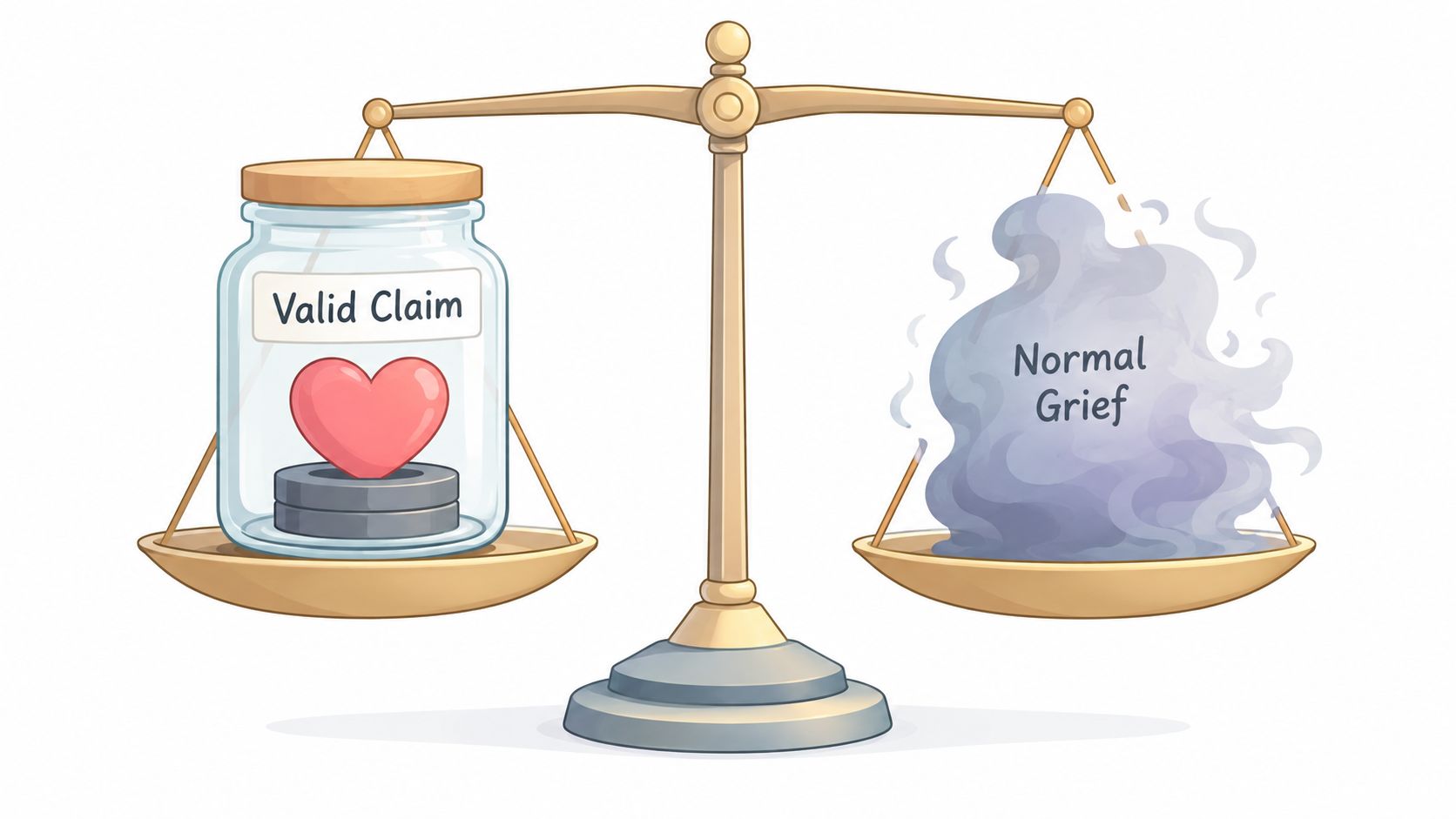
A claimant does not receive compensation merely because a crash was frightening. The claim usually requires a recognized psychological condition, medical evidence connecting it to the incident, and proof that it caused a compensable loss. The applicable threshold varies by jurisdiction and claim type. The working distinction is between short-lived distress and a psychiatric injury that produces documented impairment.
The BMJ Open review of psychological problems after motor-vehicle crashes identifies conditions including PTSD, major depressive disorder, driving phobia, and other anxiety disorders. It reports that psychological problems may affect up to 50% of motor-vehicle-crash survivors, compared with estimated prevalence of 20% in the Australian community and 25% globally. These figures describe populations, not a claimant's entitlement. They do, however, support taking post-crash mental-health complaints seriously rather than treating them as subjective distress with no evidentiary value.
Diagnosis is the starting point, not the conclusion
PTSD can involve intrusive memories, nightmares, avoidance, hypervigilance, sleep disruption, negative mood changes, and difficulty resuming ordinary activities. Depression may present as persistent low mood, loss of interest, impaired concentration, withdrawal, or reduced motivation. Anxiety can involve excessive fear, panic, physiological arousal, and avoidance of situations linked to the crash.
A qualified clinician must assess whether the presentation meets the relevant diagnostic criteria. Counsel must then address a separate legal question: What did the condition prevent the claimant from doing? Document missed work, reduced performance, disrupted relationships, abandoned activities, impaired travel, household limitations, and continuing treatment. A diagnosis without functional evidence gives the defense an opening to describe the injury as ordinary upset.
The review reports wide variation among crash samples, including PTSD estimates from 6% to 45%, depressive symptoms around 10%, anxiety symptoms around 36%, and travel phobia around 20% in cited samples. The variation limits the value of any population estimate for an individual case. It reinforces the need for a dated symptom history, clinical findings, and records showing severity and functional effect.
Referral decisions should reflect the patient's needs, the provider's qualifications, availability, and the distinction between treatment and forensic opinion. A directory of PTSD therapists in Pennsylvania may help locate care. Counsel should still review licensing, clinical fit, treatment records, and the expert's independence before relying on the resulting evidence.
Acute reactions and persistent disorders
An acute stress reaction may develop soon after trauma and later resolve. A persistent disorder requires assessment of duration, symptom pattern, impairment, and alternative explanations. Do not ask a treating provider to turn every early symptom into a permanent diagnosis. That request can weaken credibility and strain the treatment relationship.
Build the record chronologically. Capture the immediate reaction, later symptom clusters, referral date, diagnostic assessment, therapy response, medication changes, and remaining restrictions. This evidence chain can support a serious claim while keeping the presentation within what the medical record proves. The settlement position should also address the jurisdiction's causation and impairment requirements, because a diagnosis alone does not satisfy every legal threshold.
The following video may help clients and case teams distinguish emotional distress from clinically significant trauma symptoms:
Establishing Causation in Mental Health Claims
A client may report panic, insomnia, or fear of driving after a crash, yet still face a causation challenge at settlement. The defense usually does not need to prove that the claimant has no symptoms. It needs to offer another explanation that appears more persuasive, such as a pre-existing condition, chronic pain, financial pressure, or stress from the claim itself. Build psychiatric causation as a sequence of documented propositions, not as a diagnosis followed by a conclusion.
Longitudinal evidence shows why timing matters. A multisite cohort followed 332 injured patients pursuing compensation during hospitalization, at three months, and at 72 months after injury. The study found a significant direct relationship between compensation-related stress and long-term disability at 72 months, with β = 0.35 and P < .001. Three-month PTSD symptoms were associated with later compensation stress at β = 0.29 and P < .001, while depression symptoms were associated at β = 0.39 and P < .001. The reported indirect relationships were β = 0.099 and P = .001 for PTSD and β = 0.136 and P < .001 for depression, as detailed in the longitudinal compensation-stress study.
These findings do not establish that filing a claim causes psychiatric illness. They show why the chronology must distinguish symptoms linked to the incident from later distress associated with litigation, treatment, financial uncertainty, or compensation stress.
Direct trauma from the incident
Start with proximity and consistency. Identify the crash mechanism, what the claimant saw and experienced, emergency symptoms, the first disrupted sleep, the first intrusive memory, and the first avoidance behavior. Compare the account with ambulance records, emergency notes, statements to family, employment records, and early primary-care documentation.
A defense expert may argue that the first documented psychiatric symptom appeared too late. Address the gap directly. Determine whether the claimant had no symptoms, lacked access to care, concentrated on physical treatment, or reported symptoms in records that were not coded as a psychiatric diagnosis. A delayed formal diagnosis can coexist with earlier symptoms, provided the records accurately show how the condition developed.
The research on causation in personal injury cases can help frame the distinction between temporal association and proof that an incident caused or materially contributed to the claimed condition.
Exacerbation of a pre-existing condition
Prior treatment changes the analysis. Obtain pre-incident records and establish the baseline, including diagnoses, medication, therapy attendance, work performance, social activity, driving habits, and functional limitations.
Then identify what changed after the event. A claimant with earlier anxiety may have a viable aggravation claim if the crash caused new avoidance, more frequent panic, medication changes, increased treatment, or a material reduction in functioning. Do not argue that the accident created a condition that clearly predated it. Plead and prove the legally appropriate theory, whether new injury, exacerbation, acceleration, or aggravation, and apply the jurisdiction's causation threshold.
Pain as a compounding pathway
Physical pain and mental-health symptoms can reinforce each other. A systematic review cited in the causation research above found clinical symptoms of depression in 39.3% of adults with chronic pain and anxiety in 40.2%, while noting substantial heterogeneity. Another review found psychosocial factors associated with transition from acute to chronic pain in 83% of included studies, with depression identified as a possible predictor in 29%, fear-avoidance in 35%, and depression and anxiety associated with reported pain levels, as summarized in the JAMA Network Open review.
The settlement argument should connect the records without overstating them. Map pain escalation, sleep loss, reduced movement, missed rehabilitation, medication changes, and work restrictions alongside psychiatric symptoms. That integrated chronology gives the expert a reliable foundation and helps show whether the crash caused, aggravated, or merely coincided with the claimed mental-health condition.
Gathering and Organizing Psychiatric Records
Psychiatric records often contain the evidence that physical charts omit, but they can be difficult to review. A therapy note may describe the symptom that matters in a few lines. A medication list may show escalation without explaining why. A primary-care note may mention poor sleep or fear of driving months before a formal psychiatric evaluation.
The solution is a chronology designed around symptom, function, treatment, and causation, not just provider and date. Start with a master timeline that places the collision, emergency care, physical diagnoses, first symptom mention, referrals, assessments, medication changes, therapy attendance, missed appointments, work absences, and activity restrictions on the same page.

What the chronology should capture
Use source documents rather than memory wherever possible. For each meaningful entry, record the date, provider, symptom or diagnosis, treatment decision, functional consequence, and any causation statement. Separate what the claimant reported from what the clinician observed and from what the clinician concluded.
A practical review should flag:
- First mention: Find the earliest reference to nightmares, panic, avoidance, mood change, concentration problems, or sleep disturbance.
- Baseline comparison: Identify pre-incident symptoms, prior treatment, medication, work limits, and documented function.
- Clinical development: Track diagnostic assessments, therapy goals, standardized measures when used, medication starts or changes, and response.
- Daily impact: Connect symptoms to driving, employment, household tasks, childcare, social contact, exercise, and rehabilitation.
- Treatment gaps: Record missed appointments, referral delays, insurance barriers, transportation problems, and periods of improvement or disengagement.
- Alternative explanations: Note pain, medication effects, bereavement, financial stress, family conflict, subsequent incidents, and claims-related stress.
Gaps aren't automatically fatal
A treatment gap can mean improvement, avoidance, cost, access problems, or an incomplete record. Ask the client and provider before drawing a conclusion. The defense will use an unexplained gap to argue that symptoms were minor, resolved, or unrelated, so the case file should state what the evidence supports and what remains uncertain.
Manual review still has a role, particularly for privileged strategy and nuanced clinical language. But structured extraction can reduce the chance that a symptom mention or medication change disappears in a large file. Firms evaluating workflows may also consult guidance on organizing medical records, then adapt the process to their own naming conventions, review protocols, and privacy requirements.
The final product should be usable by a treating expert, a settlement lawyer, and a trial lawyer. It should show not only that the claimant received mental-health care, but also how the condition developed and what it stopped the claimant from doing.
The Role of Mental Health Experts
A treating clinician and a forensic expert serve different purposes. The treating clinician's primary duty is patient care. Their records can establish symptoms, diagnosis, treatment, response, and clinical observations. A forensic evaluator is retained to analyze questions such as causation, impairment, prognosis, alternative explanations, and the relationship between the clinical evidence and the legal issues.
Counsel should engage the right professional before the demand is drafted, not after the insurer attacks the diagnosis. Early involvement can identify missing baseline records, reveal that the current diagnosis is provisional, clarify the need for additional assessment, and prevent a demand from making a permanency assertion the treating record doesn't support.
Select for credibility and fit
A credible expert needs more than a professional title. Review licensure, relevant clinical practice, experience with trauma and injury populations, familiarity with the applicable diagnostic criteria, assessment methods, testimony history, and ability to explain limitations. A specialist who routinely evaluates PTSD may be appropriate for one file, while a psychiatrist with medication and mood-disorder expertise may be more useful in another.
Avoid shopping for a favorable conclusion. Give the expert the complete record, including prior psychiatric care, symptom-free periods, missed treatment, substance use where relevant, other stressors, and later events. An opinion that acknowledges unfavorable facts is more durable in deposition and more useful during a settlement call.
Ask the expert questions that matter
The report should address more than whether the client has a diagnosis. Ask the expert to explain:
- What symptoms support the diagnosis?
- When did the symptoms first appear, and what evidence establishes that timing?
- What alternative causes were considered?
- Did the incident cause a new condition, aggravate an earlier one, or contribute alongside pain?
- What activities, work functions, relationships, and treatment participation are impaired?
- What is the prognosis, and what facts support that opinion?
- What evidence would change the conclusion?
The expert should distinguish clinical probability from legal certainty. Counsel also needs to understand the limits of standardized testing, self-report, incomplete records, and retrospective accounts. A measured opinion may be more persuasive than a sweeping statement that ignores conflicting evidence.
Counsel's objective: Have the expert translate clinical findings into function without asking the expert to argue the lawyer's legal theory.
At mediation, the expert's value often appears in the details. “The claimant has PTSD” invites a dispute over labels. “The claimant stopped driving, missed work, abandoned rehabilitation, and continues treatment because documented exposure to traffic triggers panic” gives the adjuster a concrete impairment narrative to evaluate.
Quantifying Damages for Psychological Injury
A diagnosis does not establish the value of a claim. The settlement position becomes defensible when the file connects symptoms to documented functional loss, financial consequences, treatment needs, and the causation standard that applies in the jurisdiction. Build that chain in chronological order. Identify the baseline before the incident, the first documented change, the restrictions that followed, and the evidence showing whether those restrictions persisted.
Separate financial consequences from human consequences, then show how they interact. Lost income may be calculated from attendance records, wage evidence, and employer communications. Loss of enjoyment and emotional suffering require a specific comparison between what the claimant did before the incident, what changed afterward, and how long the change lasted.
Therapy invoices establish treatment. They do not measure the full effect of avoiding a vehicle, losing professional concentration, withdrawing from family activities, or abandoning a meaningful routine. Those effects need their own proof.
Economic and non-economic evidence
Economic losses may include treatment costs, medication, travel to providers, missed work, reduced earning capacity, and future care supported by appropriate evidence. Tie anxiety-related absences to payroll records, attendance data, disability paperwork, employer communications, or credible testimony. If concentration problems affect performance, identify the actual tasks, errors, reduced hours, or changed duties. A general statement that the client “struggles at work” gives the defense room to argue that no measurable loss occurred.
Non-economic losses require a different record. Use contemporaneous messages, calendars, journals, witness statements, therapy notes, activity records, and photographs where appropriate. Document changes in sleep, independence, relationships, recreation, travel, confidence, and ordinary choices. A chronological symptom log can help, but it should be checked against medical records and third-party observations rather than presented as standalone proof.
| Damage Type | Description | Evidence Required |
|---|---|---|
| Treatment and medication | Past and reasonably supported future psychiatric care | Bills, prescriptions, treatment plans, provider opinions |
| Lost wages | Income lost through symptoms, appointments, or inability to work | Payroll records, attendance records, employer testimony |
| Earning capacity | Reduced ability to perform or sustain work | Job duties, performance changes, vocational evidence, expert analysis |
| Pain and emotional suffering | Distress, fear, intrusive symptoms, and loss of peace of mind | Clinical records, claimant testimony, journals, witness accounts |
| Loss of enjoyment | Abandoned activities and reduced participation in ordinary life | Pre-incident and post-incident activity comparison, calendars, testimony |
| Functional impairment | Restrictions in driving, sleep, concentration, relationships, and independence | Assessments, treatment notes, work records, observed behavior |
A useful guide to calculating emotional-distress damages can help organize these categories. No formula replaces claimant-specific evidence or satisfies a jurisdictional causation threshold by itself.
Use the pain and mental-health loop carefully
Pain may reduce movement, disrupt sleep, and produce fear-avoidance. Anxiety or depression may then interfere with rehabilitation and increase the claimant's lived burden. Treat that interaction as a documented clinical pathway, not an automatic assumption.
The chronology should show when pain, sleep disruption, avoidance, and psychological symptoms appeared, how treatment affected them, and whether other causes remain plausible. Defense counsel will test pre-existing conditions, medication effects, social stressors, treatment interruptions, and gaps in care. Address those facts in the demand instead of leaving the insurer to frame them first.
A settlement demand should move from diagnosis to consequence. State the symptom, cite the supporting record, identify the lost function, quantify the economic effect where possible, and explain future care or work implications. Specificity gives the adjuster a concrete basis for evaluation and gives counsel a stronger position against an unsupported low offer.
Navigating Jurisdiction and Legal Thresholds
The assumption that psychological injury is treated the same way everywhere is dangerous. A claim may involve physical-mental harm, a purely psychological injury, or emotional distress consequential to another injury, and the applicable threshold can change with the jurisdiction, claim type, statute, and procedural posture.
A 2025 review of workers' compensation systems reported that no federal framework governs the area, each state sets its own rules and evidentiary standards, and claimants generally must prove a medically recognized disorder, work-related causation, and statutory compensability requirements. Minnesota's analysis treated PTSD as the only stand-alone mental-health injury category while separately identifying 1,030 other mental-injury claims involving stress, anxiety, depression, and related symptoms, as reported in the jurisdictional review and claims analysis. Those workers' compensation findings don't control every personal injury action, but they illustrate why generic advice is inadequate.
Build the threshold into the opening assessment
Before promising value, identify whether the local law requires physical impact, a qualifying physical injury, a recognized disorder, proof of permanency, a particular relationship to the event, or another statutory condition. Confirm whether the claim is governed by tort law, no-fault rules, workers' compensation, a contractual scheme, or a special statute.
The jurisdictional analysis should also influence evidence collection. If a pure psychological claim faces a higher threshold, obtain early records addressing diagnosis, duration, functional impairment, and causation. If the psychological injury follows a documented physical injury, still connect the two medically. Physical harm doesn't automatically establish psychiatric causation.
A diagnosis can open the inquiry, but it can't close it. The viable file is the one that answers three questions with records and credible testimony: When did the symptoms begin? What caused or worsened them? What has the claimant been unable to do because of them?
Ares helps personal injury firms organize medical records by extracting diagnoses, treatments, medications, providers, symptoms, and chronology into case-ready summaries, and it can support demand-letter drafting from documented claim evidence. Visit Ares to see how the platform can help your team identify psychiatric evidence gaps and build clearer causation and damages narratives.