
Why can someone remember a lawyer's slogan but still choose a different firm when they need help? Recall and hiring are different jobs. A law firm commercial can make the phone ring without giving the caller a credible reason to sign.
Most attorney ads share familiar ingredients: a suit, a slogan, an injury scenario, and a phone number. The useful distinction isn't which firm bought the most airtime. It's whether the commercial works through tagline recall, direct response, testimonial trust, or audience relevance, and whether the firm can deliver what the viewer expects.
Morgan & Morgan's branding, Saul Goodman's fictional pitches, Spanish-language advertising, and digital pre-roll offer different lessons. Some help people remember a name. Others answer a specific question or reduce the anxiety of contacting an attorney. For firms focused on building local trust through legal advertising, the creative decision should follow the client's hesitation, not the managing partner's favorite commercial.
The examples below are mechanisms to adapt, not campaigns to copy. Winning clients means attracting appropriate inquiries and converting them responsibly, not merely collecting views. Before producing a spot, decide what viewers should remember, what they should do next, and which claims your firm can substantiate. Then make the creative, intake process, and compliance review support that same promise.
1. Morgan & Morgan "For The People" Campaign
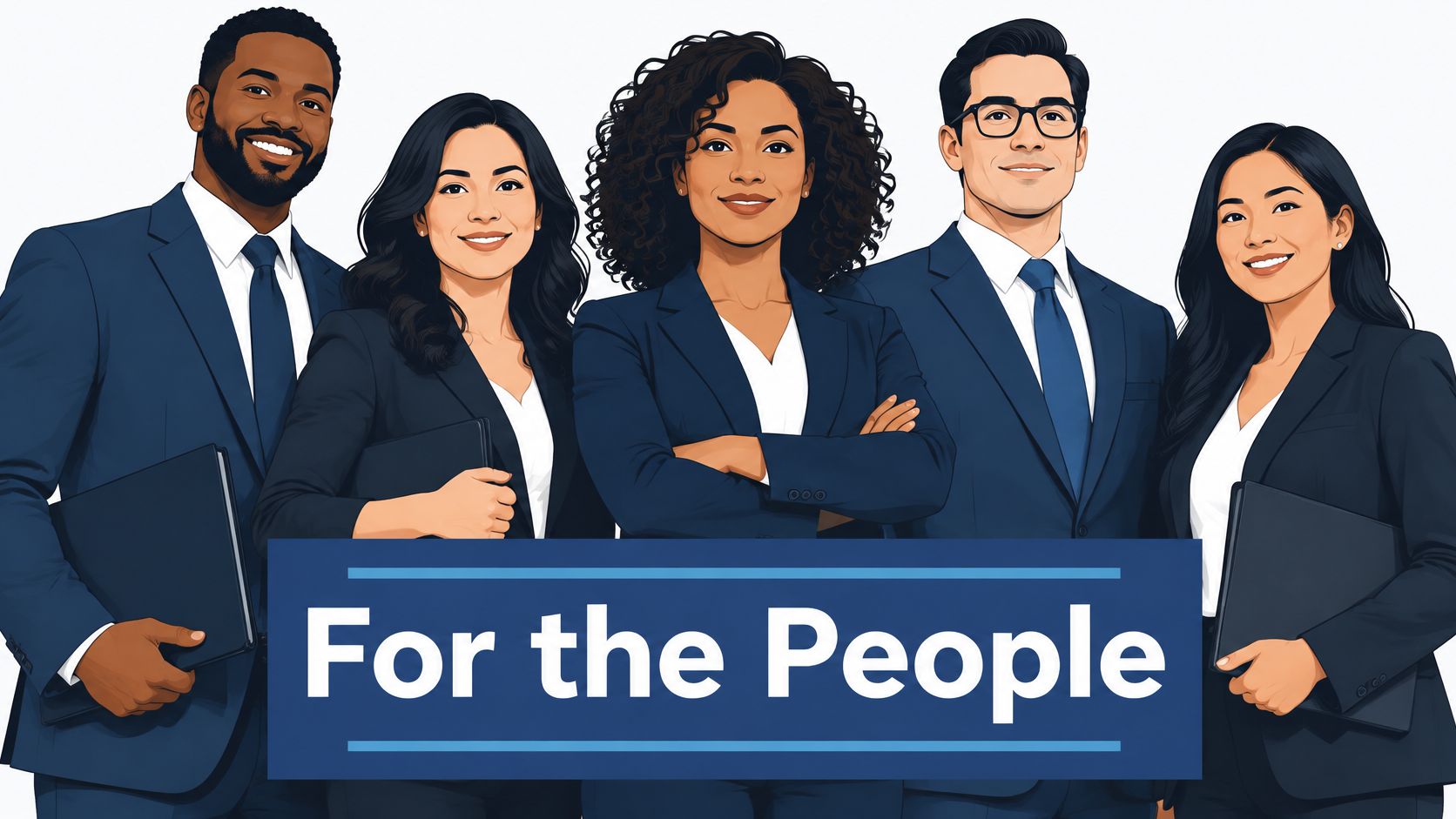
The mechanism is consistent brand association. Morgan & Morgan's “For The People” positioning gives television, outdoor, radio, and digital creative a shared verbal identity. The phrase communicates whose side the firm takes without requiring viewers to remember a legal explanation.
A smaller firm shouldn't imitate the implied scale. Replicate the discipline instead: choose a defensible positioning statement and carry it across the commercial, landing page, intake greeting, and follow-up message.
Say a local injury practice wants to emphasize accessibility. Its spot might show an attorney explaining what happens during an initial consultation, followed by a clear invitation to contact the firm. That's more credible than declaring unmatched service while sending callers into an unattended queue.
Replicate the consistency, not the spending
- Choose a durable promise. Emphasize something your team controls, such as explaining the process clearly, rather than promising a result.
- Keep the identity stable. Use consistent wording, visual treatment, and pronunciation across placements.
- Connect branding to action. Tell viewers how to request a consultation instead of assuming recognition will produce a call.
The trade-off is patience. Brand advertising isn't the same as an immediate-response campaign, and changing slogans whenever inquiries fluctuate prevents a fair test.
Before publishing, have the responsible attorney review express and implied claims, including suggestions about staffing, geographic coverage, and availability. If you advertise personal attention, define how clients reach their legal team in practice. A memorable promise becomes a liability when intake contradicts it.
2. "Better Call Saul" Fictional Lawyer Commercials
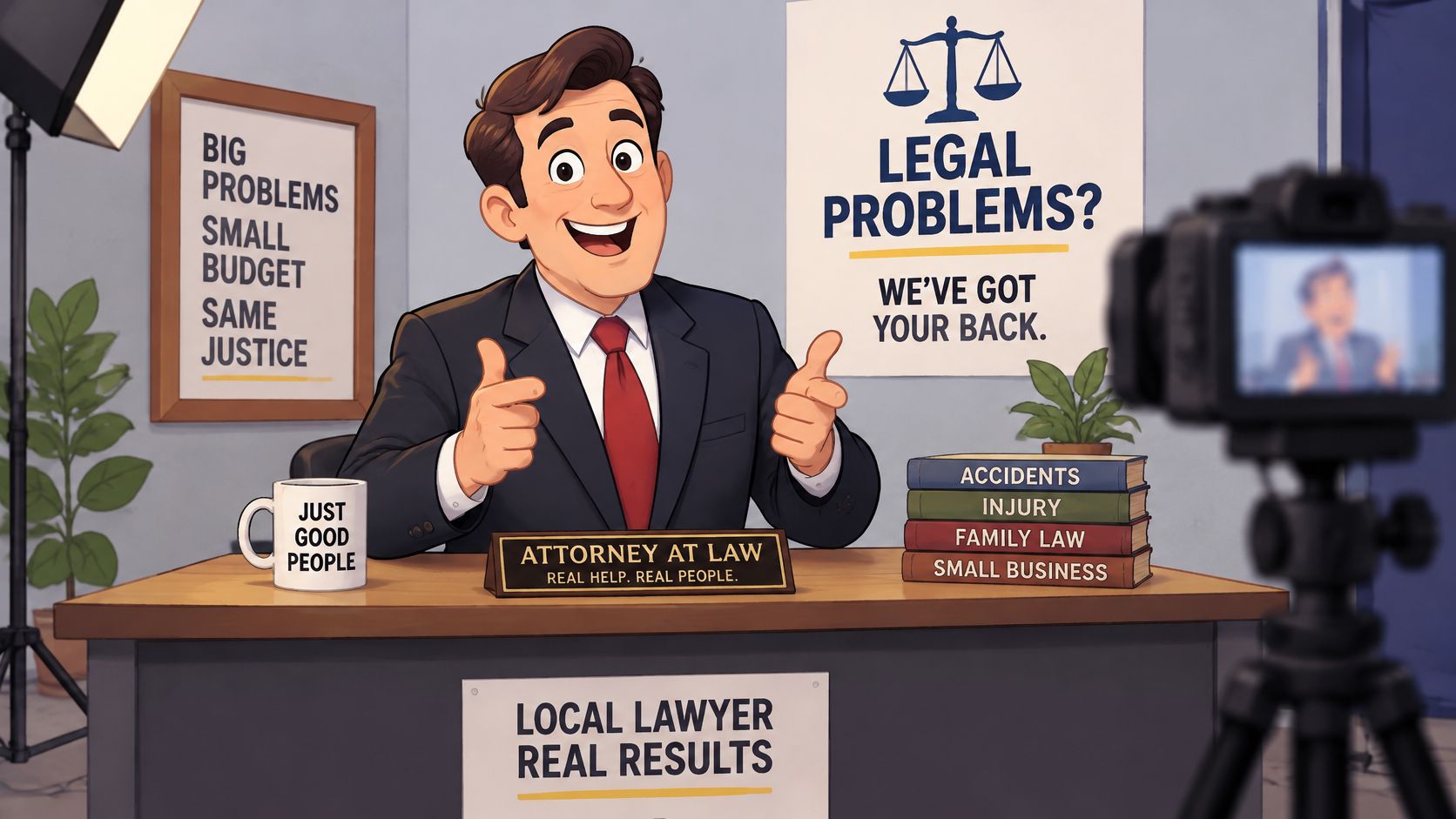
Saul Goodman's fictional advertising offers a useful warning: being memorable doesn't automatically make an attorney trustworthy. The exaggerated performances and “Better Call Saul” refrain combine personality with an unmistakable instruction.
The transferable lesson is verbal simplicity. A viewer should be able to repeat the firm's name and understand the next step without decoding a joke. The part to leave behind is the suggestion that theatrical confidence can substitute for professional judgment.
For example, a solo attorney could open with a familiar client concern: whether contacting a lawyer means committing to a lawsuit. The attorney can explain the consultation process in plain language, then deliver a short closing line tied to the firm's name.
Borrow the clarity of the instruction, not the ethics of the fictional character.
Use personality without trivializing injury
A restrained moment of humor can distinguish an attorney from interchangeable courtroom imagery. But jokes about a client's pain, financial distress, or medical treatment can undermine the reassurance the commercial needs to provide.
Write the script as a conversation with someone who is worried, not as an audition for a television character. Read it aloud and remove legal jargon, inflated adjectives, and anything staff would feel uncomfortable repeating during intake.
Compliance review should include the performance, not just the transcript. Costumes, editing, props, and dramatized confrontations can create misleading impressions even when the spoken words appear cautious. Identify actors or dramatizations where applicable, and don't let entertainment imply guaranteed victories or influence over insurers or courts.
3. Mass Tort and Mesothelioma Lawyer TV Advertising
A diagnosis-led commercial works differently from a general injury ad. The viewer recognizes a potentially relevant condition or exposure, then considers whether contacting a firm could clarify available legal options.
A mesothelioma or product-liability spot should distinguish an invitation to investigate from a statement that the viewer qualifies. Medical diagnosis, exposure history, product identification, jurisdiction, and other case-specific facts still need review. Avoid presenting compensation as automatic.
Say a firm advertises evaluations involving a particular medical product. Its intake team needs a structured way to capture product information, treatment providers, relevant documents, and permission to obtain records. A polished commercial won't compensate for staff who can't distinguish a promising inquiry from an incomplete file.
Build the screening path before buying airtime
- Define the screening questions. Have counsel approve questions that identify potentially relevant facts without encouraging callers to guess.
- Separate uncertainty from disqualification. A missing record should trigger a document request, not an invented answer.
- Assign ownership. Give each inquiry a responsible staff member and a visible next action.
The practical guidance in TV advertising for lawyers belongs alongside that operational planning, not after production.
Process design matters here. An academic study of law-firm process optimization identifies Lean Six Sigma as a framework for examining legal workflow efficiency, communication, productivity, and costs.
Apply that thinking to the route from inquiry to attorney review. Track missing documents, rework, handoffs, and readiness for a legal decision. Lead volume alone isn't success if the firm can't establish which claims the evidence supports.
4. Toll-Free Vanity Number Commercials
A vanity number reduces the effort required to remember the response channel. The commercial pairs a recognizable phrase with a spoken and visible instruction, making the call itself the central action.
This suits a straightforward consultation offer. A regional injury firm might show an attorney explaining what information callers should have available, then close with the same number in speech and on screen. Don't crowd that closing frame with competing web addresses, social handles, and unrelated practice areas.
The operational risk is immediate: every unanswered or mishandled call wastes an opportunity the firm paid to create. Before launch, call the advertised number yourself and test the greeting, routing, voicemail, and escalation path.
Balance recognition against attribution
A single public-facing vanity number supports consistency. Channel-specific tracking numbers can improve attribution, but they can also fragment the identity you're paying viewers to remember.
- Protect the memorable asset. Keep the principal advertised number stable when recall is the campaign's purpose.
- Capture attribution elsewhere. Combine call tracking with landing-page information and a simple intake question about how the caller found you.
- Control follow-up. Send document requests through an approved secure process rather than asking for sensitive records in an ordinary text thread.
Review law firm intake services as part of campaign preparation, including staff training and responsibility for missed calls.
Don't advertise availability you can't provide. A call-answering service, intake specialist, and attorney consultation are different experiences. Make the wording accurate, and train nonlawyer staff to gather facts without offering legal advice or suggesting that representation has already begun.
5. Client Testimonial and Case-Story Commercials
What does working with the firm look like from a client's point of view? A testimonial can answer that more concretely than a general promise. Focus on experiences the client can describe firsthand, such as getting updates or help organizing the process.
A case-story commercial might follow a client as they collect treatment records and receive updates. Keep the account within the speaker's experience. A positive comment about communication does not support a claim about case results.
The video below shows a client-style testimonial. Watch for how the speaker describes the experience, and whether the edit stays within what the speaker can personally support.
Protect authenticity and confidentiality
Get informed written permission for the material and its intended uses. Check the script, captions, background documents, and final edit for confidential information, settlement restrictions, and claims that need context.
If an actor portrays a client, disclose the dramatization rather than presenting it as a real client's spontaneous account. Disclose compensation, prior-result limitations, and other information where applicable under governing rules.
Production rule: Give clients prompts about their experience, not a favorable story they're expected to perform.
A phone-recorded interview can feel more approachable than a polished studio production. Firms exploring how to make UGC-style ads in Nim should preserve that accessible style without manufacturing authenticity.
The trade-off is control. Clients may speak unevenly or mention details the firm cannot publish. Edit for clarity without changing meaning, and check factual statements against the case file. A disclaimer cannot make a misleading testimonial accurate, and an emotionally compelling story should not imply that another client will get the same result.
6. Bilingual and Spanish-Language Injury Lawyer Commercials
A Spanish-language commercial is not an English spot with replacement audio. Its promise includes language access, and that promise must endure the first call, consultation scheduling, and document-request process.
Consider a firm serving callers who prefer Spanish but receive medical records in English. A credible campaign explains the consultation in accessible language and routes inquiries to qualified bilingual staff. The firm also needs a clear process for interpretation, translated communications, and attorney review.
Don't equate Spanish preference with a particular nationality, immigration status, or level of legal knowledge. Focus on the viewer's practical concern: understanding what happens next.
Match the service to the language promise
- Review legal terminology. Use qualified bilingual professionals to check meaning, tone, and jurisdiction-specific concepts.
- Test the entire route. Review the commercial, captions, landing page, phone greeting, forms, and follow-up messages together.
- Preserve source meaning. Keep original records available and identify translations so attorneys can verify consequential details.
Automated translation can help produce a draft, but it shouldn't be the final authority for medical terminology, releases, or legal explanations. If the firm relies on interpreters rather than bilingual attorneys, describe the service accurately.
The trade-off is operational commitment. A carefully targeted advertisement can generate frustration if a caller reaches staff who can't communicate with them or explain when assistance will be available.
For a smaller firm, start with a service path you can reliably staff rather than advertising broad language access across every channel. Measure completed consultations and appropriate signed matters, not just inquiries attributed to the translated spot.
7. Short-Form Digital Video Ads (YouTube and Social Pre-Roll)
Start with the client's concern, not a slow logo animation. A short-form law firm commercial needs to establish relevance before the viewer decides to leave.
For an auto-injury practice, an attorney might explain what to bring to a consultation, then invite the viewer to a dedicated evaluation page. Match the landing page to the exact offer. Sending that viewer to a homepage filled with unrelated practice areas adds unnecessary work.
Location and contextual relevance can guide placement, but don't build creative that implies knowledge of a particular viewer's diagnosis or private circumstances. Review platform policies and applicable professional rules before using sensitive audience categories or remarketing.
Test a complete path, not an isolated video
Keep the offer and landing page stable while comparing materially different openings. Evaluate qualified inquiries, attended consultations, signed matters, and the reasons prospects don't proceed.
The broader approach to personal injury marketing for lawyers should connect those outcomes to intake capacity. A cheaper form submission isn't necessarily a better prospect.
Production tools can help resize footage, create captions, and prepare variations. If you compare AI video editors for ads, prioritize revision control and accurate exports over flashy effects.
AI-assisted work still needs governance. The D.C. Bar's discussion of law-firm AI adoption identifies confidentiality, privilege, security, and distrust of results as concerns.
Keep client files out of unapproved creative tools. Use approved footage and hypothetical scenarios, check captions manually, and have an attorney approve the final version. Fast production shouldn't mean an undocumented review process.
8. Billboard and Roadside Advertising for Accident Victims
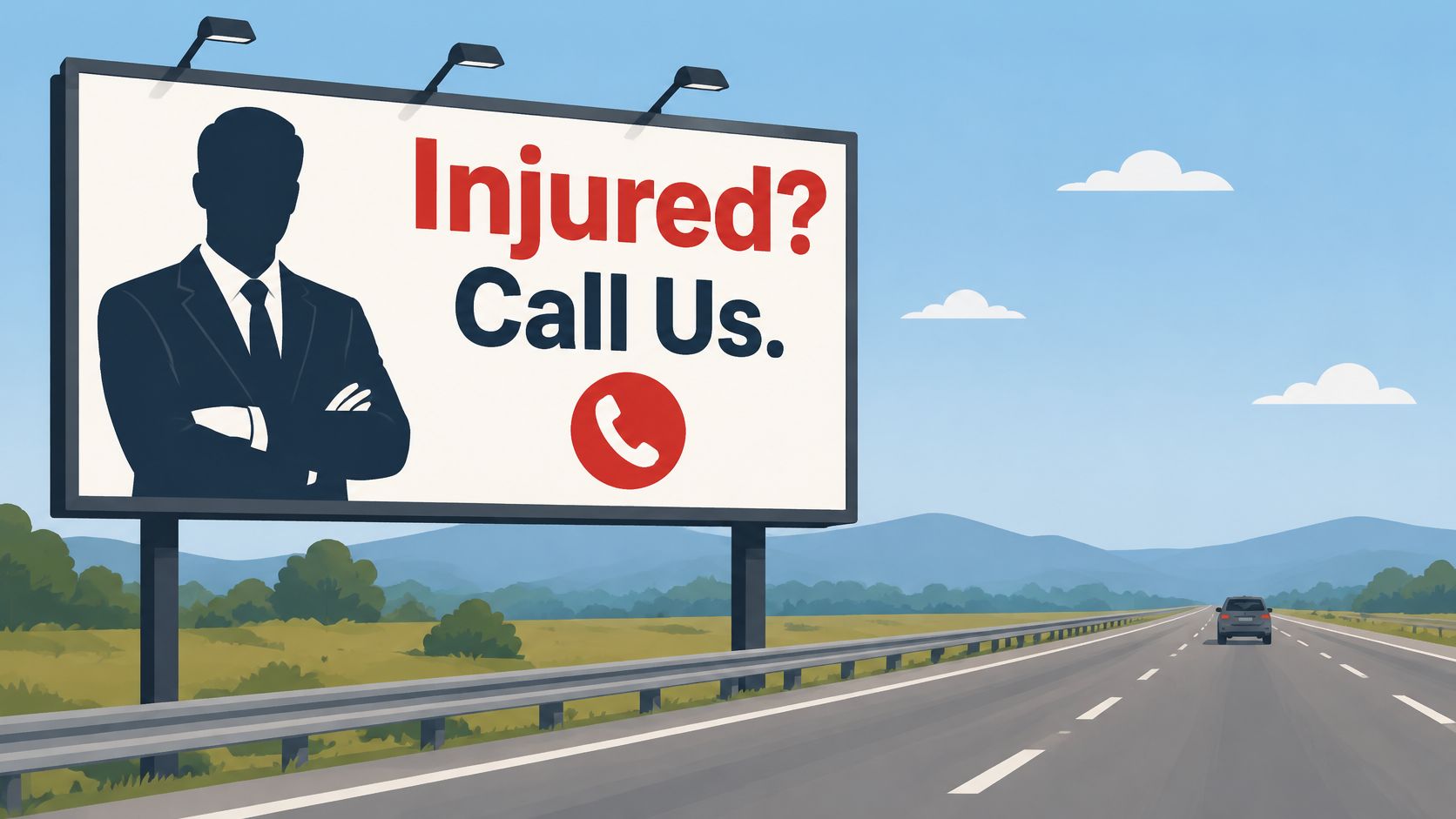
Although a billboard isn't a video commercial, it can reinforce the same name, visual identity, and consultation offer. Its mechanism is recognition under limited attention, not detailed persuasion.
A commuter might encounter the firm's roadside creative and later recognize its video or search listing. Use the same core message across those placements rather than treating outdoor advertising as a separate personality.
For example, a local firm could pair a recognizable attorney portrait with its name, injury focus, and a simple contact route. A list of practice areas, award badges, dense disclaimers, and multiple calls to action will compete for attention.
If the message only works when someone studies the artwork, simplify it before buying the placement.
Judge placement and message together
Ask the outdoor vendor for realistic views of the placement and assess readability in context. Consider obstructions, surrounding signage, viewing direction, and whether the creative remains understandable at a glance.
Don't turn proximity into an implied relationship. A hospital-adjacent placement should never suggest endorsement or affiliation that doesn't exist. Review required disclosures early enough that the design can accommodate them legibly.
Tracking also requires restraint. A memorable contact route and intake attribution question may be more useful than an elaborate address nobody remembers. Coordinate outdoor messaging with digital campaigns, but don't assume passing a billboard justifies sensitive health-related targeting.
The trade-off is attribution. Some prospects won't remember which exposure prompted their search. Compare inquiry patterns and lead quality without pretending every signed client can be assigned neatly to a particular sign.
Law Firm Commercial Formats at a Glance
| Format | Primary Channel | Core Messaging Mechanism | Best For | Replication Difficulty |
|---|---|---|---|---|
| Morgan & Morgan “For The People” campaign | TV, radio, billboards, digital | Repeats a recognizable tagline and emphasizes scale, accessibility, and a direct call to action | Building broad brand recognition and generating ongoing leads | High; requires substantial media spend |
| “Better Call Saul” fictional lawyer commercials | Local TV | Uses humorous, exaggerated legal-ad tropes and a memorable tagline | Studying ad conventions and audience perceptions | Not directly replicable; fictional satire |
| Mass tort and mesothelioma lawyer TV advertising | National and regional TV | Explains eligibility and compensation options with a toll-free number and free evaluation | Generating and screening high volumes of complex claims | High; requires airtime budget and intake capacity |
| Toll-free vanity number commercials | TV and other direct-response channels | Pairs a short service message with an easy-to-remember phone number | Driving trackable calls for urgent legal services | Moderate; requires a memorable number and call-handling |
| Client testimonial and case-story commercials | Video, social, and firm websites | Uses client narratives to build trust through personal experiences | Showing the firm's approach and connecting emotionally with prospects | Moderate to high; requires documented consent and compliance review |
| Bilingual and Spanish-language injury lawyer commercials | Spanish-language TV, radio, and digital | Combines native-language messaging with cultural relevance and language access | Reaching Spanish-speaking injury victims | High; requires qualified translation and bilingual intake |
| Short-form digital video ads | YouTube and social platforms | Delivers a quick message with targeted placement and a direct response prompt | Reaching targeted audiences and testing creative efficiently | Moderate; requires platform management and ongoing optimization |
| Billboard and roadside advertising for accident victims | Billboards and roadside placements | Uses bold, simple visuals and a phone number for repeated local exposure | Building visibility in high-traffic areas | Moderate to high; depends on placement costs and local rules |
Turning Ad-Inspired Insight Into Signed Cases
Every strong law firm commercial makes a promise the firm can operationally keep. A slogan may earn recognition, and a testimonial may reduce hesitation, but intake staff and attorneys still have to turn interest into an informed decision about representation.
Before launch, walk through the experience as a prospective client. Call the advertised number, submit the form, inspect the confirmation message, and follow the route to consultation scheduling. Identify who owns unanswered inquiries, missing records, conflicts review, and follow-up.
Measure what happens after the response
Your campaign report should connect advertising to legal work the firm can responsibly accept and complete. Useful measures include qualified inquiries, completed consultations, signed matters, missing-document delays, attorney correction rates, and demand readiness.
- Compare like with like. Separate matters by relevant characteristics so a change in case mix doesn't masquerade as better advertising.
- Find the bottleneck. If inquiries increase but consultations stall, address scheduling before buying more exposure.
- Protect quality. Faster summaries and drafts only help when attorneys can verify the underlying facts.
The American Bar Association's discussion of barriers to law-firm AI adoption supports evaluating technology through recovered capacity and case quality rather than adoption alone. Apply that same discipline to marketing: determine whether added demand produces useful work or a larger queue.
Our AI-powered litigation support platform at Ares includes medical-record summarization and demand-letter generation for document-heavy case preparation. Goody Law Group saves roughly 40 hours a month on litigation drafting; Philbrook Law saved 10+ hours per case and opened another office without adding headcount; a solo attorney at Moreno Legal reclaimed 10 hours per case. These are individual firm experiences, not promises about what another practice will achieve.
Attorney review remains essential. Customers must verify outputs before using them in proceedings or client communications, and they remain responsible for legal decisions.
Choose a format that addresses your prospects' actual hesitation. Build a clear consultation offer, verify the complete creative against applicable advertising rules, and test it with intake staff ready to respond. Keep the message only if the firm can deliver the experience it advertises and the resulting matters justify the work.
Ares helps personal injury teams turn medical records into organized summaries and demand drafts for attorney review. Connect your next advertising campaign to a repeatable case-preparation process by visiting Ares to explore support for the work that follows a signed client.