

Most personal injury cases never see a jury, and that single fact changes how value gets created. If about 95% settle before trial and only 3% to 5% reach trial in the United States, then the primary battle is not courtroom theater, it's the quality of the file you build in the first pass (Worldmetrics personal injury law statistics). That's why personal injury case evaluation is not an admin step. It's the point where liability, medical proof, damages, and negotiation strength either come together or fall apart.
A weak intake can still produce a demand letter. It just won't produce a persuasive one. The cases that settle well usually have the same thing in common, a defensible chronology, clean provider records, and a damages story that matches the medicine instead of relying on optimism.
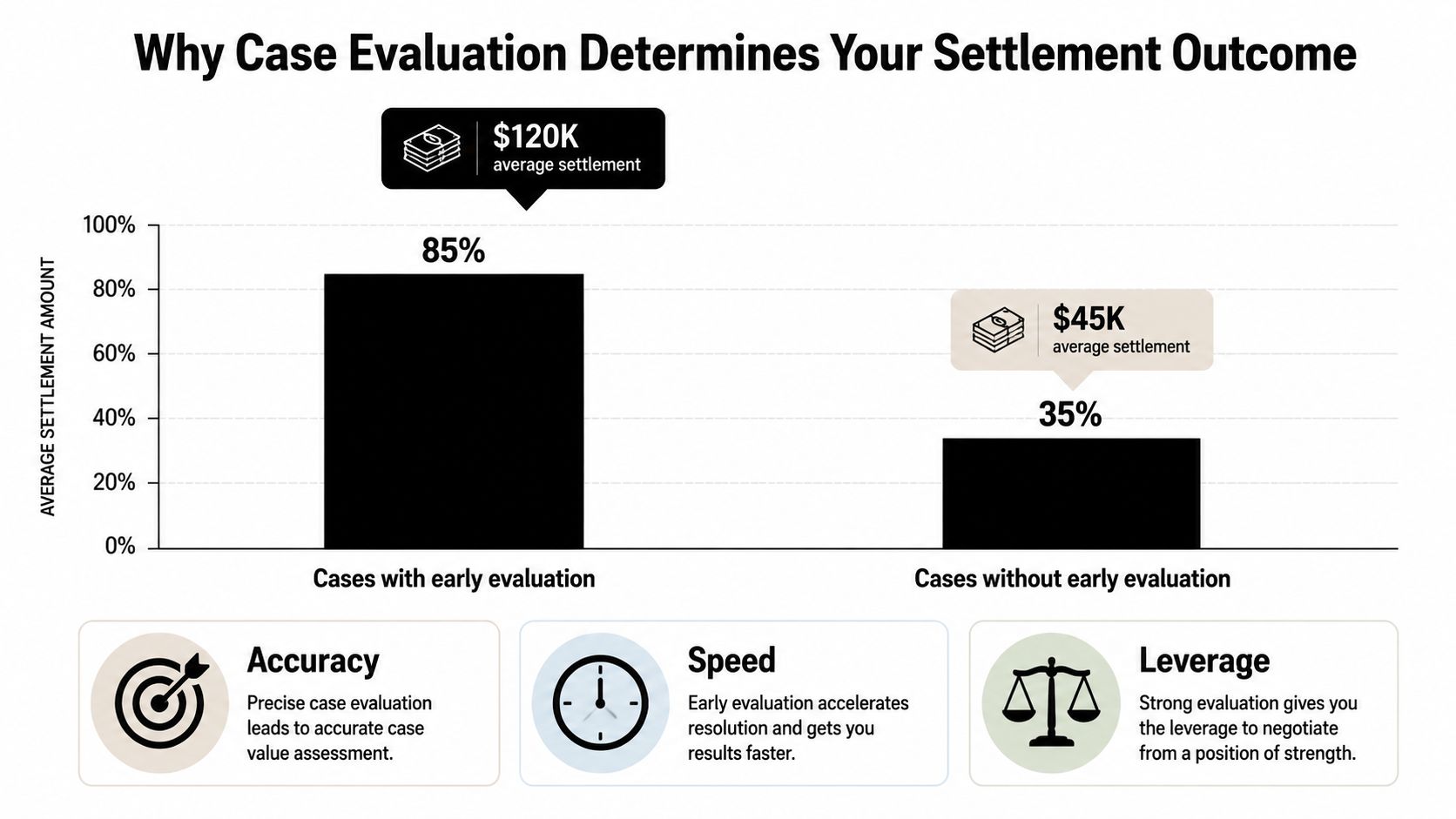
Why Case Evaluation Determines Your Settlement Outcome
Broad claims data show a heavy settlement bias in personal injury, with most matters resolving before trial and only a small share going to verdict. That means the file you build early usually becomes the version the insurer believes, the mediator weighs, and the defense attacks.
The first review sets the ceiling
A thorough personal injury case evaluation does three things at once. It tests whether liability is clear, whether the medical proof supports causation, and whether the damages story can survive scrutiny. If any one of those pieces is thin, the whole claim usually gets priced down.
That matters most in high-volume practices, where a lawyer cannot afford to discover a bad record set after drafting has already consumed hours. A case that looks like a straightforward low-back strain may involve prior complaints, treatment gaps, or a late diagnosis that changes value completely. A case with a tight timeline and consistent treatment can justify a stronger demand posture even when the injury category sounds ordinary.
Practical rule: the earlier you can tie symptoms to documented care, the less room the adjuster has to argue that the claim is speculative.
Settlement value follows proof, not labels
The valuation problem is usually not the headline injury type. It is whether the records tell a coherent story. Reported outcomes in the market range from minor-injury brackets to catastrophic claims that can reach $1 million+ depending on proof quality and severity (Clio personal injury law statistics).
I have seen plenty of files with real harm that stalled because the chronology was scrambled. I have also seen modest-looking cases outperform expectations because the medical sequence was airtight. Poor chronology creates hidden valuation leaks, especially when symptoms appear after the first visit, treatment gaps go unexplained, or the record set never clearly connects the mechanism of injury to the diagnosis. AI-assisted record review helps close those gaps by lining up visits, complaints, imaging, referrals, and discharge notes faster than a manual pass, which gives the case team a cleaner damages story and a better number to defend.
The Four Pillars of a Defensible Case Valuation
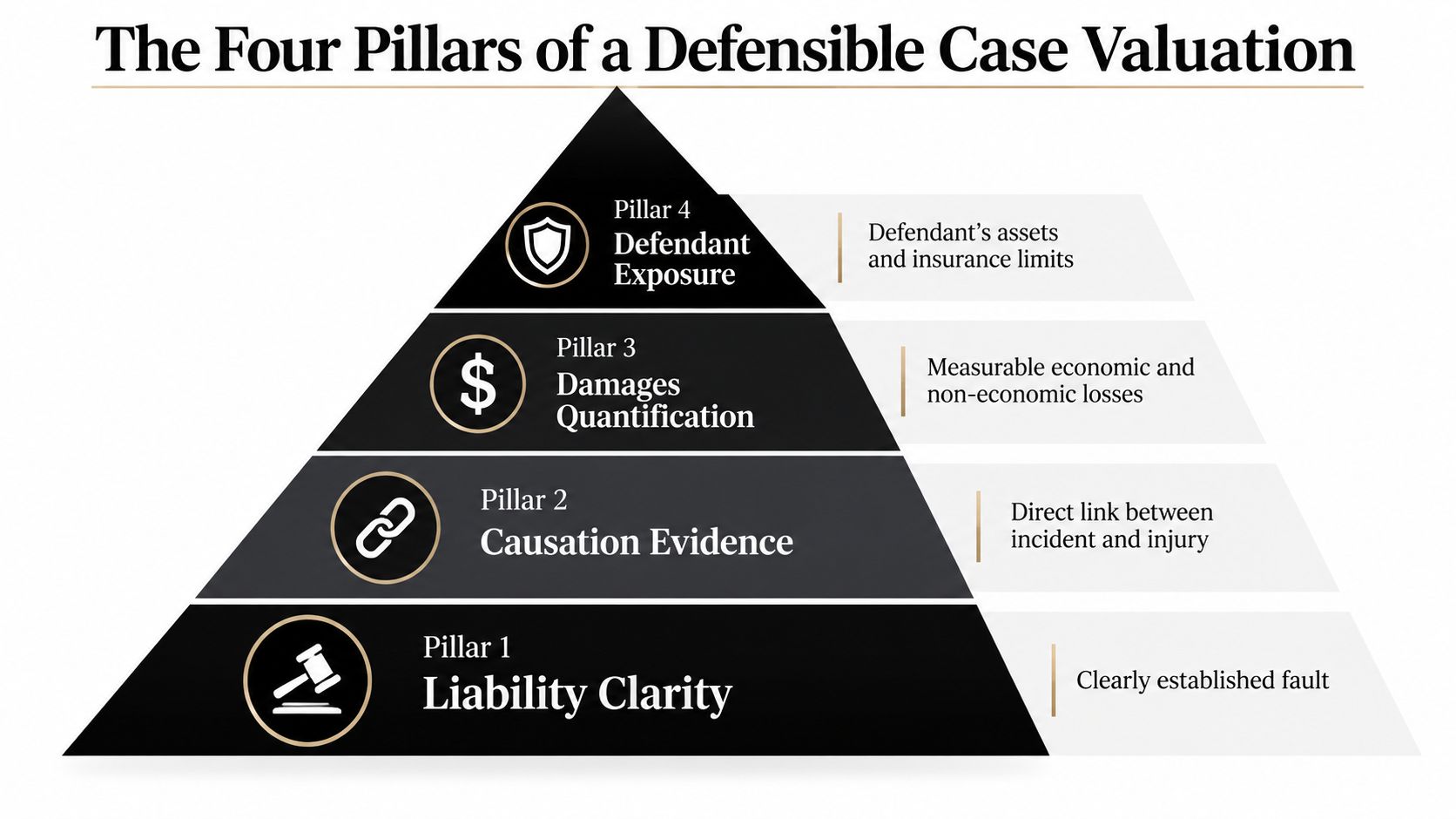
A defensible valuation usually rests on four pillars, and each one can fail for a different reason. Insurance adjusters look for the weakest link first, then use that weakness to discount the whole file. If one pillar is thin, the others often lose force too.
Liability clarity and causation evidence
Liability clarity requires facts, witness accounts, and scene evidence to line up without obvious contradictions. A police report helps, but standing alone it rarely carries the full argument. If the liability story is muddy, strong medical records may still get treated as incomplete support rather than proof of value.
Causation evidence is where many files start to lose value. The issue is whether the injury claim is medically tied to the incident, not whether the client felt pain at some point afterward. A clean emergency room note, consistent follow-up, and a specialist's findings carry far more weight than a vague pain complaint with no supporting timeline.
Damages quantification and defendant exposure
Damages quantification should be concrete. It should show treatment sequence, diagnostic findings, functional limits, wage loss where supported, and pain that matches the record. A claim with scattered notes and no coherent treatment arc tends to get priced conservatively, even when the injury is real.
Defendant exposure matters too, because value is shaped by insurance limits and practical collectibility. A strong case against an underinsured defendant still needs a strategy that reflects recovery reality. If collectibility is limited, demand timing and litigation posture need to account for that from the start.
Medical chronology and documentation gaps
A valuation file is only as strong as the chronology behind it. I use a medical chronology template for personal injury cases to track the injury from first complaint through imaging, referrals, gaps in care, and final status. That review exposes the quiet problems that lower settlement value, especially when the records do not show when symptoms started, when they changed, or why treatment paused.
Delayed-onset injuries create the same problem in a different form. A client may leave the scene thinking the pain is minor, then return days later with stiffness, headache, or radiating symptoms that were never tied cleanly back to the crash. When that progression is not documented in order, the defense will argue the injury came from somewhere else or that the client's complaints grew after the fact. AI-assisted record review closes those gaps faster by sorting visits, complaints, imaging, and referral patterns into a chronology that makes the file easier to defend.
Strong valuation does not come from stacking every possible theory. It comes from showing the defense a record that explains liability, causation, damages, and collectibility without forcing them to fill in the missing pieces themselves.
Building a Time-Anchored Medical Chronology
A static medical summary tells you what was billed. A time-anchored chronology tells you how the injury unfolded. That distinction matters because causation and damages are often proven by change over time, not by a single note in isolation (JurisPro 5-step model).
A rear-end collision that looked simple until the records were sorted
A client comes in after a rear-end collision and says the neck felt “stiff” the next day. The ER note is short, the primary care follow-up is delayed, and the specialist sees the client later. At intake, that file can look thin. Once the records are organized by date, the story changes. The incident, initial evaluation, follow-up care, diagnostic review, and future prognosis start to form a real valuation path.
That's why provider-level metadata matters for every treating source. The record review should extract provider name, credentials, specialty, facility, full address, phone or fax, medical record number, first and most recent visit dates, treatment status, and treatment type (Tavrn client intake process). Those fields let the team reconstruct continuity, find gaps, and confirm whether the care pattern supports the claimed severity.
What the chronology has to show
A useful chronology should separate five phases, before injury, immediately after, during any gap to evaluation, at the point of formal evaluation, and in the future. That structure makes it easier to connect symptom progression to causation and damages instead of relying on a snapshot.
This medical chronology template is useful when you need a repeatable structure for building that timeline across multiple providers. The goal is simple, turn disconnected notes into a sequence the adjuster can follow without guessing.
If the timeline makes sense, the valuation gets easier. If the timeline looks assembled after the fact, the defense will push hard on causation.
The Hidden Valuation Leak in Delayed-Onset Injuries
Delayed-onset injuries are where settlement value slips away. A client may leave the scene feeling normal, then neck stiffness, back pain, headaches, or cognitive issues surface later. Too many lawyers still read that delay as a credibility flaw instead of a medical pattern that needs a tighter record.
The core question is whether the chronology can explain why symptoms surfaced later and how the client reacted once they did. Intake checklists often treat treatment gaps as weakness, yet they rarely separate a harmful gap from a normal delay, a referral lag, or a practical barrier to care.
Why sparse first notes are not the end of the story
A short first visit note can reflect a client who is focused on the most obvious pain, not a minor injury. That is where valuation leaks start. If the opening note looks thin, the claim can get discounted before anyone pulls the later records into a coherent sequence.
Older valuation guidance still matters here. Permanency, demonstrable injury, and medical testimony usually drive value, so subtle or evolving symptoms can be overlooked when no one reconstructs the onset sequence carefully. The file needs a symptom narrative, not just a stack of records.
What to do when the timeline is messy
Document onset in stages. Record the day of the incident, the first symptom, the first medical complaint, the first treatment gap, and the first objective confirmation. Then explain the delay in plain language and anchor it to the record.
For clients and intake teams who want a patient-facing explanation of why pain can show up later, LifeWorks on post-accident pain delays is a useful external reference. For case valuation, the chronology still carries more weight, because the defense will care far more about dates than general reassurance.
A structured record review also helps close the gaps that delayed-onset cases create. AI-assisted medical record review can pull the relevant dates, complaints, providers, and treatment turns into one usable chronology, which saves time when the file arrives in pieces and the early notes are sparse.
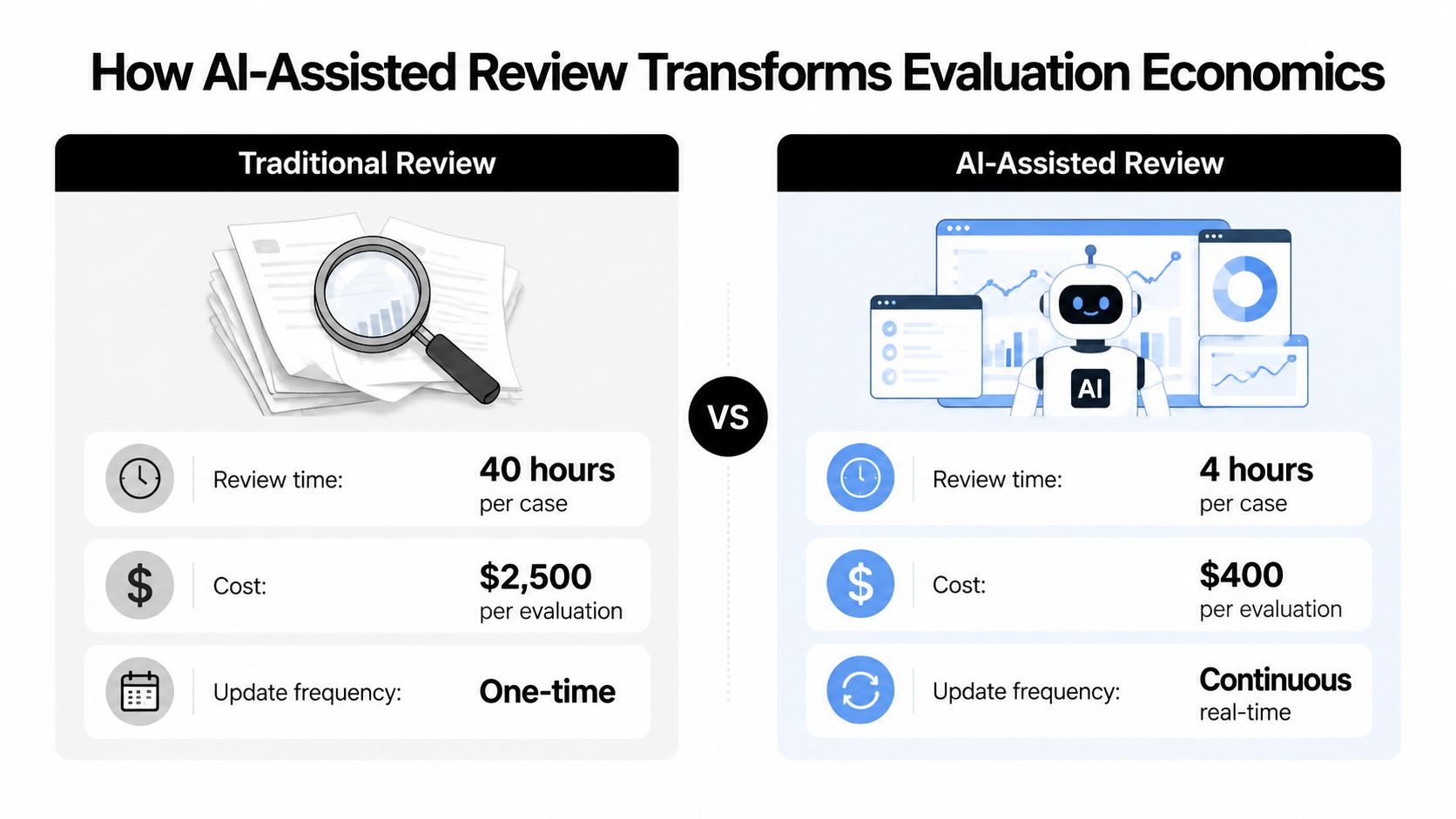
How AI-Assisted Review Transforms Evaluation Economics
Manual review stays expensive because the work never really ends. A file gets reviewed at intake, then again after treatment, then again before demand, then again when the defense pushes back. That repeated pass-through turns record review into a bottleneck in busy practices, and the 2025 industry discussion of case evaluation treats it as an ongoing process rather than a one-time event (Crash VA e-book).
Manual review versus structured AI review
Traditional review depends on someone reading every page, pulling dates by hand, and rewriting the chronology each time a new batch arrives. That works on a handful of files. It starts to break when the caseload grows and medical records arrive from multiple providers in different formats.
AI-assisted workflows change the economics by extracting dates, diagnoses, treatments, providers, and billing information into a structured summary. Lawyer judgment still matters for treatment gaps, delayed symptoms, and causation disputes. The repetitive sorting work moves off the attorney and paralegal desk, which frees time for the decisions that affect value. Ares is one platform used for medical record review and demand-support workflows, including chronology building and cited case-file summaries, and firms compare tools like this when they need more consistent triage. For a closer look at the workflow, see AI medical record review.
Where technology helps and where it doesn't
AI is useful for pulling structure out of volume. It is less useful for deciding whether a treatment gap is explainable, whether a delayed symptom is believable, or whether a specialist opinion strengthens causation. Those calls still belong to an attorney who knows the defense playbook and understands how adjusters test weak files.
The advantage is speed with control. AI can surface the key points faster so the lawyer spends time on value, not sorting. Firms also comparing intake and routing workflows can look at AI voice agents for insurance agencies to see how adjacent automation is changing response handling in insurance-facing businesses. The broader point stays the same, structured review performs better when the caseload gets noisy.
Your Case Evaluation Checklist and Workflow
A solid workflow keeps the file from drifting between intake, review, and demand. I like to think in three phases, because it forces the team to ask different questions at different points. The first pass is about identifying value. The second is about proving it. The third is about packaging it so the insurer has less room to argue.
Case Evaluation Phase Checklist
| Phase | Key Actions | Red Flags |
|---|---|---|
| Initial intake triage | Confirm liability theory, capture accident basics, identify every provider, and note symptom onset | Vague mechanism of injury, missing provider names, no clear first complaint |
| Deep record review | Build chronology, extract treatment dates, check gaps, and compare subjective complaints with objective findings | Late treatment start without explanation, inconsistent complaints, scattered facilities |
| Demand preparation | Tie chronology to damages, highlight permanency or future care where supported, and prepare gap explanations | Unsupported wage loss, overstated injury labels, summary that doesn't match the record |
What the team should verify before demand
- Medical sequence: Make sure the records show who treated the client, in what order, and for what complaint.
- Gap explanation: If care stopped or started late, document why before the defense does.
- Damage support: Don't ask for money the file can't defend with actual notes, bills, or objective findings.
- Expert need: Bring in medical support when causation, permanency, or prognosis is likely to be attacked.
The fastest way to lose advantage is to send a demand before the chronology is ready. The fastest way to build advantage is to know, early, whether the file belongs in settlement posture or toward litigation.
Scaling Evaluation Quality Across Your Entire Caseload
Strong evaluation is a firm-wide discipline, not a hero move by one attorney. If every lawyer defines value differently, the office ends up with inconsistent demands, uneven reserves, and avoidable rework. Quality control creates repeatability, and repeatability is what lets a firm grow without letting the file review standard slip.
Make the process survive staff changes
New paralegals should not learn case evaluation by shadowing whatever happens to be in someone else's inbox. They need a standard chronology format, a provider metadata checklist, and a rule for when gaps must be explained before a case advances. That makes the work easier to hand off and harder to botch.
The same logic applies to internal review. If one attorney values a record set based on instinct while another wants a structured chronology every time, the firm will keep relearning the same lessons. A defined quality assurance process helps lock the standard in place, even when caseload pressure goes up. Ares' quality assurance process guidance fits that operational need because evaluation quality only scales when review itself is standardized.
Value compounds across the full caseload
Speed matters because delays cost power. Accuracy matters because bad valuations waste negotiation effort. When both improve together, the firm can screen more files, demand with more confidence, and spend less time cleaning up preventable chronology problems.
That's the core business case for treating personal injury case evaluation as a core competency. The firms that do it well don't just work faster. They present cleaner claims, argue value more convincingly, and protect settlement numbers before the defense has a chance to define them.
If you want a faster way to turn medical records into a defensible chronology, demand support, and case-ready summaries, visit Ares. It's built for personal injury teams that need to spot gaps sooner, evaluate value more consistently, and spend less time on manual record review.