A personal injury paralegal is the operational engine of a modern law firm. They are the ones who transform the chaos of client stories, medical records, and legal deadlines into a powerful, coherent case narrative. Far from being just an assistant, a PI paralegal is a central figure who manages the immense flow of information that is absolutely critical to winning for clients.
The Modern Hub of a Personal Injury Law Firm
Step into any busy personal injury law firm, and you'll quickly realize the paralegal is the hub of the wheel. They are the central point of contact for nearly every moving part of a case.
Think of them as the air traffic controllers for legal claims. While the attorney is the pilot, setting the overall strategy and destination, the paralegal is on the ground managing the constant flow of incoming data. Client calls, police reports, medical bills, insurance letters—they track it all, ensuring nothing gets lost and everything keeps moving forward.
This job is much more than administrative support; it’s strategic case management at its core. A skilled PI paralegal is the firm's information architect, building a rock-solid foundation for every claim. They are the ones who connect the dots between a doctor's scribbled note and the final settlement figure.
Why This Role Is So Critical
The biggest challenge in any personal injury case is information overload. A single car accident claim can easily generate hundreds, sometimes thousands, of pages of documents. The paralegal's job is to master this mountain of information.
- Organizing and Synthesizing Data: They bring order to the chaos, turning stacks of paperwork into a clear, chronological story the attorney can use.
- Maintaining Momentum: By tracking deadlines and managing communications with everyone involved, they keep the case progressing smoothly and prevent costly delays.
- Serving as a Client Liaison: More often than not, the paralegal is the client's main point of contact, offering updates and reassurance during what is almost always a stressful time in their life.
A great personal injury paralegal doesn’t just manage tasks; they manage the case narrative. They understand that a well-organized file directly translates into a more persuasive argument and, ultimately, a better outcome for the client.
This guide is your roadmap to excelling in this demanding but incredibly rewarding field. We’ll break down the core duties, essential skills, and the technology that is shaping the future of this role.
For instance, any modern firm knows that specialized law firm IT support is non-negotiable for managing risk and boosting efficiency in such a data-heavy practice. Having that solid foundation allows paralegals to focus on high-value legal work. You can also explore the specific tools that make this possible in our guide to https://areslegal.ai/blog/personal-injury-case-management-software.
Our journey starts right here, by understanding the paralegal's indispensable place at the very heart of the firm.
Navigating the Personal Injury Case Lifecycle
Think of a personal injury case as a long, often winding road. The client is the passenger, understandably distressed and unsure of the way forward. The attorney is in the driver's seat, setting the overall strategy. And the paralegal? The paralegal is the expert navigator, holding the map, tracking every turn, and making sure the journey stays on course.
From that first emotional phone call to the final check being signed, the paralegal manages the critical path. They are the ones who transform the chaos and confusion following an accident into a structured, compelling story that insurance adjusters and juries can understand.
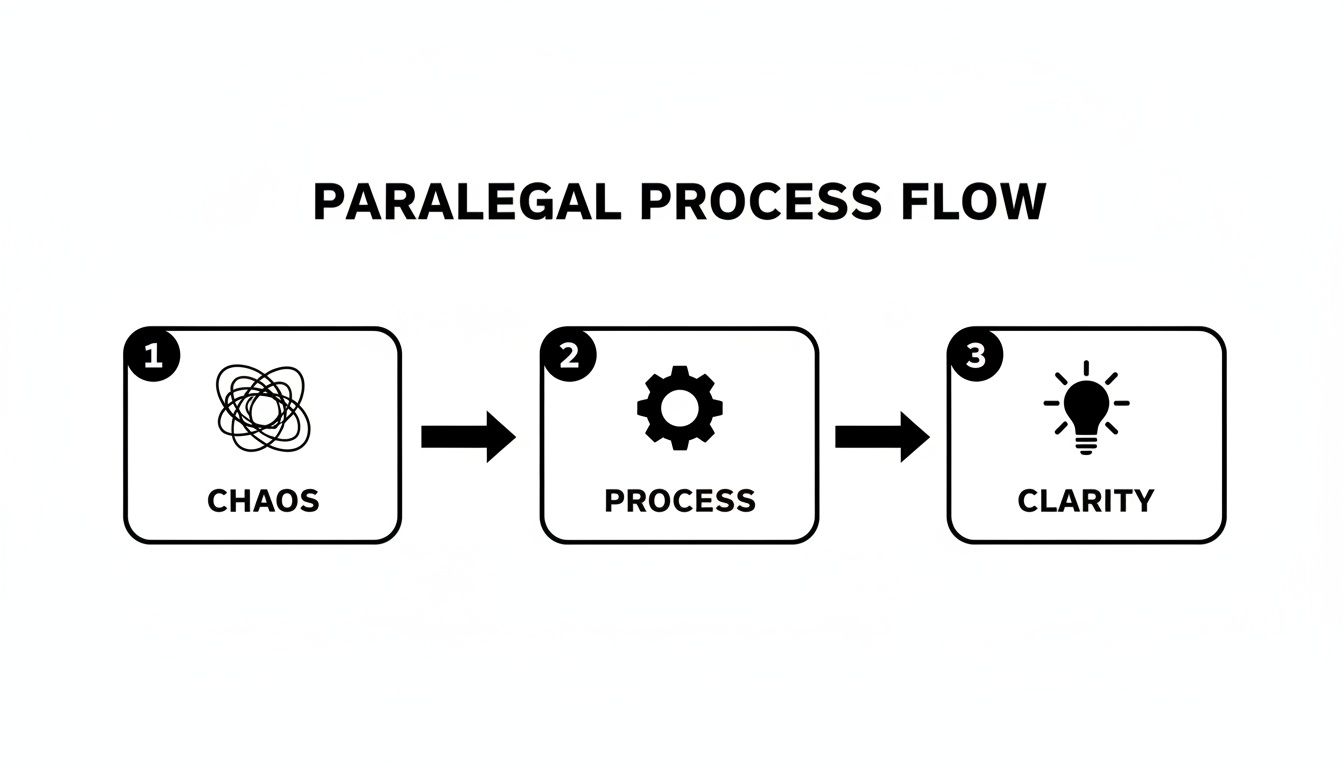
This process isn't just about paperwork; it's about imposing order on a fundamentally chaotic event. A seasoned paralegal's methodical approach brings clarity, which is the foundation of any successful claim.
Let's break down the key responsibilities of a PI paralegal as they move a case from one stage to the next. The following table provides a bird's-eye view of how their tasks evolve throughout the case's journey.
| Key Paralegal Tasks Across the PI Case Lifecycle | | :--- | :--- | :--- | | Case Phase | Paralegal Responsibilities | Key Output or Goal | | 1. Intake & Setup | Conduct initial client interview, open new file, send letters of representation. | Secure the attorney-client relationship and formally notify all parties. | | 2. Investigation | Request police reports, medical records, and bills; gather photos and witness info. | Build a comprehensive evidence file that substantiates the claim. | | 3. Case Development | Organize and summarize medical records, draft medical chronologies, prepare demand package. | Create a persuasive settlement demand based on documented evidence. | | 4. Litigation | Draft pleadings (complaint, summons), manage discovery (interrogatories, depositions), calendar deadlines. | Move the case forward through the court system efficiently and compliantly. | | 5. Settlement & Closing | Prepare settlement statements, verify lien amounts, coordinate fund disbursement. | Ensure accurate financial closure and finalization of the case. |
Each phase requires a unique focus, but they all build upon the work done in the previous stage. The quality of work in the early phases directly impacts the potential for success later on.
Phase 1: Initial Client Intake and Case Setup
It all starts with a phone call. The person on the other end is often scared, in pain, and completely overwhelmed. The personal injury paralegal is typically that first point of contact, acting as a calm, professional voice who can begin to make sense of the situation.
This initial intake is far more than just taking notes. It's an interview where the paralegal skillfully gathers the crucial facts: the date of the incident, how it happened, the nature of the injuries, and what medical care has been received. With empathy and precision, they lay the very first stone of the case's foundation. From there, they'll open the official client file and draft essential first documents, like letters of representation to insurance carriers, to put everyone on notice.
Phase 2: Evidence Gathering and Investigation
Once the case is officially open, the paralegal puts on their investigator hat. The mission is to collect every piece of evidence needed to prove the client's claim, which is a massive undertaking that demands relentless organization.
The paralegal’s checklist is extensive and includes:
- Requesting official documents like the full police accident report, any witness statements, and property damage appraisals.
- Obtaining all medical records and bills from every single provider the client has seen—from the ambulance crew and ER doctors to specialists and physical therapists.
- Documenting the scene by gathering photos of the accident location, the vehicle damage from all angles, and the client's injuries over time.
This phase is all about turning the client's story into an objective, fact-based narrative. Every document, bill, and photo is a piece of the puzzle that, when assembled, creates an undeniable picture of what happened and the impact it had.
Phase 3: Case Development and Demand Preparation
With a mountain of evidence collected, the work shifts to analysis and storytelling. The paralegal now has to synthesize all that raw information into a persuasive argument for why the client deserves compensation. A huge part of this is organizing and summarizing what can be thousands of pages of medical records into a clear, easy-to-follow medical chronology.
This chronology becomes the spine of the demand package—the comprehensive document sent to the insurance company that formally outlines the claim and demands a specific settlement. The paralegal is the architect of this package, making sure every piece of supporting evidence is included and presented in the most compelling way.
The demand package is your first, best shot at resolving a case without a lawsuit. A meticulously prepared package, crafted by a sharp paralegal, speaks volumes and can absolutely be the difference between a lowball offer and a fair settlement.
The need for this kind of efficiency is clear when you look at the numbers. The U.S. personal injury market is projected to reach $61.7 billion by 2025, fueled by nearly 400,000 new claims filed each year. For more insights, you can discover more data on the personal injury market. This high volume makes a paralegal’s ability to develop cases quickly and accurately more valuable than ever.
Weaving a Compelling Case Narrative from Medical Records
In a personal injury case, medical records are the raw material. They arrive in dense, disorganized, and often overwhelming stacks of paper and digital files. A top-tier personal injury paralegal doesn't just manage this information; they transform it into a powerful story that proves a client's suffering and justifies their claim.
This process boils down to two critical, intertwined skills: synthesizing mountains of medical data and then using that synthesis to craft a persuasive demand letter. Think of it like a documentary filmmaker. The records are hours of raw footage. The medical chronology is the edited, sequential storyline. The demand letter is the final, compelling film presented to the insurance adjuster.
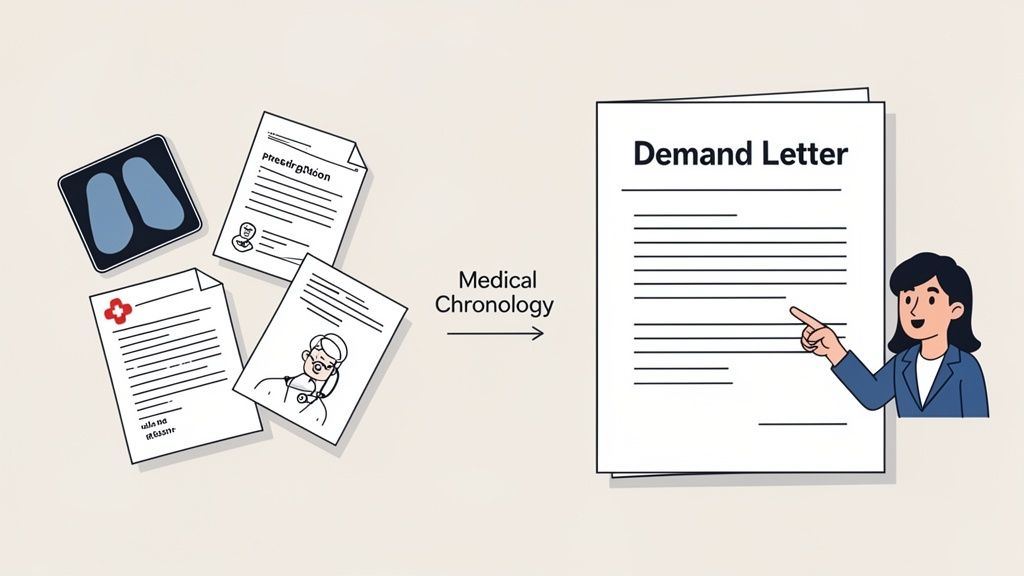
Without a clear, fact-based narrative, even the strongest claims can fail. It's the story that makes an adjuster see the real person behind the claim number.
From Stacks of Paper to a Clear Timeline
The first job is to build a medical chronology. This isn't just a list of appointments; it's a detailed, date-by-date account of the client’s entire medical journey after the incident. It’s the narrative backbone that connects treatments to injuries and symptoms directly back to the accident.
A paralegal pores over every single page from every provider—hospitals, specialists, physical therapists, pharmacies—to pull out the most important details. The goal is to identify the crucial plot points in the client’s recovery story.
A rock-solid medical chronology always includes:
- Date of Service: Every single appointment, procedure, or prescription fill.
- Provider Information: The specific doctor, clinic, or hospital.
- Key Medical Events: A summary of diagnoses, treatments, tests, and prescribed medications.
- Patient Complaints: Direct notes on the client’s reported pain, symptoms, and how their daily life has been affected.
- Total Costs: The billed amount for each service, which is essential for calculating damages.
This timeline does more than just organize facts; it reveals the story's arc. It shows an adjuster the progression of an injury, the persistence of pain, and the full extent of medical care needed. To learn more about this foundational skill, you can explore the art of creating a powerful medical record summary.
Crafting the Persuasive Demand Letter
Once the medical chronology is complete, the paralegal can draft the demand letter. This document is the cornerstone of any settlement negotiation. It’s the firm’s opening salvo, presenting the case to the insurance company and making a formal request for compensation.
A great demand letter is part legal argument, part human story. It has to be grounded in evidence while also conveying the real-world, human cost of the injury. A generic, poorly written demand is easy for an adjuster to dismiss, but a compelling one demands to be taken seriously.
The demand letter is your opening argument. It sets the tone for the entire negotiation and is your best chance to secure a fair settlement without resorting to a costly lawsuit. A paralegal’s ability to draft a clear, persuasive demand is one of their most valuable contributions.
An effective demand letter follows a logical structure, walking the adjuster step-by-step through every part of the claim.
Key Components of an Irresistible Demand Letter
To really hit home, a demand letter must be comprehensive and easy to follow. A seasoned personal injury paralegal ensures it contains several key sections, each one building on the last to create an undeniable case for the client.
- Introduction and Liability: It starts with a concise summary of the incident, clearly explaining why the insured party is at fault. This section pulls from evidence like police reports and witness statements.
- The Medical Narrative: This is where the medical chronology truly shines. The paralegal weaves the summarized medical facts into a compelling story of the client’s injury, treatment, and ongoing struggles.
- Damages and Financial Impact: Here, the paralegal lays out a detailed accounting of all economic losses. This covers all medical bills (past and future), lost income, and any other out-of-pocket expenses.
- Pain and Suffering: This section puts a number on the non-economic damages. It paints a picture of the physical pain, emotional distress, and loss of enjoyment of life the client has suffered.
- The Demand: The letter closes with a clear, specific monetary demand for settlement. This gives the insurance company a firm number to start negotiations.
By mastering these skills, a personal injury paralegal does far more than just manage files. They become the storyteller who ensures a client’s experience is not just heard, but fully understood and properly valued.
Leveraging AI to Work Smarter, Not Harder
Any seasoned personal injury paralegal knows the grind. Poring over thousands of pages of medical records feels like trying to navigate a new city with an old, crumpled paper map. Sure, you'll eventually get where you're going, but it's an inefficient, error-prone journey. You spend more time just trying to make sense of the map than actually moving the case forward.
Now, think about that same journey with a GPS. That's the kind of shift artificial intelligence brings to the legal field. AI-powered legal tech is helping the paralegal role evolve from a primarily administrative function into a strategic one. These tools don't replace paralegals; they give them superpowers.
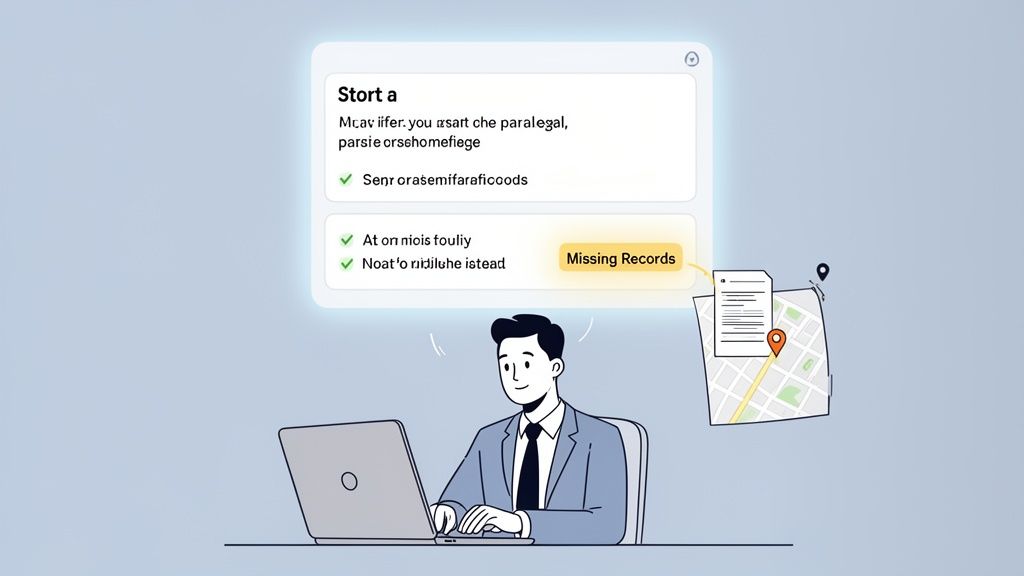
By taking over the most time-consuming, repetitive tasks, AI gives paralegals their valuable time back. This allows them to focus on the high-impact work that demands human insight, empathy, and strategic thinking.
From Manual Drudgery to Automated Insight
At its heart, AI for personal injury law is about spotting patterns and pulling out key data at a speed no human could ever hope to match. Instead of blocking out days or even weeks to read every single line of every medical record, a paralegal can use an AI tool to do the heavy lifting in just minutes.
Modern platforms can automatically handle some of the biggest time-sinks:
- Create Medical Chronologies: AI scans hundreds of pages and instantly pulls out key events—diagnoses, treatments, and appointments—organizing them into a clean, chronological timeline.
- Identify Missing Records: By analyzing that timeline, the software can flag gaps in treatment or point out missing documents from a provider. This is a game-changer for building a complete, airtight case file.
- Generate Demand Letter Drafts: The AI can take all that synthesized data—medical summaries, provider details, and billing information—and assemble it into a structured first draft of a demand letter, saving countless hours.
AI essentially acts as a super-powered assistant. It tackles the meticulous, repetitive work, freeing up the paralegal to focus on the bigger picture and case strategy.
This shift allows a paralegal personal injury specialist to graduate from being a data processor to a data analyst. They can spend their time digging into AI-generated summaries, spotting potential case weaknesses, and working side-by-side with attorneys on strategy.
The Real-World Impact of AI Integration
Paralegals often get bogged down in manual work that, while critical, is incredibly draining. This is where AI platforms like Ares come in. Built specifically for this challenge and HIPAA-compliant, these tools are designed for simplicity. A paralegal can drag and drop case files, let the system extract the crucial facts, and get a drafted demand in minutes. This can easily save 10+ hours of tedious work per case.
This move toward AI aligns with the booming legal analytics market, which is projected to hit $3.15 billion by 2025. In a competitive field with over 50,000 firms, paralegals using AI can quickly spot weaknesses across providers, improve team collaboration, and help secure better outcomes for clients.
The benefit isn't just about saving time; it's about expanding a firm's capacity. When paralegals can manage more cases without quality suffering, the entire firm becomes more productive and profitable.
Becoming a Tech-Savvy Paralegal
The modern personal injury paralegal is no longer just an expert in legal procedure—they are quickly becoming experts in legal technology. Getting comfortable with these tools is key to career growth and staying ahead of the curve.
Here’s how a paralegal can start weaving AI into their workflow:
- Understand the Capabilities: Get a feel for what different AI tools are good at. Some are built for document review, while others are geared toward e-discovery or legal research.
- Focus on the Output: Learn to critically review what the AI produces. The technology gives you a solid foundation, but a skilled paralegal provides the essential final review and human touch.
- Champion Adoption: Be the go-to person at your firm who understands and advocates for these tools. Your expertise can make the entire team more efficient.
Paralegals can get a huge head start by researching what is the best AI for summarizing legal cases and learning how to use it to their advantage. This proactive mindset positions you as a leader.
Ultimately, artificial intelligence gives paralegals the power to do more of what they do best: apply their legal knowledge and critical thinking to help win cases. For a deeper look at this evolving role, you can explore the partnership between https://areslegal.ai/blog/artificial-intelligence-paralegal. The future isn't about AI replacing paralegals—it's about AI making them indispensable.
Building Your Skillset for Career Advancement
What really separates a good personal injury paralegal from a great one? It's not just about knowing the law; it's a unique mix of technical know-how, genuine empathy, sharp communication, and rock-solid organizational skills.Think of it like building a toolkit. A mechanic can't fix every problem with just one wrench, and a top-tier paralegal needs a whole range of abilities to navigate the twists and turns of personal injury cases. The more tools you have in your belt, the more valuable you become to your firm and the clients who depend on you.
Mastering the Essential Hard Skills
Hard skills are the concrete, teachable abilities that are the price of admission for this job. You pick them up through education and on-the-job training, and they’re absolutely non-negotiable for keeping up in a busy personal injury practice. Nailing these down is what ensures you're accurate, efficient, and compliant.
A successful paralegal personal injury professional must master:
- Legal Research and Writing: You have to be able to dig deep into legal databases and then turn that research into clear, persuasive documents. We're talking pleadings, motions, and discovery requests that get the point across without any fluff.
- Software Proficiency: Modern law offices live and breathe technology. You’ll be expected to be proficient in case management software like Clio or MyCase, document management systems, and e-discovery platforms.
- Medical Terminology: This one is huge. You will be living in medical records, so you need to be comfortable with complex diagnoses, treatments, and procedures to piece together the client's story and build a strong case.
These are the foundational skills. They prove you can handle the core technical work and manage the mountain of information that comes with every single case.
Cultivating Indispensable Soft Skills
Hard skills will get your foot in the door, but your soft skills are what will make you a legend at the firm. These are the people skills—how you connect with clients, collaborate with attorneys, and deal with opposing counsel. In a practice area built around human trauma, these are every bit as important as knowing the law.
Soft skills are the engine of client trust and firm efficiency. A paralegal with strong empathy and communication can de-escalate a tense client call and gather crucial information that a less-skilled professional might miss.
These are the skills that will define your professional reputation:
- Client Empathy and Communication: Your clients are often facing one of the most difficult periods of their lives. Being able to listen with compassion, break down complicated legal jargon into plain English, and offer a steady, reassuring presence is priceless.
- Grace Under Pressure: Personal injury work is a world of deadlines and high stakes. The best paralegals stay calm and organized, even when they're juggling five urgent tasks at once with a court deadline breathing down their neck.
- Problem-Solving: No case ever goes exactly according to plan. A great paralegal sees potential roadblocks before they happen, thinks on their feet to find a solution, and takes the initiative to push the case forward without needing to be told what to do next.
Stand Out with Certifications
If you're looking to formalize your expertise and get a real edge in the job market, professional certifications are a great way to go. They send a powerful signal to employers that you’re serious about your career and have met a high standard of competence.
Certifications like the Certified Paralegal (CP) from NALA or the Professional Paralegal (PP) from NALS can give your credibility—and your earning potential—a serious boost. They validate what you know and show you’re committed to staying at the top of your game, which makes you an incredible asset to any law firm.
Charting Your Career and Salary Trajectory
Becoming a personal injury paralegal isn't just a job—it's the start of a genuine career path with plenty of room to grow. The skills you sharpen every day—managing complex cases, navigating delicate client conversations, and mastering legal tech—don't just help you in your current role. They build a foundation for more senior and specialized positions down the road.
Think of your first paralegal role as boot camp. You'll learn the fundamentals of case management inside and out. After you've put in the time, you can step up to a Senior Paralegal or Case Manager position. In these roles, you’re trusted with more complex cases, get more autonomy, and often start mentoring the junior staff. For some, the path even leads to a role like Law Firm Administrator, where you’re running the business side of the whole practice.
What Can You Expect to Earn?
Your salary as a personal injury paralegal is a moving target, shaped by a few key variables. While national averages give you a ballpark figure, what you actually take home can swing pretty dramatically depending on your experience and where you work. Knowing what moves the needle is the first step to maximizing your income.
Here’s what really shapes your paycheck:
- Geographic Location: This one’s a biggie. A paralegal in a major city like New York or Los Angeles will almost always command a higher salary than someone in a small town. It all comes down to the cost of living and what local firms are billing clients.
- Firm Size and Type: Large, high-volume plaintiff firms often have the resources for more structured, and often higher, pay scales. They might also offer more robust benefits packages compared to smaller, boutique firms.
- Years of Experience: Experience is king. A seasoned paralegal with a decade in the trenches and a proven track record can negotiate a far better salary than someone just entering the field. It’s as simple as that.
- Specialized Skills: Are you the go-to person for trial prep? A whiz with e-discovery software? Expertise in high-demand areas makes you a more valuable asset and gives you serious leverage at the negotiating table.
Think of your career as a long-term investment. Every new skill you pick up, especially in legal technology, adds to your professional value and directly boosts your earning potential over time.
How to Keep Moving Up
If you want to advance, you have to be intentional about it. Doing your job well is the baseline, but actively looking for ways to grow is what will make you stand out. This could mean earning an advanced certification, stepping up to take the lead on a major case, or becoming the firm’s resident expert on a new software platform.
Your career ladder might look something like this:
- Paralegal: Your focus is on mastering the core responsibilities: managing case files, keeping clients informed, and handling all the documentation.
- Senior Paralegal: You start taking on more responsibility, like supervising junior paralegals, managing high-stakes cases, and playing a bigger role in complex litigation.
- Case Manager: Here, you shift into a more strategic role. You're overseeing a full caseload from start to finish with a high degree of independence.
- Law Firm Administrator: Your focus moves from legal work to the operational side of the business—things like firm finances, HR, and technology strategy.
By continuously honing your skills and looking for the next challenge, you can build a truly successful and rewarding career in the fast-paced world of personal injury law.
Common Questions About the Personal Injury Paralegal Role
If you're thinking about a career as a personal injury paralegal, you probably have a lot of questions about what the job is really like. Let's break down some of the most common ones to give you a clearer picture of the day-to-day realities.
What’s the Toughest Part of the Job?
Without a doubt, the biggest challenge is the one-two punch of managing the emotional weight of your cases while juggling non-negotiable deadlines. You spend your days talking to people who are going through some of the worst times of their lives. They're in pain, they're scared, and they're counting on you.
At the same time, the legal clock is always ticking. You have to balance being a compassionate ear for your clients with the relentless need to gather evidence, draft documents, and hit every single deadline the court throws at you. It takes a special kind of person—someone with both a big heart and an ironclad sense of organization—to thrive.
How Much Will I Actually Talk to Clients?
A lot. In most personal injury firms, the paralegal is the client's main point of contact. From the moment they first call the office to the day the case settles, you're the one they'll be talking to.
This isn't just about answering the phone; this constant communication is crucial.
- Building Rapport: You're the one who builds the trust that holds the attorney-client relationship together.
- Fact-Finding: You’ll be checking in on their medical treatments and getting updates on their recovery, which is vital information for the case.
- Keeping Them Informed: You translate confusing legal jargon into plain English, helping clients understand what’s happening and what to expect next.
Is This a Job I Can Do From Home?
Yes, absolutely. The legal world has seen a huge shift toward remote work, and personal injury law is no exception. Thanks to cloud-based case management software and secure digital communication, most of a PI paralegal's core duties can be done from anywhere.
Document management, drafting pleadings, and communicating with clients are all perfectly suited for a remote setup. As long as the firm has its tech in order and good systems for staying connected, a virtual or hybrid role works incredibly well.
Of course, you might still need to pop into the office for things like preparing for a trial or meeting with a client in person. How much you can work remotely really just depends on your firm's specific policies and setup.
If You Had to Pick One, What Is the Most Important Skill to Have?
If I had to boil it all down to one single thing, it would be an almost obsessive attention to detail. So much of this job rests on getting the small things right, every single time.
A typo in a medical bill summary, a missed deadline by one day, or an overlooked detail in a police report can completely change the trajectory of a case. Your ability to catch those tiny errors is what separates a good paralegal from a great one. That precision is what builds a winning case and directly impacts the client's final settlement or trial verdict.
Ready to eliminate hours of manual document review and empower your paralegals to focus on high-impact work? Ares provides an AI-powered platform built for personal injury firms to automate medical record summaries and demand letter drafts in minutes. Discover how you can save time and settle faster at https://areslegal.ai.