You're probably here because your current role has started to feel lopsided. Maybe you know the medicine cold, but you're done with the physical strain of bedside care. Maybe you've spent years in coding, CDI, utilization management, or claims, and you want work that uses your judgment instead of grinding through another shift with no control over your day.
That's where medical chart review jobs start to make sense.
In legal and insurance settings, chart review isn't clerical work. It's analytical work. Good reviewers spot treatment gaps, coding issues, causation questions, prior conditions, chronology problems, and documentation inconsistencies that change the direction of a claim or case. Poor reviewers miss them, and those misses cost money, credibility, and time.
I've seen candidates underestimate the role because the job title sounds simple. It isn't. The people who do well in this field read records like investigators. They know which details matter, which ones don't, and how to turn a thick chart into something a lawyer, adjuster, physician advisor, or claims leader can use.
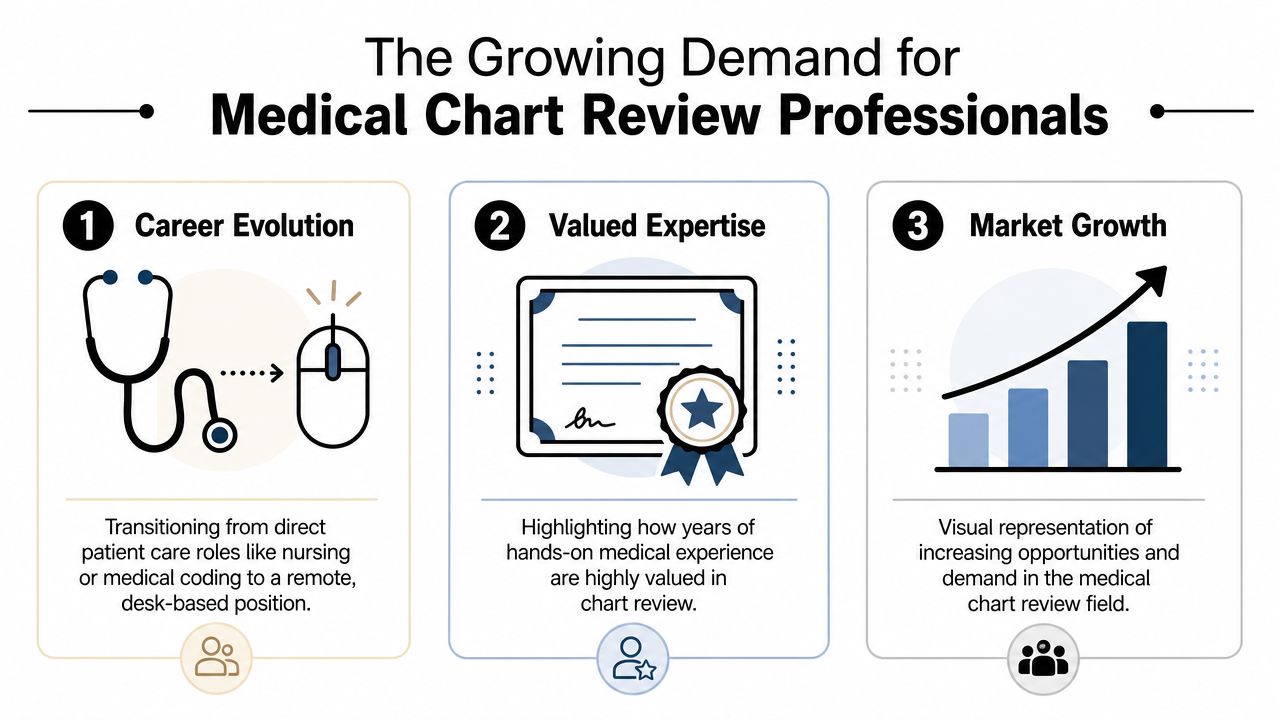
The Growing Demand for Medical Chart Review Professionals
A lot of people enter this field at an inflection point in their careers. Nurses want to stay in healthcare without staying on the floor. Coders want a role with more analysis and less repetitive queue work. Experienced clinical staff want remote or desk-based options that still reward judgment.
That's one reason medical chart review jobs have become more attractive across legal, insurance, and healthcare operations.
Why the role keeps expanding
At the most practical level, every sector needs someone who can make a record usable. In a personal injury matter, that might mean organizing treatment into a timeline and separating accident-related care from preexisting conditions. In insurance, it may mean checking medical necessity, validating diagnoses, or identifying documentation defects that affect reimbursement. In healthcare operations, it often means supporting coding accuracy, audits, and quality review.
The demand is broad enough that it shows up in occupational data, not just on job boards. Employment of medical records specialists is projected to grow 7 percent from 2024 to 2034, and the U.S. Bureau of Labor Statistics estimates about 14,200 openings annually over that period according to the Bureau of Labor Statistics outlook for medical records specialists.
That matters because chart review work sits inside that larger documentation and health information ecosystem. The title on the posting may differ. The core function doesn't.
Practical rule: If a role requires someone to pull meaning, risk, and chronology out of records, it's chart review work even when the employer calls it audit, utilization review, case analysis, or medical records review.
What employers are really buying
Employers aren't paying for someone to read pages. They're paying for clinical interpretation plus disciplined documentation.
That's especially true in the legal and insurance sectors, where one reviewer can affect reserve decisions, claim valuation, litigation strategy, appeal outcomes, or compliance exposure. A strong reviewer helps the rest of the team move faster because the key facts become visible. A weak reviewer creates drag. Everyone else has to recheck the file.
A few traits keep showing up in the best candidates:
- Clinical context: They understand what the record is saying, not just what it explicitly states.
- Chronology discipline: They can build a clean timeline from scattered notes, imaging, therapy records, and billing support.
- Issue spotting: They notice missing signatures, inconsistent dates, undocumented onset history, and diagnosis drift.
- Communication: They write findings in a way non-clinicians can use.
If you're hiring at scale, broad recruiting support can help surface those profiles faster. Teams that work in adjacent healthcare staffing functions often look to specialized healthcare hiring solutions when they need candidates who understand documentation-heavy roles rather than general administrative work.
Job Types Employers and Expected Pay
Not all medical chart review jobs ask for the same brain. The title may look similar, but the work changes a lot depending on whether the file belongs to a law firm, insurer, hospital, or review vendor.
The biggest mistake candidates make is applying to every posting as if they're interchangeable. They're not.
The three lanes most people end up in
Legal chart review is usually the most narrative-heavy lane. You're building a story from the records. That means chronology, mechanism of injury, prior medical history, treatment progression, gaps in care, and causation issues matter more than abstract coding purity alone. Personal injury firms, medical malpractice teams, workers' compensation counsel, and defense firms all use reviewers, but they use them differently.
Insurance review is more rule-bound. The reviewer has to evaluate the file against policy language, medical necessity standards, utilization criteria, or billing requirements. The writing still matters, but the frame is tighter. You're often answering a defined business question rather than building a broad case theory.
Healthcare operations sits somewhere in the middle. Internal auditors, coding teams, revenue cycle departments, quality teams, and compliance groups need accurate chart interpretation, but the output often feeds internal workflows rather than litigation or claim disputes.
Here's a simple side-by-side view.
| Sector | Primary Goal | Common Employers | Key Skills |
|---|---|---|---|
| Legal | Build usable medical narratives and identify case-critical facts | Law firms, independent experts, litigation support vendors, legal nurse consulting practices | Chronology building, causation analysis, concise medical summaries, spotting treatment gaps |
| Insurance | Support coverage, utilization, documentation, and payment decisions | Insurance companies, workers' compensation boards, independent review organizations | Medical necessity review, policy awareness, consistent documentation, audit readiness |
| Healthcare operations | Improve coding, compliance, billing, and quality workflows | Hospitals, health systems, physician groups, audit vendors | Coding awareness, chart abstraction, internal audit discipline, EHR fluency |
What compensation looks like
Compensation varies a lot by niche, credentials, and review complexity. Physician chart reviewer jobs offer salaries ranging from $44,500 to $103,000 annually, with some high-volume remote professionals earning up to $2,000 weekly according to salary and market information summarized by EntreMD. That same source notes common employers include hospitals, insurance companies, workers' compensation boards, and legal firms.
Those figures are useful as a market reference, but don't read them too broadly. A physician reviewer handling specialized utilization or legal review sits in a different market from an RN summarizing plaintiff treatment, and both differ again from a coder doing retrospective audit support.
In legal work, complexity usually pays better than volume. In insurance work, consistency and turnaround often matter more than elegant writing.
How to choose your best fit
The right lane depends less on job title and more on how you think.
If you like ambiguity, chronology, and argument support, legal work may suit you. If you prefer structured criteria, defined workflows, and measurable consistency, insurance review usually fits better. If you enjoy internal quality and documentation integrity, healthcare operations is often the strongest match.
Candidates who want a broader sense of adjacent legal review work can also look at how firms evaluate document-heavy hiring in roles like legal document review jobs. The workflows differ, but the hiring logic often overlaps. Employers want people who can process large files without losing accuracy.
Essential Qualifications and Skills for Chart Reviewers
An adjuster needs a summary by 3 p.m. A plaintiff firm wants a treatment timeline that will survive deposition scrutiny. The chart is 1,800 pages, half of it scanned sideways, with duplicate records and a few gaps that matter. That is the level of work employers in legal and insurance review are hiring for.
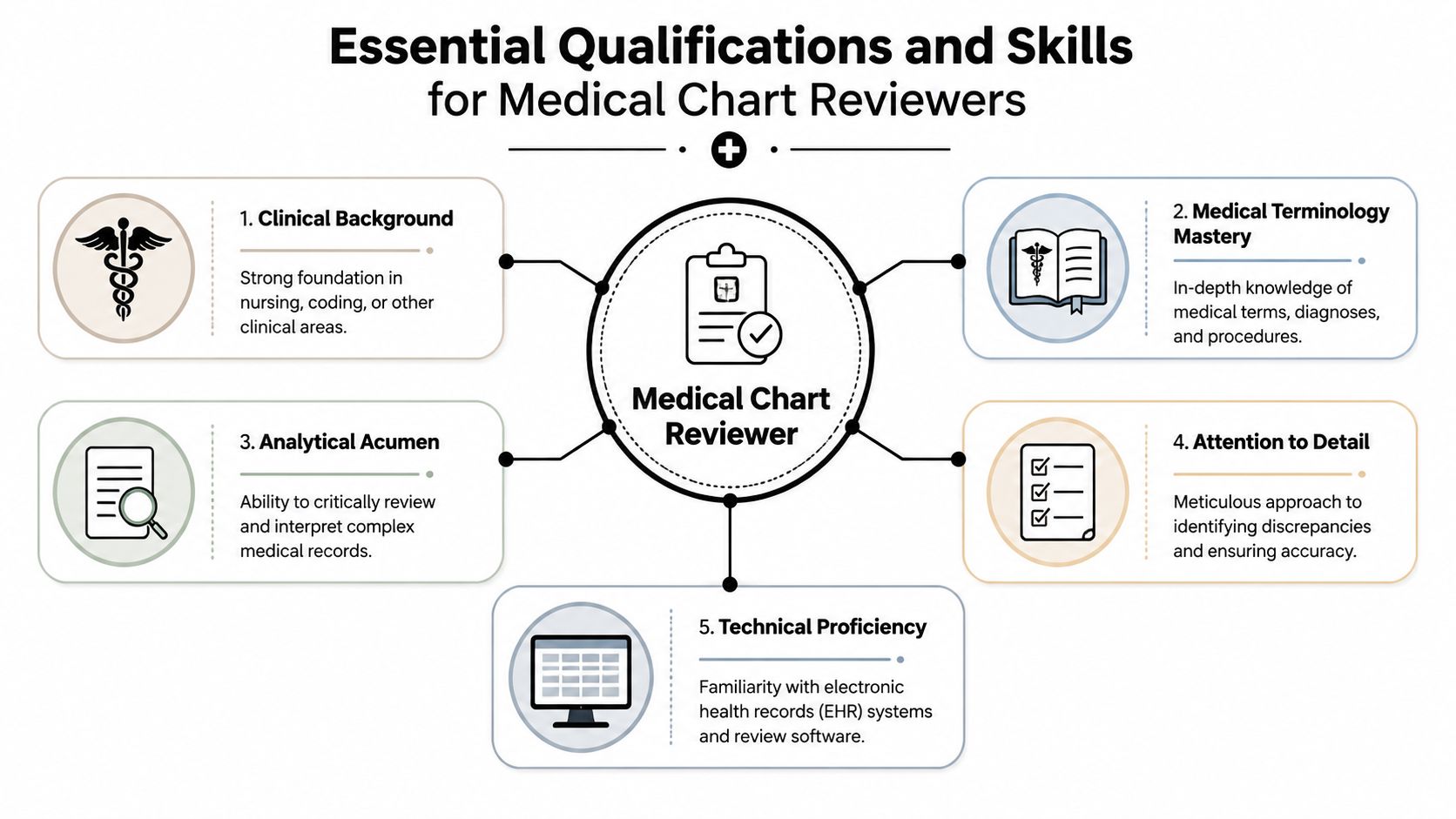
The baseline credential helps you get screened in. Hiring decisions come down to judgment, writing, and record control. Reviewers who last in this work can separate what the chart says from what they assume it says, then explain it in a form the end user can act on.
Credentials matter, but match matters more
Employers usually start with fit to the file type. For legal review, that may be RN, LPN, physician, paralegal with medical records experience, or legal nurse consulting work. For insurance review, they often want utilization review, CDI, coding, claims, or compliance experience. AAPC and AHIMA certifications still carry weight because they show training in documentation rules and terminology, but they do not replace actual file judgment.
I have passed on candidates with strong letters after their name because their samples read like generic chart notes. I have also hired reviewers with less impressive titles who could build a clean chronology, flag missing records, and keep opinions inside the boundaries of the documentation.
That distinction matters.
The Office of the National Coordinator for Health Information Technology guide to EHRs and documentation workflows is a better reference point here than a generic hiring blog, because it reflects the systems reviewers work from. Employers want people who understand how records are created, stored, amended, and pulled. That knowledge affects accuracy in both litigation support and payer review.
The skills that separate a usable reviewer from a risky one
Strong chart reviewers combine clinical reading skill with file discipline.
- Clinical comprehension: Read diagnoses, procedures, medication changes, and treatment progression without stretching beyond the record.
- Chronology building: Put events in order, reconcile conflicting dates, and note where the timeline breaks.
- Audience-specific writing: A demand package summary, an IME support memo, and an internal claims note require different levels of detail and tone.
- Issue spotting: Catch duplicate pages, missing op reports, unsigned entries, template language, and copied-forward history that can distort the story.
- Defensible speed: Produce work quickly enough to meet legal and insurance deadlines without creating avoidable inaccuracies.
In legal files, writing carries more weight than many applicants expect. Attorneys do not need a reviewer to sound academic. They need a reviewer who can tell them what happened, when it happened, where the support sits in the record, and what is still missing. In insurance, the writing can be shorter, but the consistency standard is stricter.
This role is changing because the tools are changing. Researchers writing in the National Library of Medicine article on AI-assisted chart review describe a pattern many employers already see. AI handles routine extraction well, while human reviewers still do better with nuance, context, and conflicting documentation. That is the current trade-off. Software can pull dates, labs, and diagnosis terms. It cannot be trusted on its own to decide whether a gap in care is real, whether causation support exists, or whether a copied note should be treated cautiously.
What technical proficiency means now
Technical skill now includes more than being comfortable in an EHR. Reviewers are expected to work inside review platforms, secure document repositories, redaction tools, OCR outputs, and AI-assisted extraction systems. The job is not to trust those tools. The job is to verify them.
The reviewers who stay valuable are the ones who know where automation saves time and where it creates risk. If an OCR pass misreads a medication dose, or an AI summary collapses two hospitalizations into one episode of care, a legal or claims team can make a bad decision from a clean-looking report. That is why employers still test for human judgment.
Candidates who want a sharper picture of daily expectations should read this breakdown of the medical records reviewer role. For application materials, StoryCV for healthcare resumes has useful examples, but tailor them to the niche. A legal employer wants to see timelines, case support, and writing discipline. An insurance employer wants to see consistency, policy awareness, and turnaround control.
A short video can help if you're new to how the role is framed in practice:
Your Strategy for Finding and Landing a Job
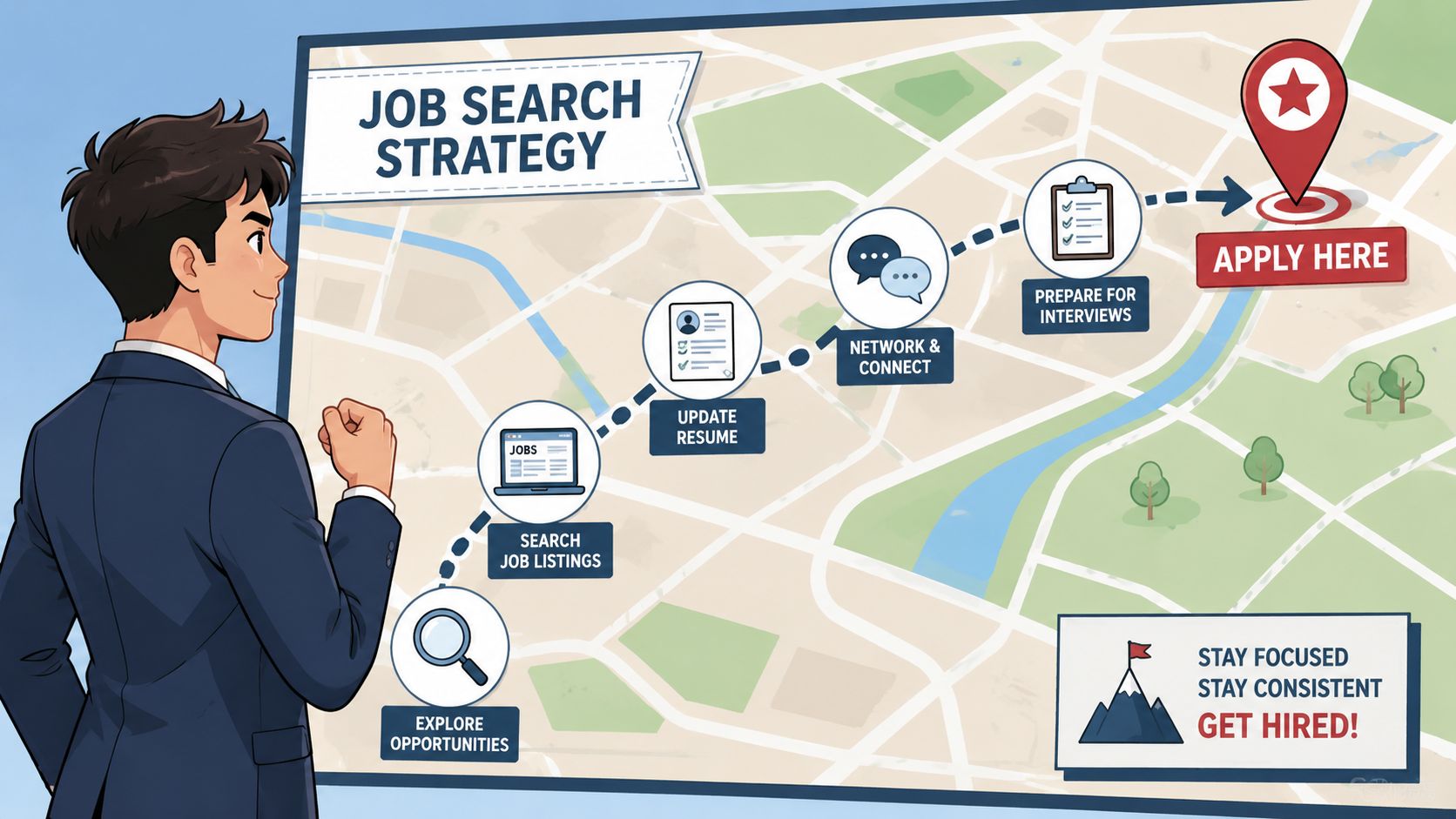
A hiring manager opens your application at 7:15 a.m. before a claims meeting or a case staffing call. They are not asking, “Can this person read a chart?” They are asking, “Can this person answer my question fast, accurately, and in a format my team can use?” Your job search works better once you build around that standard.
The strongest candidates do not apply to every posting with “chart review” in the title. They pick a lane and make the fit obvious. A rehab nurse with workers' compensation exposure should target IME support, causation review, and claims-facing roles. A coder with audit experience should aim at SIU, payment integrity, DRG validation, or internal compliance review. A nurse or paralegal who has already built chronologies, summaries, and provider timelines has a clearer path into law firm and expert support work.
Search where the right employers actually hire
Public job boards still matter, but legal and insurance hiring often happens in narrower channels. Firms fill these roles through referrals, contract pools, specialty recruiters, and association networks because they want reviewers who already understand deadlines, confidentiality, and the cost of a bad summary.
Use a mix of sources:
- Professional associations: AAPC and AHIMA job boards and member communities often surface audit, compliance, and payer-side review roles.
- Legal nurse and medico-legal networks: Small firms and consultants often hire from known circles before they post broadly.
- Independent review organizations: These groups hire for utilization review, appeal support, peer review coordination, and insurer-facing chart work.
- Law firm operations staff and litigation support contacts: Plaintiff and defense firms may post on LinkedIn, work through recruiters, or hire project reviewers directly.
Candidates shifting from bedside care, case management, coding, or utilization work usually need to show applied review judgment, not just credentials. Practical preparation helps. This guide to medical record review training is a good starting point if you need to translate existing experience into legal or insurance review work.
Rewrite your resume in the language hiring managers use
A weak resume is often the problem. I see applicants with solid experience lose interviews because the document reads like a staff nurse resume or a coder resume. Hiring managers in this niche look for review output, pattern recognition, writing quality, and defensible reasoning.
Use bullets that show what you extracted, what you found, and who used your work. Good examples include:
- Reviewed multi-provider records to identify prior history, treatment sequence, and gaps affecting claims or case analysis.
- Analyzed clinical documentation for coding support, medical necessity, internal consistency, and missing evidence.
- Prepared medical chronologies and concise summaries for attorneys, adjusters, auditors, or physician reviewers.
- Flagged conflicting dates, unsupported diagnoses, and missing records before final review or submission.
- Managed protected health information under HIPAA and employer confidentiality standards.
Avoid vague language like “responsible for reviewing charts.” State the result. If your work shortened attorney prep time, improved claim file quality, reduced rework, or helped clarify causation, say so.
If you want examples of healthcare resume phrasing that read more like outcomes and less like job descriptions, this resource on StoryCV for healthcare resumes is useful for structure and wording.
Expect a work sample
Good employers test. In legal and insurance settings, that usually means a short chart exercise, a chronology prompt, or a discussion of how you would handle inconsistent records. That is a positive sign. The employer knows the difference between someone who has touched records and someone who can review them under pressure.
Prepare for tasks like these:
- Summarize a short chart: Pull out chronology, diagnoses, treatment milestones, and open questions.
- Spot inconsistencies: Look for date conflicts, duplicate documentation, unsupported conclusions, and missing follow-up.
- Explain your reasoning: State why you flagged the issue and what business or case risk it creates.
- Show your documentation habits: Explain how you label exhibits, track source pages, and separate fact from inference.
One more point matters now. Many employers use OCR, document automation, and AI-generated summaries to speed intake. That does not reduce the value of human reviewers. It raises the standard. Candidates who get hired can catch when the software merged two encounters, missed a qualifier in a radiology report, or pulled the wrong date into a timeline.
Bring a repeatable method to the interview. Start with the referral question, build the chronology, confirm providers and settings, isolate key diagnoses and treatment, then note conflicts and missing records. That answer tells an employer you can be trusted with live files.
Mastering the Daily Workflow and Essential Tools
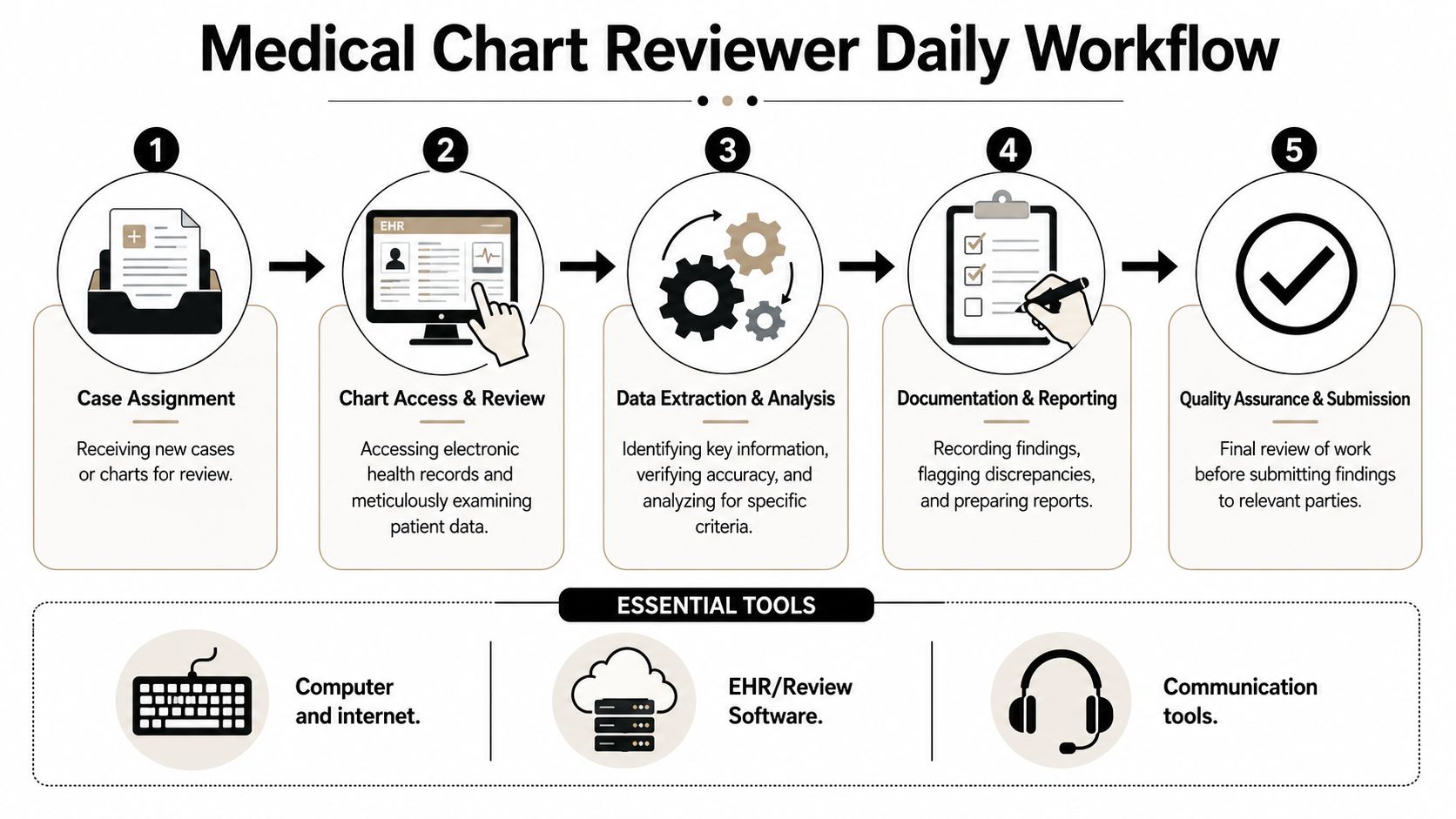
The day-to-day work becomes manageable once you stop treating every file like a free-form reading exercise. Good chart reviewers use a repeatable process.
A new case lands in your queue. Before you draft a summary or make a recommendation, you need to know what question you're answering. Legal teams may want causation, chronology, and prior history. Insurance teams may need medical necessity, documentation support, or billing validation. If you start reading without defining the purpose, you'll waste time and miss the key issue.
What a disciplined workflow looks like
The strongest operational lesson from formal chart review methodology is simple. Define what you're extracting before the review starts. A rigorous process includes defining variables in advance, pilot testing on about 10% of the sample, and compiling an abstraction procedures manual so reviewers stay consistent according to the medical record review methodology article in the National Library of Medicine.
Even outside research settings, that principle holds up. In legal and insurance work, your “variables” might be date of loss, prior similar complaints, imaging chronology, procedure history, medication changes, work restrictions, or unsupported diagnosis carry-forwards.
A practical workflow often looks like this:
- Intake the assignment: Confirm the question, scope, deadline, and record set.
- Build the frame first: Set up your chronology fields, issue tags, and provider list before deep reading.
- Extract and compare: Pull key facts, then cross-check them against other parts of the record.
- Write for action: Deliver findings in a format the end user can act on without rereading the chart.
- Run QA before submission: Check names, dates, page references, and whether the conclusion matches the file.
Tools matter, but process matters more
Most reviewers work across multiple systems. That can include EHR portals, payer systems, spreadsheet trackers, PDF review platforms, secure messaging tools, and internal case management software. None of those tools fixes a sloppy method.
The file handling side also deserves more respect than it gets. Legal and insurance review often involves large record sets moving between parties, vendors, and internal teams. If your process for receiving and sending records is casual, your compliance risk goes up quickly. Teams that need practical guidance on protected transfers often review options for encrypted business file sharing before standardizing workflows.
Accuracy problems usually start upstream. The reviewer didn't define the task, the file set arrived disorganized, or nobody agreed on the output format.
HIPAA compliance lives inside every step of this process. Not as a policy binder on a shelf, but as daily behavior. Screen discipline, secure storage, controlled sharing, and minimum-necessary access aren't administrative extras. They're part of being employable.
Advancing Your Career in Medical Chart Review
This field has more ceiling than many people expect.
Once you've proven you can review accurately, write clearly, and hold up under deadline pressure, you can start moving toward more specialized and better-positioned work. In legal practice, that may mean focusing on personal injury, medical malpractice, mass torts, or workers' compensation. In insurance, it may mean utilization review, appeals, fraud-related review, risk adjustment, or complex claims support.
Specialization matters because employers trust reviewers who know the pressure points of a file type. A reviewer who understands how preexisting conditions affect injury claims brings different value than one who mainly audits coding consistency. Both are useful. They just solve different problems.
Career growth also isn't limited to deeper subject matter. Experienced reviewers often move into lead roles where they standardize workflows, train junior staff, maintain quality controls, and help set review protocols. Others move into consulting, especially if they've built credibility with law firms, carriers, or outside review organizations.
The technology shift is also opening a new lane. Teams need reviewers who can evaluate AI-assisted extraction, catch false positives, refine output, and convert raw machine summaries into defensible work product. That's a strong position for someone who understands both records and workflow design.
If you want long-term stability, this niche has it. The work sits at the intersection of healthcare, law, reimbursement, compliance, and operations. Those functions don't disappear. They get more document-heavy, more contested, and more dependent on people who can turn records into decisions.
If your firm handles injury cases and spends too many staff hours organizing records, summarizing treatment, and drafting demands, Ares is worth a look. It's built for personal injury teams that need faster medical record review and clearer case-ready outputs without sacrificing structure, chronology, or security.