A well-crafted demand letter is more than a formality; it's a strategic tool that sets the narrative, establishes liability, and frames the valuation of a client's damages. It is the crucial first step in compelling an insurance adjuster to take a claim seriously and can significantly influence the speed and value of a final settlement. Relying on outdated or generic templates often fails to capture the unique, compelling details of a case, potentially leaving significant compensation on the table.
This guide moves beyond basic formats to provide a strategic breakdown of 7 annotated personal injury demand letter samples and powerful drafting resources. We will dissect each example, revealing the tactical nuances that command attention, from structuring a persuasive medical chronology to articulating a justifiable figure for pain and suffering. To build truly high-value settlement letters, a critical first step is to master how to conduct legal research to substantiate every element of your claim with relevant case law and statutory support.
Here, you will find a curated collection of platforms and templates, each presented with direct links and screenshots for easy access. We'll analyze their strengths, weaknesses, and ideal use cases, providing actionable takeaways to help you select the right starting point for your next demand. Whether you are handling a straightforward soft-tissue injury or a complex catastrophic claim, these insights will equip you to draft demands that not only inform but persuade, paving the way for faster, more favorable resolutions for your clients.
1. Ares
For personal injury firms aiming to move beyond static templates and revolutionize their demand letter process, Ares presents a sophisticated, AI-powered solution. Instead of offering generic personal injury demand letter samples, Ares automates the most time-intensive part of their creation: the meticulous review of medical records and the synthesis of a compelling factual narrative. This platform is not a repository of examples but a dynamic engine for generating high-quality, data-driven demand letter drafts tailored to each specific case.
The core strength of Ares lies in its ability to transform mountains of unstructured medical data into a structured, case-ready format. By simply uploading raw medical records, firms can leverage AI to extract critical information such as diagnoses, treatment timelines, provider details, and symptom chronologies. This process, which leading PI firms report saves over 10 hours of manual work per case, delivers both an organized medical summary and a robust first draft of the demand letter, allowing legal teams to focus on strategy and refinement rather than administrative drudgery.
In-Depth Analysis: Key Features and Strategic Advantages
Ares stands out by directly addressing the primary bottlenecks in personal injury case management. Its workflow is designed for maximum efficiency and strategic impact, making it an indispensable tool for modern PI practices.
Key Capabilities:
- Automated Medical Record Analysis: The platform’s AI scans and interprets complex medical documents, systematically extracting and organizing key facts. This eliminates human error in data entry and ensures no critical detail is overlooked.
- Instant Demand Letter Generation: Ares uses the structured medical data to produce a comprehensive demand letter draft. This draft serves as a powerful starting point, already populated with the essential factual predicate needed to justify the settlement demand.
- Structured Medical Chronologies: Beyond the letter itself, Ares creates clear, timeline-based medical overviews. These summaries are invaluable for internal case review, client meetings, and preparing for negotiations or trial.
- HIPAA-Compliant Security: Designed specifically for the legal industry, Ares provides enterprise-grade security and is fully HIPAA-compliant, ensuring sensitive client Protected Health Information (PHI) is handled with the utmost care.
Strategic Takeaway: The primary value of Ares is not just time savings; it's the strategic advantage gained from speed and consistency. By automating the foundational work, firms can move cases to the demand stage faster, increasing cash flow and client satisfaction. Furthermore, the platform helps standardize the quality of the firm’s work product, ensuring every demand letter is built on a solid, well-documented factual basis. For a deeper understanding of the components that make these documents effective, you can review this guide on what a demand letter is.
Use Cases and Practical Application
The utility of Ares spans firms of all sizes, from solo practitioners to large, high-volume practices. Its intuitive drag-and-drop interface and straightforward four-step process (upload, analyze, review, export) ensure a minimal learning curve.
- For Paralegals & Case Managers: Automates the tedious task of sifting through records, freeing them to manage client communication and other high-value activities.
- For Attorneys: Provides a complete factual overview at a glance, enabling quicker case evaluation and strategic decision-making. The AI can also help surface potential gaps in treatment or documentation that need to be addressed before sending the demand.
- For Firm Owners: Enhances operational efficiency, allowing the firm to handle a higher caseload without a proportional increase in staff. The improved speed and quality can directly translate to increased revenue and a stronger market reputation.
| Feature Comparison | Ares AI Platform | Traditional Templates |
|---|---|---|
| Source Material | Client-specific medical records | Generic, pre-written examples |
| Output | Custom-generated demand draft & medical summary | Static document requiring manual data entry |
| Time to Draft | Minutes | Hours or days |
| Data Accuracy | High (direct extraction) | Prone to manual error |
| Strategic Insight | Surfaces case-specific facts & chronologies | Provides structure only |
Pros & Cons
Pros:
- Massive Time Savings: Firms consistently report saving 10+ hours of manual review and drafting per case.
- Improved Accuracy & Consistency: AI-driven data extraction reduces the risk of manual errors and ensures a uniform quality standard.
- Enhanced Case Strategy: Quickly surfaces the complete medical narrative, helping identify strengths, weaknesses, and gaps.
- Scalability: The efficient workflow allows firms to grow their caseload without being constrained by administrative bottlenecks.
- Security & Compliance: Built with HIPAA compliance and robust security protocols for handling sensitive client data.
Cons:
- Opaque Pricing: Pricing is not public; interested firms must schedule a demo and request a quote, which can delay the evaluation process.
- Requires Attorney Oversight: While powerful, the AI-generated output is a draft. It requires review and refinement by a qualified legal professional to ensure accuracy, capture nuance, and inject legal arguments.
Access the Platform: https://areslegal.ai
2. AllLaw (by Nolo)
AllLaw, an extension of the trusted Nolo legal network, offers a curated library of free, full-text personal injury demand letter samples. This resource is ideal for legal professionals seeking solid, foundational examples for common accident types without the friction of subscriptions or account creation. It provides a direct and practical starting point for drafting compelling settlement demands.
The platform organizes its samples by specific incident types, such as car accidents, slip-and-falls, and bicycle collisions. This categorical approach allows paralegals and attorneys to quickly locate a relevant template that mirrors the core facts of their case, significantly reducing initial drafting time.
Strategic Analysis and Tactical Insights
What sets AllLaw apart is its integration with Nolo's extensive library of how-to legal guides. Each sample letter is often accompanied by step-by-step articles explaining the strategic purpose behind each section of the demand, from establishing liability to calculating damages. This educational component makes AllLaw an excellent training tool for junior associates or paralegals new to personal injury practice.
The letters themselves are drafted with clear, concise language that effectively communicates liability, outlines injuries, and justifies the settlement amount. They provide a strong structural framework that firms can adapt and build upon. While the content is geared toward a consumer audience, the underlying legal principles and organizational flow are professionally sound.
Key Takeaway: Use AllLaw’s samples as a structural baseline. Their strength lies in their clear, logical flow and comprehensive inclusion of key demand elements. Focus on adapting their straightforward narrative style to fit your client’s specific facts and then overlay a more sophisticated legal analysis and exhibit strategy.
Practical Application and Customization
While AllLaw provides excellent templates, they are intentionally generic and not jurisdiction-specific. Effective use requires customization and legal refinement.
- Localize Legal Standards: You must insert state-specific statutes and case law regarding negligence, comparative fault, and damage caps.
- Integrate Exhibits: The samples do not include exhibit lists. Your firm must append and reference all crucial supporting documents, such as police reports, medical records, billing statements, and expert reports.
- Refine the Tone: Adjust the letter's tone based on the adjuster, insurance carrier, and case specifics. A straightforward case against a reasonable carrier may use a collaborative tone, while a case with clear liability and a difficult carrier may require a more assertive posture.
AllLaw offers a valuable, no-cost resource for foundational drafting. For a deeper dive into the strategic components and advanced techniques that elevate a standard template into a high-impact legal document, our comprehensive guide on the personal injury demand letter provides expert-level insights.
| Feature | AllLaw (by Nolo) |
|---|---|
| Access/Cost | Free, no account required |
| Content Focus | Full-text samples by accident type (car, slip-and-fall) |
| Key Advantage | Strong editorial guidance and linked how-to articles |
| Limitation | Static text, not state-specific, requires manual customization |
| Best For | Training, foundational drafting, and quick reference |
Website: AllLaw Personal Injury Demand Letter Samples
3. LegalTemplates
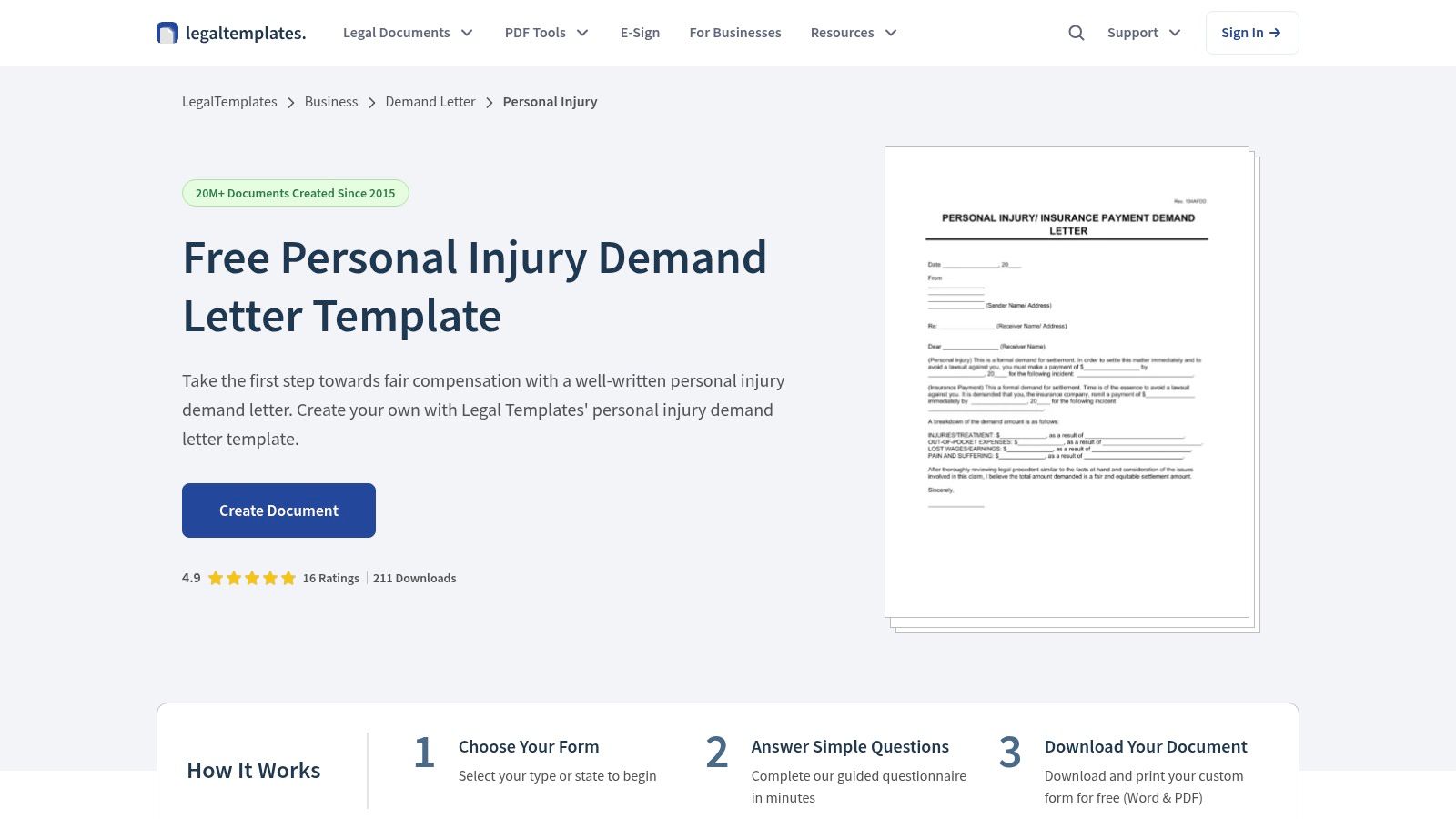
LegalTemplates offers a unique, interactive approach to document creation by providing a guided Q&A process to generate personal injury demand letter samples. This platform is designed for users who want to quickly assemble a comprehensive first draft by following a structured, step-by-step questionnaire. The final document is then available for download in easily editable formats like Word and PDF.
The guided process prompts users to input specific details about the incident, injuries, medical treatment, lost wages, and other damages. This method ensures that critical information is not overlooked, making it an efficient tool for paralegals or attorneys looking to quickly structure the factual narrative of a case before adding nuanced legal arguments.
Strategic Analysis and Tactical Insights
The primary strength of LegalTemplates is its ability to enforce a logical and complete factual outline. The questionnaire acts as a checklist, systematically guiding the drafter through each essential component of the demand, from liability facts to a detailed damages summary. This structured input helps prevent common drafting errors, such as forgetting to include a specific medical provider or miscalculating a wage loss period.
While the generated text is foundational, it provides a solid and well-organized starting point. The platform often includes helpful notes and examples within the questionnaire, explaining the purpose of each requested piece of information. This feature adds a layer of guidance that is particularly useful for those new to drafting demand letters, ensuring the initial output is logically sound and factually complete.
Key Takeaway: Leverage the LegalTemplates guided builder to ensure complete factual inclusion for straightforward cases. The tool excels at creating a comprehensive "who, what, when, where, and why" narrative. Use the output as a data-rich framework to which you will add legal citations, strategic framing, and a persuasive damages argument.
Practical Application and Customization
The document generated by LegalTemplates is a template, not a finished legal document. It requires significant professional refinement to be effective in a legal setting.
- Attorney Review is Non-Negotiable: The automated draft must be thoroughly reviewed, edited, and expanded upon by a qualified attorney to ensure legal accuracy and strategic effectiveness.
- Insert Jurisdictional Law: The template is generic. You must integrate state-specific statutes on negligence, damage caps, and relevant case law to make the demand legally potent.
- Refine Damage Calculations: The tool provides a structure for listing damages, but the final calculation, especially for non-economic damages, requires sophisticated analysis. For a detailed methodology, explore our expert guide on how to calculate pain and suffering damages.
- Standardize Formatting: The output may not match your firm's branding or formatting standards. Expect to reformat the document to align with your professional letterhead and style guide.
While LegalTemplates often operates on a freemium or subscription model, its guided approach offers a distinct advantage for ensuring a factually complete first draft.
| Feature | LegalTemplates |
|---|---|
| Access/Cost | Freemium/Subscription for full features and downloads |
| Content Focus | Guided Q&A generator for creating a custom draft |
| Key Advantage | Structured input process reduces risk of omitting key facts |
| Limitation | Generic output, requires significant legal/jurisdictional customization |
| Best For | Quickly creating a comprehensive first draft for straightforward cases |
Website: LegalTemplates Personal Injury Demand Letter Form
4. eForms
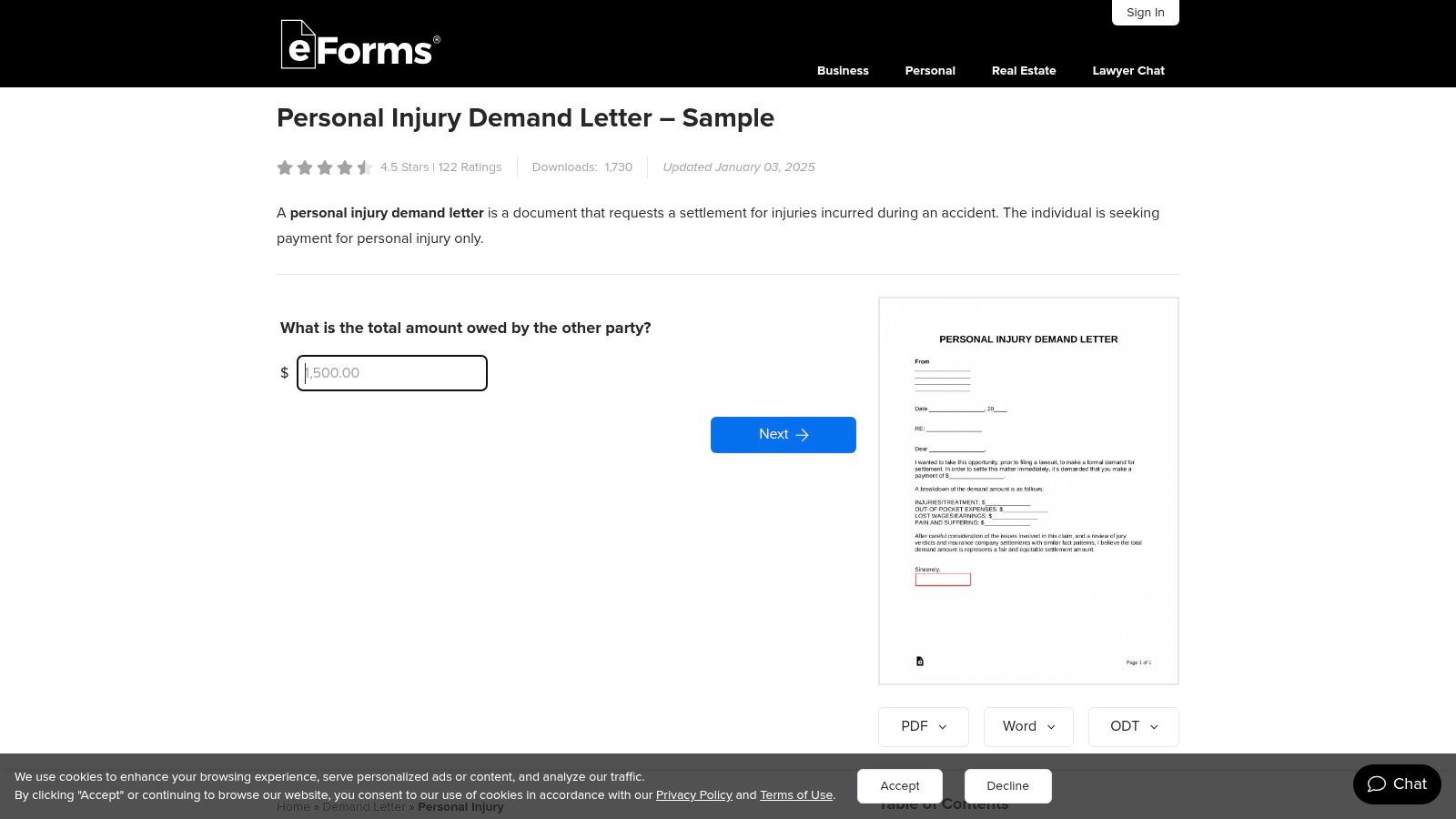
eForms provides a highly accessible, single-template solution for firms needing a structured personal injury demand letter sample available in multiple, ready-to-edit formats. This platform is particularly useful for teams that prioritize workflow efficiency, offering immediate downloads in Word, ODT, and PDF formats without requiring registration. Its clear, sectioned layout makes it an excellent resource for training or for quickly assembling a standard demand.
The sample is logically organized with dedicated sections for outlining the facts of the incident, establishing liability, detailing injuries, and calculating the final settlement demand. eForms also provides a brief step-by-step guide on the claims process, adding a layer of educational context for junior staff members. The inclusion of update dates and user ratings adds a measure of transparency and relevance.
Strategic Analysis and Tactical Insights
The primary strategic advantage of the eForms template is its immediate utility. The availability of Word and ODT files allows for seamless integration into a firm's existing document management systems and mail-merge processes. This plug-and-play functionality is ideal for high-volume practices that need to generate initial demand drafts with maximum efficiency.
While the sample itself is generic, its structure provides a solid and professionally recognized framework. The clear demarcation between liability, injuries, and damages ensures that all critical components of the demand are addressed. This compartmentalized approach helps prevent omissions and serves as a reliable checklist for paralegals and case managers tasked with compiling the necessary information.
Key Takeaway: Leverage eForms for its file format versatility and structural clarity. Use the downloadable Word document as a master template within your firm’s system, pre-populating it with firm-specific language, branding, and standard exhibit lists to create a proprietary, reusable asset.
Practical Application and Customization
The eForms sample is a starting point, not a final product. Its effectiveness hinges on thorough customization and legal enhancement to reflect the nuances of your specific case and jurisdiction.
- Elevate the Narrative: The template's language is functional but generic. Infuse the "Facts of the Incident" and "Injuries and Treatment" sections with a compelling narrative that highlights the defendant's negligence and the severity of your client's suffering.
- Specify Damages: Expand the damages section to include detailed line items for all economic losses (medical bills, lost wages, future care) and a well-reasoned justification for non-economic damages based on state law and relevant case precedents.
- Navigate Gated Content: Be aware that while this specific template is free, the site may promote premium services or gated content. Focus on using the free asset and avoid being sidetracked by upsells that are not relevant to your immediate drafting needs.
By using the eForms document as a functional shell, legal teams can significantly accelerate the initial drafting phase while ensuring all fundamental elements are in place.
| Feature | eForms |
|---|---|
| Access/Cost | Free, no account required |
| Content Focus | Single, general-purpose demand letter template |
| Key Advantage | Multiple downloadable formats (Word, ODT, PDF) |
| Limitation | Lacks legal or jurisdictional specificity; some site content is gated |
| Best For | Efficient initial drafting, training, and creating internal templates |
Website: eForms Personal Injury Demand Letter
5. US Legal Forms
US Legal Forms offers an extensive commercial library of legal documents, including numerous personal injury demand letter samples available on a pay-per-form or subscription basis. This platform is particularly useful for law firms looking to quickly acquire jurisdiction-specific templates that go beyond generic examples. Its value lies in its large, attorney-maintained catalog that provides a transaction-based solution for building a firm's internal forms bank.
The site provides state- and even city-specific demand letters, intent-to-sue notices, and various settlement correspondence templates. This localization can provide a more refined starting point, potentially including relevant statutory language or phrasing common to a particular jurisdiction, which can save initial research time.
Strategic Analysis and Tactical Insights
The key advantage of US Legal Forms is its sheer volume and specificity. Where free resources offer general templates, this platform allows a firm to purchase a document tailored, for instance, to a "car accident in Phoenix, Arizona." This pre-localization gives paralegals and attorneys a head start by incorporating jurisdiction-specific nuances that generic templates lack, though verification and customization are still essential.
The documents are designed for immediate use, available for instant download in editable formats like Word or RTF. This allows for quick integration into a firm's existing letterhead and document management system. The platform acts less as an educational tool and more as a commercial repository for transactional drafting needs.
Key Takeaway: Leverage US Legal Forms to build a robust internal library of templates. Purchase several variants for common case types within your primary jurisdictions. This creates a cost-effective, proprietary forms bank that your team can refine and adapt over time, standardizing the quality and efficiency of your initial demand letters.
Practical Application and Customization
While these forms are attorney-prepared, they are not a substitute for bespoke legal work. They are a commercial product that requires professional adaptation to meet the ethical and strategic demands of a specific case.
- Verify and Update Citations: Always double-check any state-specific legal citations or references within the template, as laws and case precedents evolve.
- Inject Case-Specific Facts: The purchased template will provide the structure, but you must meticulously integrate your client’s narrative, the specific evidence, and a detailed damages calculation.
- Standardize for Firm Use: When building a forms bank, edit the purchased templates to align with your firm's voice, strategic approach, and preferred formatting before distributing them for internal use. This ensures consistency across all cases.
US Legal Forms provides a practical, paid alternative for sourcing jurisdictionally-aligned templates. To understand how to infuse these templates with the strategic elements that drive higher settlements, refer to our in-depth analysis on the anatomy of a successful personal injury demand letter.
| Feature | US Legal Forms |
|---|---|
| Access/Cost | Pay-per-form or subscription; pricing varies |
| Content Focus | State- and city-specific demand letters and settlement forms |
| Key Advantage | Large, jurisdiction-specific catalog for building a firm's form library |
| Limitation | Quality and specificity vary; requires significant attorney tailoring |
| Best For | Firms needing localized templates and building an internal forms bank |
Website: US Legal Forms
6. Jotform Sign
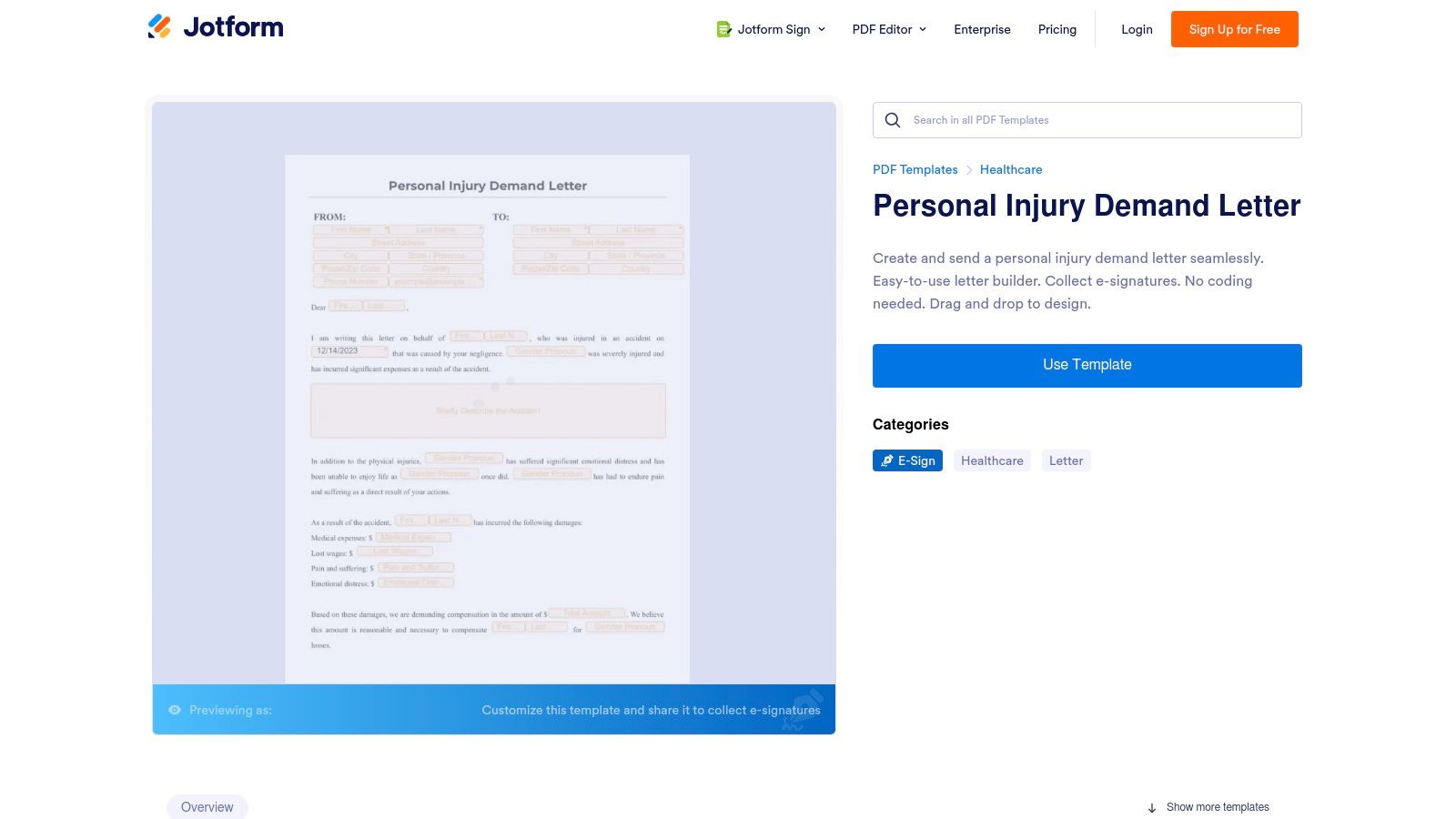
Jotform Sign offers a unique, workflow-oriented approach to creating a personal injury demand letter sample. Instead of a static text file, it provides an interactive PDF template integrated into a powerful form-building and e-signature platform. This resource is engineered for law firms looking to streamline the entire demand letter process, from drafting and internal review to client signature and final delivery.
The platform's strength lies in its ability to transform the demand letter into a dynamic, data-driven document. Firms can quickly populate fields, clone the template for new cases, and manage the entire lifecycle within a single, secure environment, complete with audit trails. This makes it an excellent choice for practices prioritizing efficiency and standardization.
Strategic Analysis and Tactical Insights
What distinguishes Jotform Sign is its focus on operational efficiency rather than just content. The platform excels at creating a standardized, repeatable workflow that reduces administrative overhead. The built-in e-signature capability is a significant advantage, allowing attorneys to secure client approval on the final draft remotely and instantly, which is crucial for meeting deadlines or moving quickly on a settlement opportunity.
Furthermore, the ability to attach exhibits like medical records, photos, and police reports directly to the document package simplifies the assembly process. The system’s activity logs provide a clear, time-stamped record of when the document was sent, viewed, and signed, which can be invaluable for case management and compliance. This creates a more robust and defensible process from an operational standpoint.
Key Takeaway: Leverage Jotform Sign not just for the template, but to build a standardized demand letter workflow. Use its cloning feature to create firm-approved versions for different case types (e.g., MIST vs. catastrophic injury) and its signature process to accelerate client review cycles and formalize approvals.
Practical Application and Customization
While the workflow is highly efficient, the legal content of the base template requires significant professional input. It serves as a structural placeholder that must be infused with case-specific legal arguments and facts.
- Substantive Legal Drafting: The default text is generic. Attorneys must rewrite the liability, damages, and legal analysis sections to reflect the specific facts, applicable state laws, and strategic positioning of the case.
- Tiered Feature Access: A Jotform account is necessary. While a free plan exists, features like HIPAA compliance, increased signature limits, and advanced customization are part of paid subscription tiers, which modern PI firms will likely require.
- Format and Attach Exhibits: Use the attachment feature to compile a complete and organized demand package. Ensure all referenced exhibits are properly labeled and attached before sending the document for signature or to the insurance adjuster.
Jotform Sign is less a source of legal content and more a powerful tool for process optimization. It’s ideal for firms that have already developed strong internal templates but need a better system to manage their creation, approval, and distribution.
| Feature | Jotform Sign |
|---|---|
| Access/Cost | Requires Jotform account; paid tiers for full features |
| Content Focus | Editable PDF template with form fields and e-signature |
| Key Advantage | Streamlines internal workflow, review, and client signature |
| Limitation | Template content is generic; requires substantial legal drafting |
| Best For | Firms seeking to standardize and automate the demand process |
Website: Jotform Personal Injury Demand Letter Template
7. Thomson Reuters Practical Law (Tort & Personal Injury Forms)
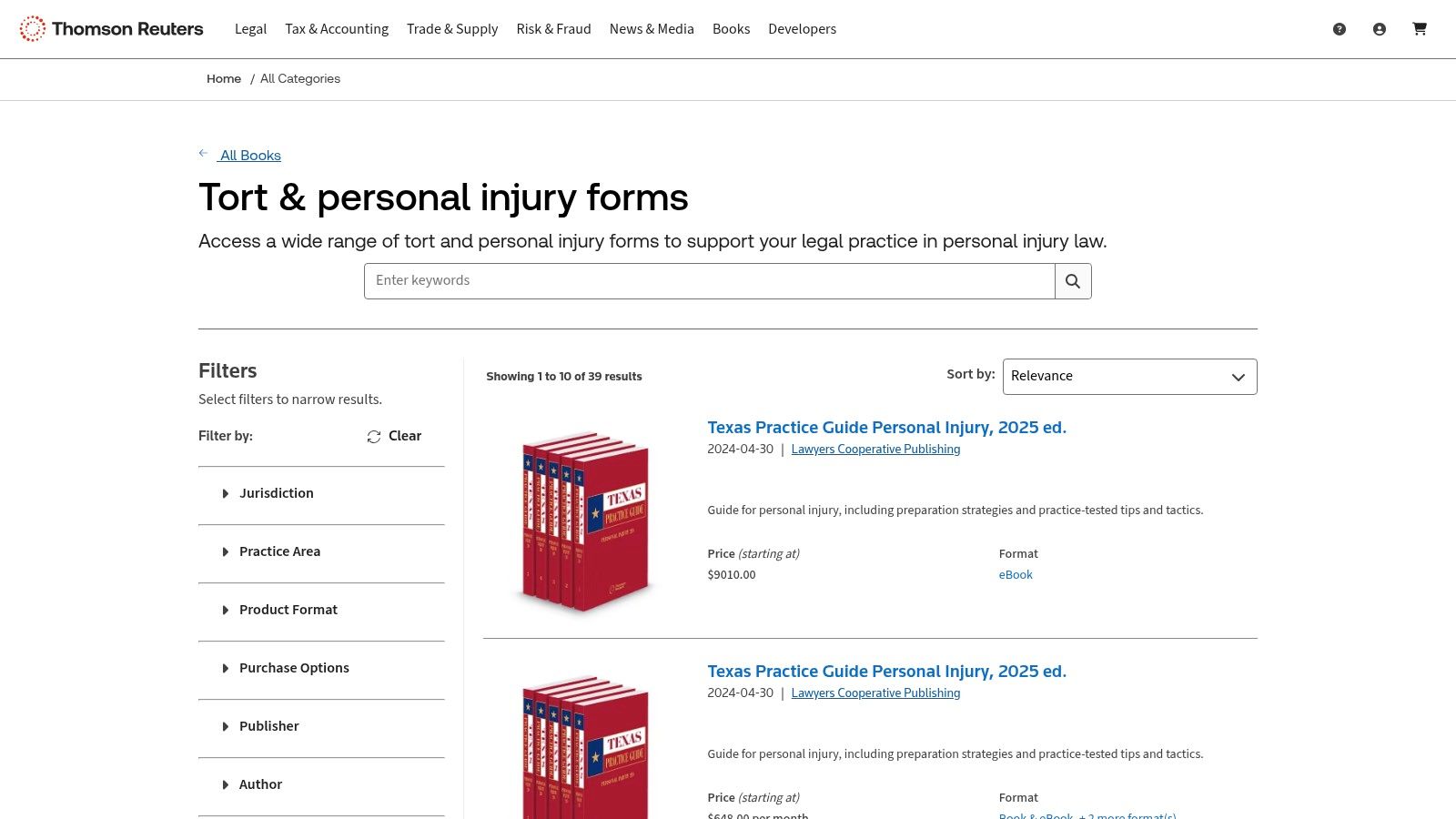
Thomson Reuters Practical Law provides a premium, attorney-drafted resource for personal injury demand letter samples and related litigation documents. Designed for practicing attorneys and sophisticated law firms, this platform offers more than just templates; it provides a comprehensive suite of vetted precedents, detailed drafting notes, and jurisdictional insights that integrate directly into a professional legal workflow.
This resource is best suited for firms seeking to standardize their internal forms and ensure best-practice compliance. By leveraging Practical Law, legal teams can access continuously updated materials that reflect current case law and procedural rules, establishing a high-quality baseline for all pre-litigation correspondence.
Strategic Analysis and Tactical Insights
Practical Law’s primary advantage is the depth of its accompanying commentary and strategic guidance. Each form or template comes with "Drafting Notes" that explain the purpose of specific clauses, flag jurisdiction-specific considerations, and offer alternative language for different factual scenarios. This contextual layer transforms a static form into an interactive drafting tool.
The platform's content is maintained by a team of experienced attorney-editors, ensuring the precedents are not only legally sound but also practically effective. For personal injury litigators, this means the provided demand letters are structured to anticipate common insurance defense tactics and include provisions that strengthen a claimant's position from the outset. The integration with Westlaw also allows for seamless legal research to support the assertions made in the letter.
Key Takeaway: Use Practical Law not just for the template but for the embedded strategic intelligence. The Drafting Notes are a masterclass in risk mitigation and tactical positioning. Leverage these insights to train associates and build firm-wide best practices for demand letter construction.
Practical Application and Customization
While these forms are expertly drafted, they serve as a starting point. Effective implementation requires tailoring them to the unique aspects of each case and integrating them into your firm's existing systems.
- Jurisdictional Nuances: Pay close attention to the state-specific notes and annotations provided, as they often highlight critical differences in tort law, statutes of limitations, and damage calculation methodologies.
- Leverage Checklists: The platform includes checklists for pre-suit investigation and demand package preparation. Use these tools to ensure no critical evidence or argument is overlooked before sending the letter.
- Integrate with Automation: For firms using Contract Express or other document automation software, these templates can be used as the foundation for creating intelligent, automated demand letter generators, significantly boosting efficiency.
Access to Thomson Reuters Practical Law is typically through an enterprise-level subscription, making it a significant investment. However, for firms that handle a high volume of personal injury cases, the value lies in the risk reduction, enhanced quality control, and efficiency gains it provides.
| Feature | Thomson Reuters Practical Law |
|---|---|
| Access/Cost | Enterprise subscription required |
| Content Focus | Attorney-vetted precedents with drafting notes and checklists |
| Key Advantage | Deep strategic commentary and jurisdictional insights |
| Limitation | High cost; requires integration into an existing professional ecosystem |
| Best For | Standardizing firm-wide forms and training litigation associates |
Website: Thomson Reuters Practical Law (Tort & Personal Injury Forms)
7-Source Comparison: Personal Injury Demand Letter Samples
| Product | Implementation complexity | Resource requirements | Expected outcomes | Ideal use cases | Key advantages |
|---|---|---|---|---|---|
| Ares | Low — simple drag-and-drop workflow; demo/onboarding typical | Paid SaaS; HIPAA-ready security and PHI controls | Large time savings (reported 10+ hrs/case); structured medical summaries & demand drafts | PI firms needing automated medical‑record review, high caseloads, trial prep | AI extraction of medical facts, HIPAA-compliant, generates case‑ready summaries & drafts |
| AllLaw (by Nolo) | Minimal — web access, no account needed | Free; browser access; manual editing by attorney | Static sample letters and how‑to guidance | Individuals or small firms seeking free examples and drafting guidance | Curated, practical samples with editorial guidance from Nolo |
| LegalTemplates | Low — guided Q&A produces downloadable draft | Freemium; editable Word/PDF exports; attorney review required | Customizable first drafts that reduce omissions | Quick first‑draft generation and firm template standardization | Guided questionnaire, editable exports for easy editing |
| eForms | Low — download and edit ready samples | Free/low-cost downloads in multiple formats (Word/ODT/PDF) | Ready‑to‑edit sample with structured sections for immediate use | Teams needing editable samples and baseline training materials | Multiple file types, clear structured sections for facts/liability/injuries |
| US Legal Forms | Low–Medium — search, purchase, download; straightforward workflow | Pay‑per‑form or subscription; jurisdiction‑specific forms | Jurisdiction‑matched templates and a broad forms catalog | Firms building a localized forms bank or needing state/city variants | Extensive localized catalog; attorney‑prepared templates |
| Jotform Sign | Low–Medium — template customization plus e-sign setup; account required | Jotform account; some features on paid tiers | Quick customization with integrated e‑signature and audit trail | Firms wanting intake‑to‑sign workflows and remote signature capture | Built‑in e‑sign, audit logs, attachments, template cloning |
| Thomson Reuters Practical Law | Medium–High — enterprise subscription and platform integration | Enterprise subscription; integrates with Westlaw/Contract Express | Vetted precedents, drafting notes, jurisdictional insight and automation ready | Mid/large firms requiring high‑trust precedents and template automation | Attorney‑maintained precedents, jurisdictional guidance, research integration |
From Drafting to Dollars: Automating Your Firm's Demand Letter Workflow
Throughout this guide, we have dissected a variety of personal injury demand letter samples, moving from basic templates to sophisticated, strategically crafted documents. We have explored how to tailor your approach for different injury severities, complex liability scenarios, and specific payers. The core lesson is clear: a powerful demand letter is far more than a simple summary of facts; it is a meticulously constructed narrative designed to persuade, justify, and compel a favorable settlement.
The examples from platforms like Thomson Reuters Practical Law and AllLaw demonstrate the critical components of a solid legal argument, while tools such as LegalTemplates and eForms offer a starting point for straightforward cases. However, the true path to scaling your practice and maximizing case value lies not just in having good samples, but in systematizing their creation.
Key Takeaways: From Manual Drafting to Strategic Automation
The fundamental challenge for any growing personal injury firm is efficiency. Manually reviewing medical records, calculating damages, and drafting each demand letter from scratch is a time-intensive process that creates a significant bottleneck, limiting the number of cases your team can effectively manage. The strategic shift from manual labor to an automated workflow is no longer a luxury; it is a competitive necessity.
The primary takeaways from our analysis include:
- Narrative is King: The most effective demand letters tell a compelling story of the client's suffering and loss, supported by irrefutable evidence.
- Precision in Damages: Vague calculations are easily dismissed. A strong demand letter itemizes every economic and non-economic loss with clear justification and supporting documentation.
- Strategic Customization: A one-size-fits-all template is insufficient. The tone, legal arguments, and settlement demand must be adapted based on the adjuster, insurance carrier, policy limits, and potential for bad-faith claims.
Implementing an Efficient Demand Letter System
Transitioning from reliance on static templates to a dynamic, tool-driven process empowers your firm to produce higher-quality demand packages in a fraction of the time. This is where dedicated legal tech platforms provide a decisive advantage over generic form builders. While a simple template can get you started, a purpose-built tool like Ares is designed to handle the complexities of personal injury cases from the ground up.
When implementing a new system, consider these critical factors:
- Integration: How well does the tool integrate with your existing case management software and document storage? A seamless connection prevents data silos and redundant data entry.
- Medical Record Processing: The single greatest time-sink in demand letter preparation is organizing and analyzing medical records. A platform that can automatically ingest, chronologize, and summarize these documents is a game-changer.
- Customization and Control: The system should generate a robust first draft while still allowing your legal team to inject their unique strategy, tone, and legal expertise. Automation should assist, not replace, the attorney's critical judgment.
By creating a standardized yet flexible process, you ensure consistency and quality across all cases, regardless of which attorney or paralegal is handling the file. For a deeper dive into setting up and managing automated workflows for document generation and client communication, explore these resources on creating efficient processes. This framework allows your team to focus its energy on high-value tasks like negotiation strategy and client relationships, rather than administrative churn.
Ultimately, the personal injury demand letter samples we’ve reviewed are blueprints. The future of profitable law practice lies in using advanced tools to construct those blueprints faster, more accurately, and more persuasively than ever before. By embracing this evolution, you are not just drafting documents; you are building a more powerful, efficient, and successful firm.
Ready to transform your demand letter process from a time-consuming chore into a strategic advantage? Discover how Ares leverages AI to automatically review medical records, draft comprehensive demand letters, and slash your drafting time by over 80%. See for yourself how top PI firms are accelerating settlements and increasing case values with our purpose-built platform at Ares.