
Think of your demand letter as the opening argument in a trial that may never happen. It's more than just a summary of facts; it's your first, and often best, chance to convince an insurance adjuster that settling your client's claim is their smartest move. A well-written letter sets the tone, frames the narrative, and shows you're ready to fight.
The Strategic Purpose of a Demand Letter
The demand letter is the foundational document of your entire case. It’s where you transform a stack of police reports and medical records into a compelling story that an adjuster can't ignore. Your objective is to build a persuasive argument on paper, making it clear from the outset why your client deserves fair compensation.
This document really pulls its weight by serving several key functions at once:
- Controlling the Narrative: This is your chance to tell the story your way. You get to highlight the defendant's negligence and paint a clear picture of how the incident turned your client's life upside down.
- Signaling You're Prepared: A detailed, well-organized letter sends a powerful message. It tells the adjuster you’ve done your homework, you're on top of the details, and you won't be pushed around.
- Anchoring the Negotiation: By carefully calculating and justifying every dollar, you establish a credible starting point for settlement talks. This makes it much harder for an adjuster to justify a lowball offer.
Setting the Stage for Settlement
Never underestimate the power of this first step. A strong demand letter can be the difference between a quick, favorable settlement and a long, drawn-out court battle. In fact, many seasoned attorneys will tell you that the case is often won or lost right here.
A well-structured demand letter is the cornerstone of pre-litigation strategy. It establishes the facts, outlines the legal basis for the claim, and presents a clear path to resolution, compelling the insurer to engage seriously from the outset.
The numbers back this up. Industry data has consistently shown that strong, evidence-backed demand letters lead to settlements in roughly 70-80% of personal injury cases before they ever see a courtroom. This is a testament to their power in driving efficient resolutions. As you might expect, many firms are now exploring how AI can impact demand letter generation to make this critical process even more effective.
Ultimately, mastering the art of the demand letter isn't just about good lawyering—it's about getting better results for your clients and making your own practice run more smoothly.
To get it right, every demand letter needs to be built on a solid foundation. The following table breaks down the essential parts that create a high-impact document.
Table: Core Components of a High-Impact Demand Letter
| Component | Strategic Purpose | Critical Information to Include |
|---|---|---|
| Case Information | Establishes a professional tone and provides immediate context for the adjuster. | Client name, date of incident, claim number, insured's name. |
| Liability Narrative | Clearly frames the incident to establish the other party's fault. | A factual, chronological account of the incident, citing police reports or witness statements. |
| Injuries & Treatment | Details the physical and emotional harm to justify the damages sought. | A comprehensive list of all diagnoses, medical providers, and a summary of the treatment journey. |
| Damages Calculation | Quantifies the claim and anchors the settlement negotiation. | Itemized lists of all medical bills (past and future), lost wages, and other economic losses. |
| Demand Amount | Presents a clear, firm starting point for negotiation. | A specific monetary figure for settlement, often with a policy limits demand if applicable. |
| Supporting Documents | Provides the evidence to substantiate every claim made in the letter. | A numbered list of all attachments, such as medical records, bills, photos, and reports. |
| Settlement Deadline | Creates a sense of urgency and prompts a timely response from the insurer. | A reasonable but firm deadline (30 days is standard) for the adjuster to respond. |
Each of these components works together to build a powerful case before you ever file a complaint. Getting them right is the key to a successful pre-litigation strategy.
Crafting a Powerful Narrative of Liability
Facts alone don't move adjusters; a powerful story does. When you sit down to write a demand letter, your first job is to build a narrative that makes liability undeniable. You're connecting the dots for the claims professional, leaving them with no other conclusion than to accept their insured’s responsibility.
Start with a clear, chronological account of the incident. Pull from the police report, witness statements, and your client's own words to paint a vivid, step-by-step picture of what happened. The story should flow logically, guiding the reader to the single, unavoidable conclusion: the defendant’s negligence caused this entire mess.
From Incident to Injury
Once you've locked down fault, the story has to pivot to the human cost. This isn't the place for dry medical terminology. Instead of just listing diagnoses from a report, you need to describe what your client actually went through.
Walk the adjuster through the moments right after the crash—the shock, the immediate searing pain, the disorienting ambulance ride. From there, map out their medical journey. This is about more than just summarizing treatments; it’s about conveying the brutal reality of a slow, painful recovery.
- Illustrate the Pain: Detail the grueling physical therapy sessions, the wince-inducing injections, or the difficult, uncertain recovery from surgery.
- Show the Disruption: Explain how these injuries meant your client couldn't go to work, had to cancel a long-planned family vacation, or was forced to give up a favorite hobby like coaching their kid's soccer team.
- Highlight the Emotional Toll: Don't forget the anxiety, the frustration, and the depression that so often follow a serious physical injury.
This is how you turn abstract medical terms into a relatable story of human suffering. It makes the damages feel real, tangible, and significant.
The best demand letters don't just state the client suffered a C5-C6 disc herniation. They explain that because of this injury, your client can no longer pick up their grandchild, sleep through the night, or do the job they’ve had for 20 years. That’s the connection that builds case value.
Weaving in the Evidence Seamlessly
Your story becomes rock-solid when you back it up with hard evidence woven directly into the narrative. Never just attach a giant stack of records at the end and hope for the best. Instead, reference key documents as you tell the story.
For example, you might write: "The sheer force of the T-bone collision, which is obvious from the photographs (Exhibit A), caused Ms. Jones to strike her head on the side window, resulting in a concussion diagnosed in the emergency room (see ER records, Exhibit B)."
This approach forces the adjuster to engage with the proof in the context of your client’s experience. It shows you're prepared and have built a case that's airtight from the start. A well-organized chronology of medical records is absolutely critical here. To get this part right, you can learn more about building a compelling medical record chronology in our detailed guide.
By framing the demand as a story of liability and loss, you completely change the dynamic. You're not just presenting a claim; you're telling a human story that demands a just resolution. That makes it much harder for an adjuster to justify a lowball offer.
Calculating and Substantiating Client Damages
This is where the rubber meets the road. In the damages section, you translate your client’s pain, loss, and suffering into a number the adjuster can understand and, more importantly, justify paying. Every single dollar you demand needs to be backed by solid, irrefutable proof. Precision here isn't just a good idea; it's everything.
The process boils down to two distinct categories of loss: economic and non-economic damages. Each requires a different mindset and a specific approach to build a claim that’s not just credible, but compelling.
Tallying the Economic Damages
We call these the "specials," and they're the most straightforward part of your calculation. These are the tangible, out-of-pocket expenses your client has shouldered because of their injuries. Your job is to be meticulously organized and leave no stone unturned.
You need to present a clear, documented trail of every financial loss.
- Medical Expenses: Gather and itemize every single bill. We’re talking about everything from the ambulance ride and ER visit to every physical therapy session and prescription refill. A clear, chronological list is your best friend here.
- Lost Wages: This needs to be rock-solid. Get a formal letter from the client’s employer that details their pay rate, the exact hours they missed, and the total wages lost. Back it up with pay stubs from before and after the incident—the visual contrast is powerful.
- Future Costs: Don't neglect what's to come. If the injuries require long-term care, you’ll want to include a life care plan or a physician's report that projects future medical expenses, ongoing therapy, or even necessary modifications to their home. This shows the adjuster you're looking at the complete picture.
This is all about connecting the dots for the adjuster, showing how the evidence builds a complete story of your client's ordeal.
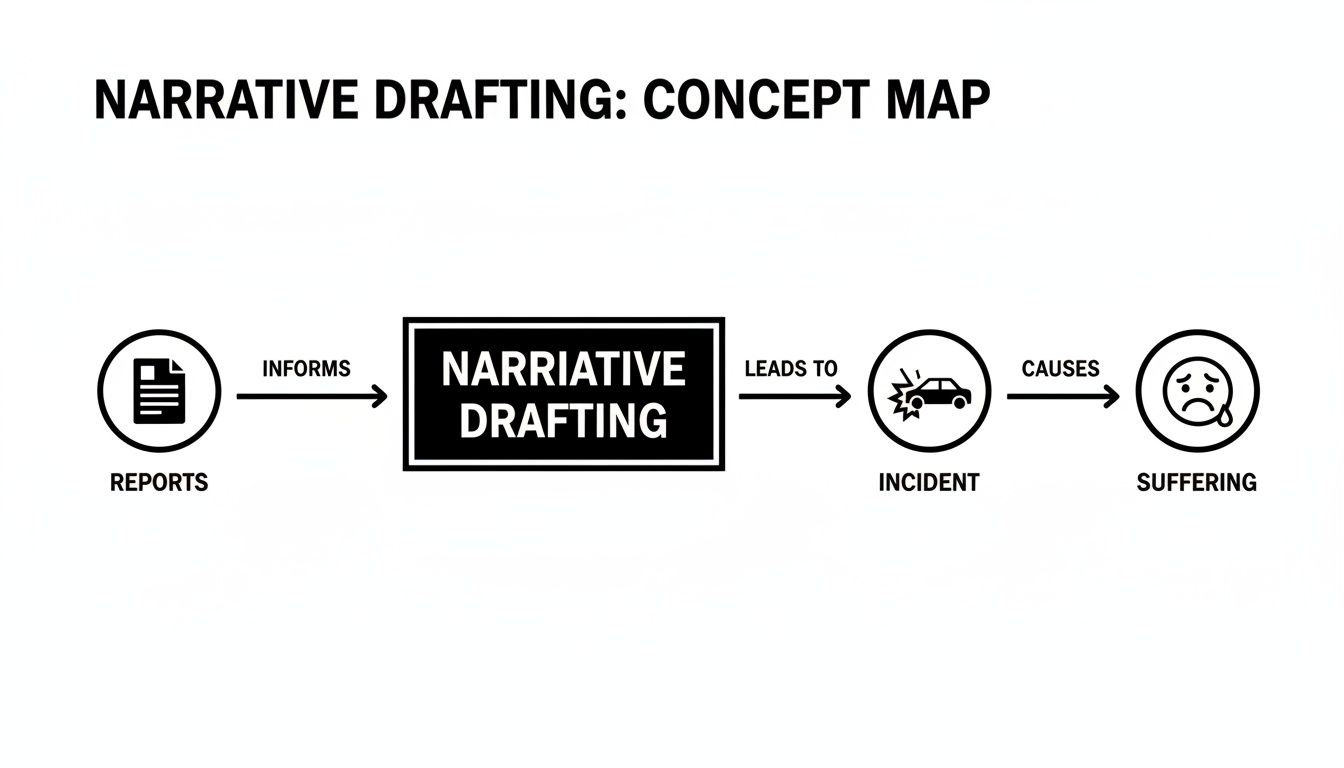
The map above shows the critical path: you take the raw evidence (reports), use it to frame the incident, and then translate that into the very real human suffering that justifies the non-economic damages.
The Art of Valuing Pain and Suffering
Now we move from science to art. Putting a number on non-economic damages—what we commonly call "pain and suffering"—is subjective, but it can't be arbitrary. This is where you assign a monetary value to the physical agony, emotional distress, and the simple loss of enjoyment of life your client has been forced to endure.
Two well-established methods can help guide you: the multiplier and the per diem approach.
The multiplier method is a classic for a reason. You start by totaling the economic damages and then multiply that figure by a number, usually somewhere between 1.5 and 5. The right multiplier depends entirely on the severity of the case. Permanent scarring, a long-term disability, or deep emotional trauma will push that number higher.
The per diem (or "per day") approach assigns a daily dollar amount for your client's suffering, running from the day of the incident until they've reached maximum medical improvement.
No matter which method you use, you have to justify the number. This is where your narrative skills come back into play. Use powerful excerpts from your client’s own journal. Weave in statements from family and friends describing the person they were before the accident and who they are now. Pull direct quotes from the physician’s notes describing their pain levels.
For a deeper dive into these strategies, check out our guide on how to calculate pain and suffering damages in PI claims. Your objective is to take the abstract concept of "suffering" and make it so tangible the adjuster can't ignore it.
Using AI to Enhance Speed and Accuracy
Let's be honest—the single biggest time-suck in drafting a demand letter is the mountain of medical records. For any case with more than one or two providers, manually sifting through those files feels like an archaeological dig. You spend hours just trying to piece together a coherent timeline.
This is where the right tools completely change the game.
Modern AI platforms can chew through thousands of pages of medical files in minutes, not days. They pull out a perfect chronology of symptoms, diagnoses, treatments, and providers, giving you a clean slate to work from. It's not just about speed; it’s about working smarter.
From Manual Slog to Strategic Advantage
Manually reviewing records isn't just slow; it's a huge drain on your firm's resources. A 2023 analysis from Tavrn revealed that old-school methods eat up 4-6 hours per letter. That translates to $400-$900 in paralegal costs for just one document.
AI turns that entire manual extraction process on its head. A platform like Ares, for instance, can take a disorganized mess of records and instantly generate a crisp, high-level summary. This frees up your team from mind-numbing administrative work so they can focus on what really matters: legal strategy and building the case.
The real magic here is how AI can spot connections a human might overlook after hours of reading. It can flag a subtle gap in treatment or highlight a critical diagnostic note buried on page 300 of a hospital record, giving you the ammunition you need to strengthen your narrative and justify your damages.
Of course, getting the facts straight from the beginning is key. To make sure you capture every detail from initial client interviews and follow-up meetings, using something like the best AI meeting transcription software can be a lifesaver, ensuring no crucial information slips through the cracks.
Building a Flawless, Data-Driven Demand Letter
An AI-generated medical summary is the perfect foundation for your demand letter. Instead of starting with a blank page and a pile of records, you begin with a structured, accurate overview of the entire medical history.
This immediately gives you an edge:
- Draft Faster: You can generate a comprehensive first draft of the medical narrative in a fraction of the time it would normally take.
- Improve Accuracy: The risk of human error—like mistyping a date, a diagnosis, or a provider's name—is virtually eliminated.
- Strengthen Your Argument: With all the facts laid out, you can easily pinpoint the most compelling medical evidence to support your claims for liability and damages.
By automating the most labor-intensive part of the demand letter process, your firm can take on more cases without ever compromising on the quality or precision of your work. We cover this approach in more detail in our guide on AI for medical record review.
Ultimately, making this shift helps you move faster, build much stronger cases, and deliver better results for the people who are counting on you.
Finalizing the Demand Package for Maximum Impact
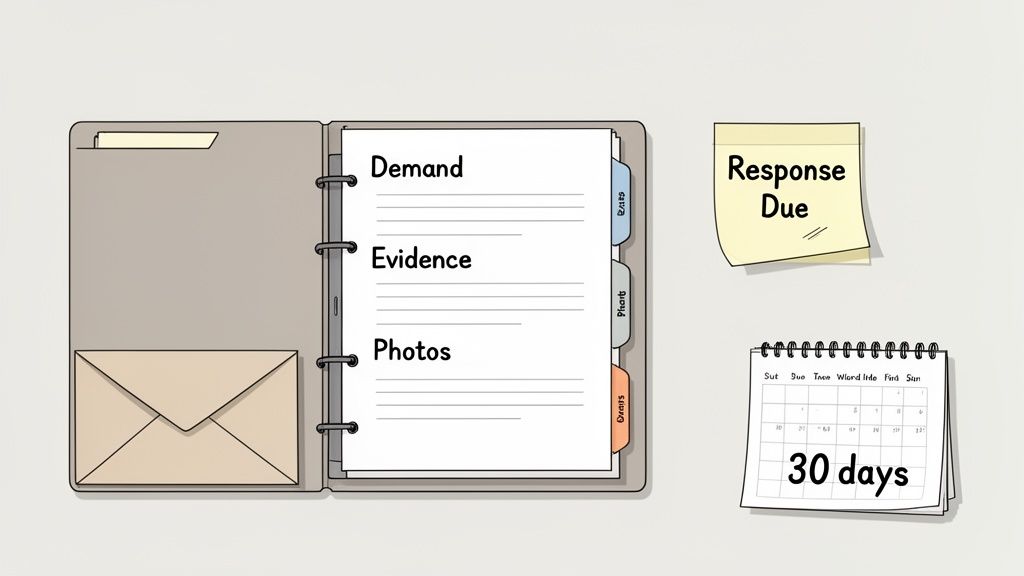 Even the most powerfully written demand letter will fall flat if it’s attached to a jumbled mess of exhibits. Assembling the final package isn’t just about printing and stapling; it's a critical part of your strategy. You're building a complete, easy-to-follow case file that guides the insurance adjuster directly to your conclusion—the settlement you're demanding.
Your objective here is to remove any and all friction. The moment an adjuster has to dig through disorganized papers to find a specific medical bill or piece together a confusing timeline, you’ve given them a reason to undervalue, delay, or even deny your claim. A clean, logical presentation makes their job easier, which in turn makes it easier for them to approve your demand.
Structuring Your Exhibits for Clarity
Start with a simple but professional cover page that functions as an exhibit list. Number or letter every single attachment. This index acts as a roadmap, showing the adjuster at a glance that you are meticulous and have everything buttoned up.
From there, organize your supporting documents to follow the story you told in the letter:
- Police and Incident Reports: Put these right at the top. Establish liability from the get-go.
- Medical Records: The best way to organize these is chronologically, provider by provider. This clearly shows the progression of your client's injuries and their treatment journey.
- Medical Bills: Group these by the provider so they correspond directly with the records you just presented.
- Lost Wage Verification: This is where you include official letters from the employer, pay stubs, and any other income documentation.
- Photographs and Other Visuals: End with the visual proof. Let the pictures of the property damage and your client's injuries leave a lasting impression.
The easier you make it for an adjuster to verify your claims, the faster they can justify the settlement amount to their superiors. A well-organized package is a sign of a well-prepared attorney, signaling that you will be just as meticulous if the case proceeds to litigation.
The Closing Demand and Deadline
Bring it all home with a concise and firm conclusion. After a brief summary of your strongest arguments, state the settlement demand. Be unambiguous. This isn't the opening of a negotiation; it's the specific amount required to resolve the claim right now.
Just as critical is the deadline. Give them a firm, but reasonable, timeframe to respond—30 days is standard practice and creates the necessary urgency. You also need to state what happens if they ignore it. Clearly articulate your intent to file suit if the deadline expires without a resolution. This firm, professional closing puts the ball squarely in their court and prevents your demand from getting buried on someone’s desk.
The effectiveness of demand letters has changed over time. Older, less organized methods often struggled, with settlement rates dipping to 50-60% in complex cases. Today's strategic approach aims to significantly improve those numbers. For attorneys looking to see how technology can help, you can discover more insights from this 2020 analysis on the subject.
Before you seal that envelope or hit "send," one final review is essential. This isn't just a proofread; it's a comprehensive check to ensure your package is as persuasive and airtight as possible.
Pre-Submission Checklist for Your Demand Letter
| Checklist Item | Verification Status | Actionable Notes |
|---|---|---|
| Clear Demand Amount | ☐ Confirmed | Is the total demand amount stated clearly and without ambiguity in the closing? |
| Deadline Specified | ☐ Confirmed | Is a reasonable response deadline (30 days is standard) included? |
| Consequences Stated | ☐ Confirmed | Does the letter state the next step (e.g., filing a lawsuit) if the deadline passes? |
| All Exhibits Listed | ☐ Confirmed | Does the cover page or index accurately list every single attachment? |
| Exhibits Organized Logically | ☐ Confirmed | Are medical records, bills, and other evidence ordered in a way that supports the narrative? |
| Key Evidence Referenced | ☐ Confirmed | Does the letter text explicitly reference specific exhibits (e.g., "See Exhibit C")? |
| Tone & Language Check | ☐ Confirmed | Is the tone firm and professional, free of emotional or overly aggressive language? |
| Final Proofread | ☐ Confirmed | Has the entire package been checked for typos, grammatical errors, and calculation mistakes? |
Taking a few extra minutes to run through this checklist can be the difference between a quick, favorable settlement and months of unnecessary back-and-forth. It’s your last chance to make sure you’ve put your best foot forward.
Common Questions About Drafting Demand Letters
Even attorneys who have been doing this for years still run into questions when putting together a demand letter. It's a unique process—part legal argument, part persuasive storytelling—and a few common uncertainties always seem to pop up.
Let's walk through some of the most frequent questions we see from other lawyers and paralegals during this critical phase of a personal injury claim. Getting these right can make all the difference in your negotiations.
What Is the Best Tone to Use in a Demand Letter?
The ideal tone is firm, professional, and confident. It should never be aggressive. Your goal here is to persuade an insurance adjuster, not to start a war. An overly hostile or emotional letter immediately puts an adjuster on the defensive, which is the fastest way to shut down any hope of a productive negotiation.
Instead, present the facts objectively and lay out your legal arguments with calm authority. The letter needs to clearly communicate two things: the undeniable strength of your client's case and your firm's absolute readiness to litigate if a fair settlement isn't on the table. This balanced approach shows you're in control and encourages the adjuster to treat the claim seriously.
How Much Medical Detail Should I Include?
You need to find the sweet spot between painting a clear picture of your client's suffering and drowning the adjuster in medical jargon. The real skill here is translating clinical details into a compelling human story. Don't just list every diagnosis and procedure from the records.
Focus on the impact.
For instance, explain how that specific "arthroscopic surgery" meant a week-long hospital stay, followed by three grueling months of physical therapy appointments three times a week. That’s far more powerful than a dry recitation of medical terms. It connects the treatment directly to the real-world consequences for your client, making the claim for non-economic damages much more tangible.
Remember, you're telling a story backed by facts. The narrative should draw a straight line from the defendant's negligence to your client's injuries and the life disruptions that followed. This turns the claim into something about a person, not just a file number.
By focusing on the story of the recovery journey, you force the adjuster to see the true scope of your client’s losses.
What Are the Most Common Mistakes to Avoid?
A few common missteps can completely torpedo an otherwise solid demand letter. Keeping these pitfalls in mind is crucial for protecting your client's claim and your firm’s reputation.
- Factual Inaccuracies: A small error in a date, a name, or a medical detail can kill your credibility. Double- and triple-check everything.
- Unsubstantiated Demands: Every single dollar you ask for, from medical bills to pain and suffering, has to be justified and backed by proof. Pulling a number out of thin air is a rookie mistake.
- A Weak Liability Argument: If you don't clearly and convincingly establish the defendant's fault from the outset, you're giving the adjuster an easy way to dispute the entire claim.
- An Aggressive or Emotional Tone: As we covered, this almost always backfires. It signals weakness, not strength, and makes the adjuster less willing to negotiate in good faith.
- Forgetting a Firm Deadline: Without a specific response date, you're letting the insurance company control the timeline. They will almost certainly drag their feet.
Should I Attach All Medical Records to the Initial Demand?
This comes down to strategy, but in most personal injury cases, the answer is a resounding yes. When you send a complete package with all supporting documentation, you're showing the adjuster you're prepared and have nothing to hide. It gives them everything they need to properly evaluate the case and, just as importantly, justify the settlement amount to their manager.
Some attorneys like to hold back certain records as a negotiation tactic, but this often just invites unnecessary delays and endless requests for more information. Providing a comprehensive, well-organized file from day one is almost always the most efficient path to getting a fair and timely offer.
Drafting a powerful demand letter requires meticulous attention to detail, from crafting that compelling narrative to making sure every claim is fully backed by evidence. The most time-consuming part of that process? The medical records review.
Ares automates that heavy lifting. Our AI-powered platform pulls the key facts, builds a perfect chronology, and generates a structured summary that gives your team a massive head start. You can draft a winning demand letter in a fraction of the time.
Ready to stop wasting hours on manual review and start building stronger cases faster? Explore how Ares can help you settle faster.